
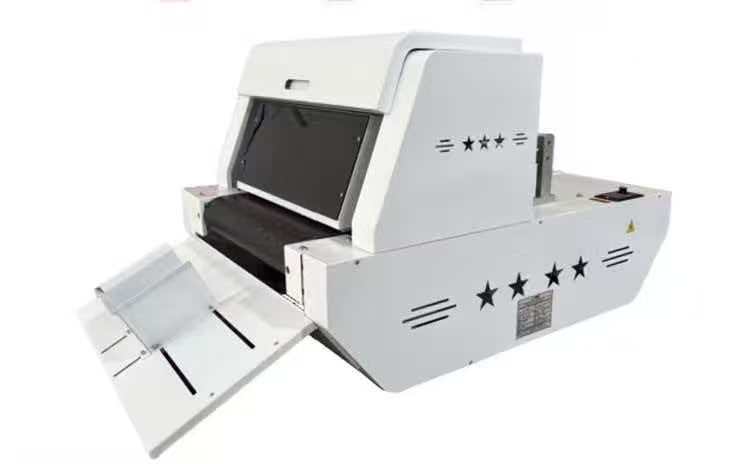
ZMK400 vs Traditional Printing: Why Desktop Single-Pass Technology is the Game-Changer
 Mia
Mia
Introduction: The Paradigm Shift in Printing Technology
For decades, the printing industry operated on a simple model: large minimum order quantities, long lead times, and significant upfront costs. This model worked well for large-scale manufacturers but created barriers for small businesses, entrepreneurs, and innovators. The ZMK400 represents a fundamental departure from this model, introducing a new paradigm that prioritizes flexibility, speed, and accessibility.
This article compares traditional printing methods with the ZMK400's desktop single-pass technology, demonstrating why this shift represents a genuine game-changer for businesses of all sizes.
Chapter 1: Understanding Traditional Printing Methods
Offset Printing
Offset printing has been the industry standard for decades. It involves transferring ink from a plate to a rubber roller, then to the substrate. While excellent for large-volume production, offset printing has significant limitations for small businesses.
Characteristics:
- Minimum order quantities: 5,000-10,000 units
- Setup time: 2-4 hours
- Lead time: 2-4 weeks
- Cost per unit (at 10,000 units): $0.15-0.30
- Cost per unit (at 1,000 units): $0.50-1.00
- Color accuracy: Excellent
- Material flexibility: Limited (primarily paper)
Best for: Large-volume, long-term production runs with consistent designs
Flexographic Printing
Flexography uses flexible printing plates and is commonly used for packaging, labels, and corrugated materials. Like offset printing, it requires significant setup and minimum order quantities.
Characteristics:
- Minimum order quantities: 3,000-5,000 units
- Setup time: 1-3 hours
- Lead time: 1-2 weeks
- Cost per unit (at 5,000 units): $0.20-0.40
- Cost per unit (at 1,000 units): $0.60-1.20
- Color accuracy: Good
- Material flexibility: Good (paper, cardboard, film)
Best for: Medium-volume production of packaging and labels
Digital Printing (Traditional)
Traditional digital printing includes inkjet and laser printing technologies. While offering better flexibility than offset or flexography, traditional digital printing has limitations in speed and quality for industrial applications.
Characteristics:
- Minimum order quantities: 100-500 units
- Setup time: 15-30 minutes
- Lead time: 1-3 days
- Cost per unit (at 1,000 units): $0.30-0.60
- Cost per unit (at 10,000 units): $0.15-0.30
- Color accuracy: Good
- Material flexibility: Limited (primarily paper)
Best for: Small-volume, variable data printing
Chapter 2: The ZMK400 Advantage
Speed and Efficiency
The ZMK400 operates at speeds up to 30 meters per minute, making it competitive with traditional printing methods while offering superior flexibility.
Comparison:
| Method | Speed | Lead Time | Setup Time |
| Offset | 200-300 m/min | 2-4 weeks | 2-4 hours |
| Flexography | 100-200 m/min | 1-2 weeks | 1-3 hours |
| Traditional Digital | 10-20 m/min | 1-3 days | 15-30 min |
| ZMK400 | 30 m/min | 24 hours | 5-10 min |
The ZMK400's 30 m/min speed is faster than traditional digital printing and competitive with flexography, while offering dramatically faster lead times and setup.
Cost Structure
The ZMK400 fundamentally changes the cost structure of printing by eliminating minimum order quantities and setup fees.
Cost Comparison for 1,000 Units:
| Cost Component | Offset | Flexography | Traditional Digital | ZMK400 |
| Setup/Plate Costs | $200-400 | $150-300 | $0 | $0 |
| Per-Unit Cost | $0.50-1.00 | $0.60-1.20 | $0.30-0.60 | $0.35-0.50 |
| Total Cost | $700-1,400 | $750-1,500 | $300-600 | $350-500 |
| Cost Per Unit | $0.70-1.40 | $0.75-1.50 | $0.30-0.60 | $0.35-0.50 |
For small production runs, the ZMK400 is competitive or superior in cost while offering dramatically better flexibility.
Cost Comparison for 10,000 Units:
| Cost Component | Offset | Flexography | Traditional Digital | ZMK400 |
| Setup/Plate Costs | $200-400 | $150-300 | $0 | $0 |
| Per-Unit Cost | $0.15-0.30 | $0.20-0.40 | $0.15-0.30 | $0.35-0.50 |
| Total Cost | $1,700-3,400 | $2,150-4,300 | $1,500-3,000 | $3,500-5,000 |
| Cost Per Unit | $0.17-0.34 | $0.22-0.43 | $0.15-0.30 | $0.35-0.50 |
For large production runs, offset printing remains the most cost-effective option. However, the ZMK400 offers advantages that offset this cost premium.
Quality and Precision
The ZMK400 offers exceptional quality with multiple resolution options (300×1200, 600×1200, 1200×1200 dpi), enabling photographic-quality output.
Quality Comparison:
| Aspect | Offset | Flexography | Traditional Digital | ZMK400 |
| Max Resolution | 2400 dpi | 1200 dpi | 1200 dpi | 1200 dpi |
| Color Accuracy | Excellent | Good | Good | Excellent |
| Fine Detail | Excellent | Good | Good | Excellent |
| Variable Data | No | No | Yes | Yes |
| Consistency | Excellent | Good | Good | Excellent |
The ZMK400 matches or exceeds the quality of traditional methods while offering variable data capabilities that traditional offset and flexography cannot match.
Chapter 3: Flexibility and Customization
Variable Data Printing
The ZMK400's variable data printing capability is a game-changer for applications requiring personalization or sequential information.
Applications:
- Personalized Packaging: Customer names, addresses, or messages
- Sequential Numbering: Serial numbers, batch codes, or order numbers
- QR Codes: Unique codes for each item
- Date/Time Coding: Automatic expiration dates or production dates
- Conditional Printing: Different designs based on data fields
Traditional offset and flexography cannot support variable data printing without stopping the press and changing plates, making them impractical for these applications.
Material Versatility
The ZMK400 supports 18+ material types, significantly exceeding traditional printing methods.
Material Comparison:
| Material | Offset | Flexography | Traditional Digital | ZMK400 |
| Paper | Yes | Yes | Yes | Yes |
| Cardboard | Limited | Yes | Limited | Yes |
| Kraft Paper | Yes | Yes | Limited | Yes |
| Cotton Paper | No | No | No | Yes |
| Rice Paper | No | No | No | Yes |
| Thin Wood | No | No | No | Yes |
| Specialty Papers | Limited | Limited | Limited | Yes |
The ZMK400's material versatility opens applications that traditional methods cannot support.
Design Flexibility
The ZMK400 allows unlimited design changes without setup costs or lead times.
Scenario: Seasonal Product Line
A company wants to print 1,000 boxes for each of four seasons (4,000 total).
Traditional Approach:
- Setup costs: $200-400 × 4 = $800-1,600
- Per-unit cost: $0.50-1.00 × 4,000 = $2,000-4,000
- Lead time: 2-4 weeks per design = 8-16 weeks total
- Total cost: $2,800-5,600
- Total time: 8-16 weeks
ZMK400 Approach:
- Setup costs: $0
- Per-unit cost: $0.35-0.50 × 4,000 = $1,400-2,000
- Lead time: 1-2 days per design = 4-8 days total
- Total cost: $1,400-2,000
- Total time: 4-8 days
The ZMK400 saves both cost and time while enabling design flexibility.
Chapter 4: Operational Advantages
Maintenance and Reliability
The ZMK400 uses HP Thermal Inkjet (TIJ) technology, which requires minimal maintenance compared to traditional printing equipment.
Maintenance Comparison:
| Aspect | Offset | Flexography | Traditional Digital | ZMK400 |
| Daily Maintenance | 30-60 min | 30-60 min | 15-30 min | 5-10 min |
| Weekly Maintenance | 2-4 hours | 2-4 hours | 1-2 hours | 30 min |
| Annual Maintenance Cost | $2,000-5,000 | $1,500-4,000 | $1,000-3,000 | $500-1,000 |
| Downtime Risk | High | High | Medium | Low |
| Operator Skill Required | High | High | Medium | Low |
The ZMK400's low maintenance requirements and high reliability make it ideal for small businesses with limited technical expertise.
Space and Energy Efficiency
The ZMK400's compact size and low power consumption offer significant operational advantages.
Space and Energy Comparison:
| Aspect | Offset | Flexography | Traditional Digital | ZMK400 |
| Footprint | 3-5 m² | 2-4 m² | 1-2 m² | 0.57 m² |
| Power Consumption | 3-5 kW | 2-4 kW | 1-2 kW | 1 kW |
| Annual Energy Cost | $3,000-5,000 | $2,000-4,000 | $1,000-2,000 | $500-1,000 |
| Real Estate Cost (per m²/year) | $50-100 | $50-100 | $50-100 | $50-100 |
| Annual Real Estate Cost | $150-500 | $100-400 | $50-200 | $29-57 |
The ZMK400's compact size and low power consumption result in significant cost savings, particularly for small businesses in high-rent areas.
Chapter 5: Business Model Implications
Traditional Printing Model
The traditional printing model is built on economies of scale. Success requires:
- High-volume production
- Long production runs
- Significant upfront investment
- Specialized expertise
- Dedicated facility
This model works well for large manufacturers but creates barriers for small businesses and entrepreneurs.
ZMK400 Business Model
The ZMK400 enables a new business model based on flexibility and customization:
- Low-volume production
- Short production runs
- Low upfront investment
- Minimal specialized expertise
- Flexible facility requirements
This model is ideal for small businesses, entrepreneurs, and innovative companies.
Revenue Opportunities
The ZMK400 opens revenue opportunities that traditional printing cannot support:
On-Demand Packaging: Provide custom packaging to businesses that previously couldn't afford it due to minimum order quantities.
Personalization Services: Offer personalized packaging for gifts, events, and special occasions.
Rapid Prototyping: Help businesses test new packaging designs quickly and affordably.
Specialty Material Printing: Serve niche markets requiring specialty materials.
Chapter 6: When to Choose Each Technology
Choose Traditional Offset Printing When:
- Producing more than 50,000 units
- Requiring the absolute lowest cost per unit
- Needing exceptional color accuracy for photographic images
- Producing long-term, consistent designs
- Willing to accept long lead times
Choose Flexography When:
- Producing 10,000-50,000 units
- Printing on flexible materials (film, foil)
- Requiring good speed and cost efficiency
- Willing to accept 1-2 week lead times
- Needing moderate design flexibility
Choose Traditional Digital When:
- Producing 1,000-10,000 units
- Requiring variable data printing
- Needing quick turnaround (1-3 days)
- Willing to accept higher per-unit costs
- Printing primarily on paper
Choose ZMK400 When:
- Producing 100-10,000 units
- Requiring variable data printing
- Needing 24-48 hour turnaround
- Requiring material versatility (18+ types)
- Wanting minimal maintenance and expertise
- Seeking low upfront investment
- Prioritizing flexibility over per-unit cost
Conclusion: The Future Belongs to Flexibility
The printing industry is undergoing a fundamental transformation. While traditional printing methods will continue to serve large-scale manufacturing, the ZMK400 represents the future for small businesses, entrepreneurs, and innovative companies.
The ZMK400 is not simply another printing technology—it's a fundamentally different approach to printing that prioritizes flexibility, speed, and accessibility over pure cost efficiency. For businesses that value these characteristics, the ZMK400 is genuinely a game-changer.
The question is not whether traditional printing or desktop single-pass technology is better. Rather, each has its place. The real opportunity lies in recognizing which technology is right for your specific business needs and market position.
For most small businesses entering or expanding in the printing market, the ZMK400 represents an unprecedented opportunity to compete with larger enterprises while maintaining the flexibility and customization that drive customer satisfaction and profitability.