
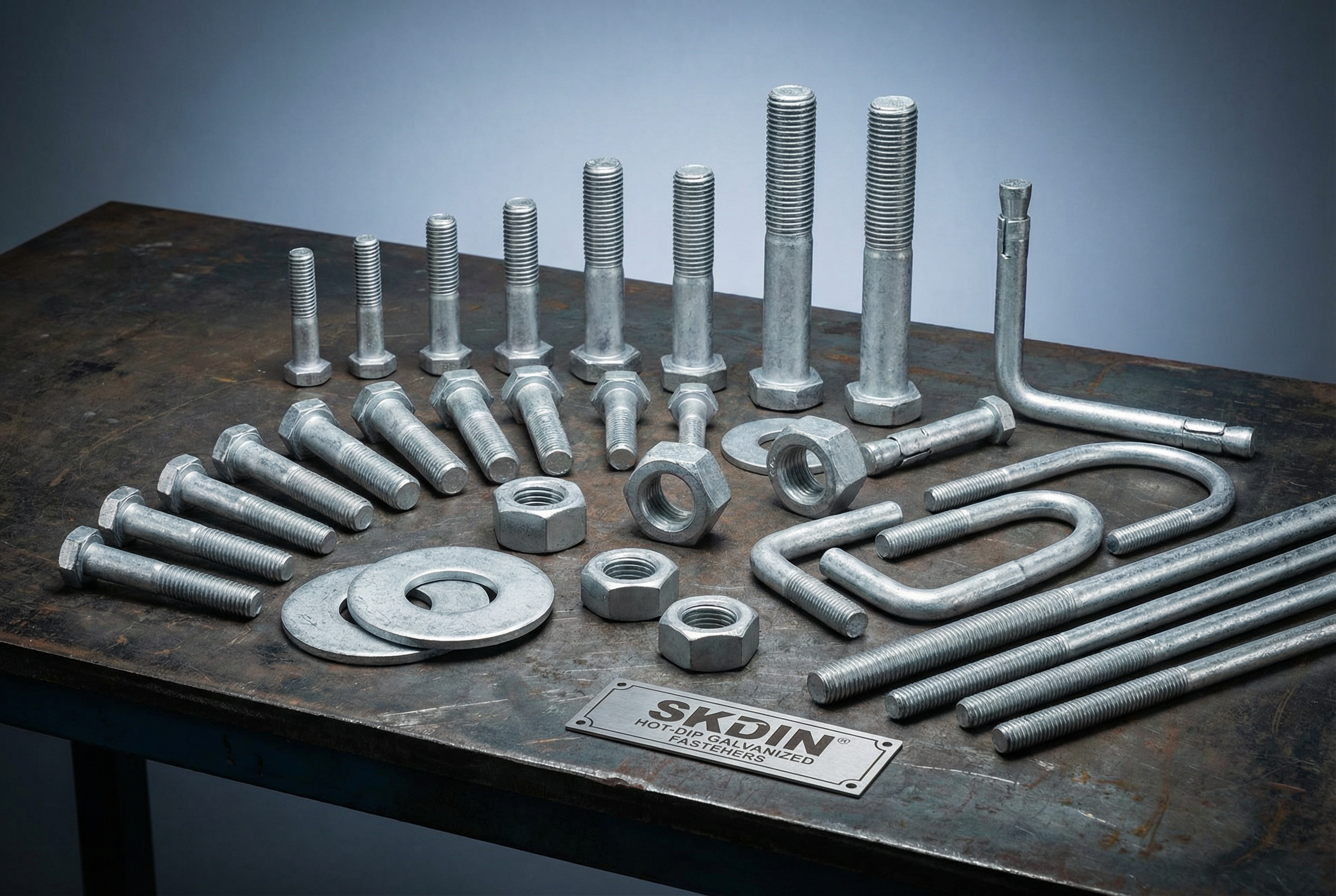
The Complete Guide to Hot-Dip Galvanized Fasteners: Process, Tolerances, and Applications
 Mia
Mia
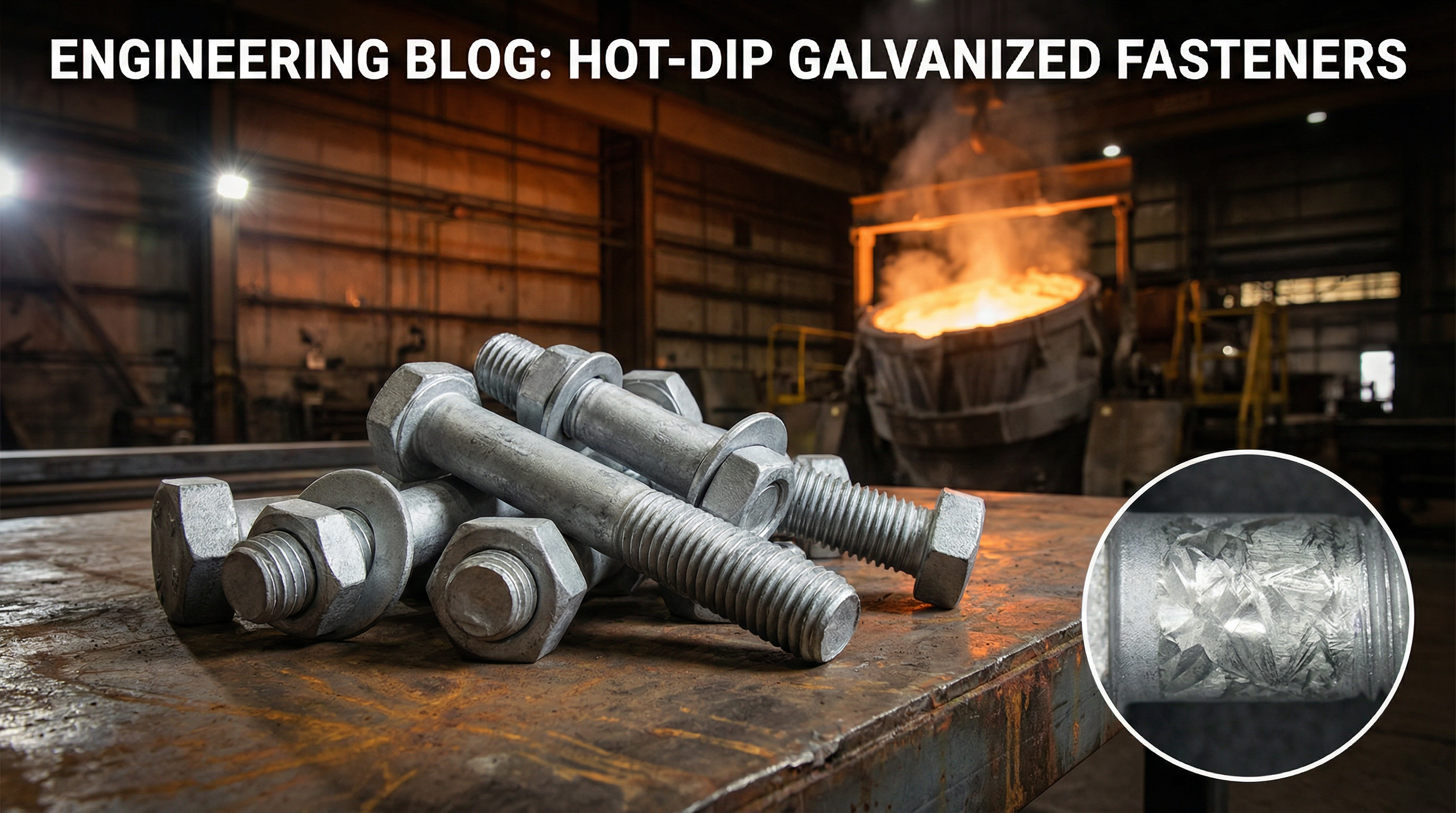
When engineers design structures that must survive decades of exposure to rain, snow, salt, and industrial chemicals, standard steel fasteners simply won't last. The ultimate solution for heavy-duty corrosion protection is Hot-Dip Galvanizing (HDG).
Hot-dip galvanized fasteners are easily recognizable by their rough, matte silver-grey finish and characteristic crystalline "spangle" pattern. But HDG is more than just a coating; it is a metallurgical bond that provides superior, long-lasting protection. In this 2026 engineering guide, we will explore the HDG process, compare it to other zinc coatings, and explain the critical engineering rules for specifying HDG threads.
The Hot-Dip Galvanizing Process
Hot-dip galvanizing is not a simple dipping process. It involves a rigorous multi-step chemical preparation to ensure the zinc bonds perfectly with the steel substrate.
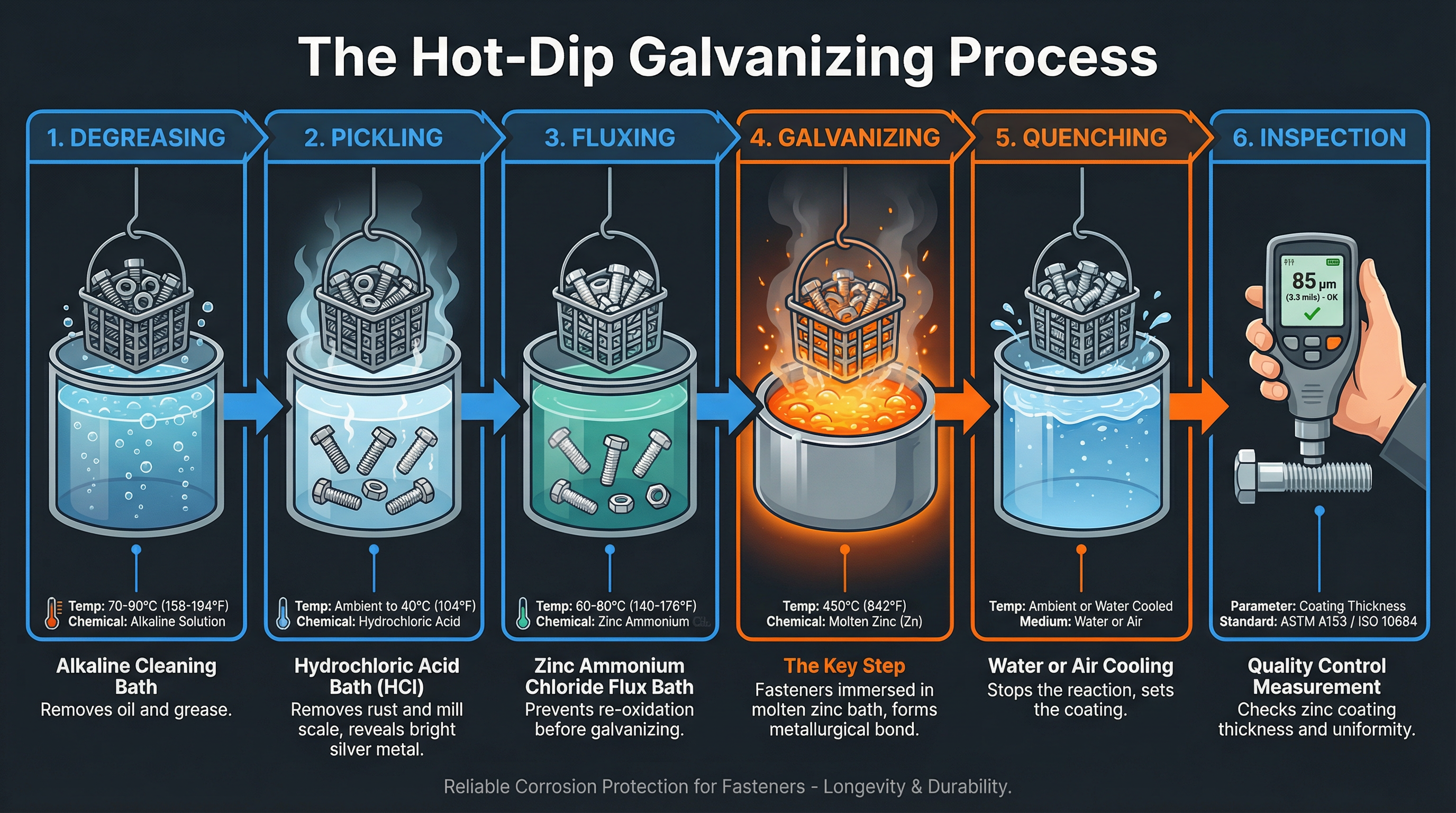
The standard process (governed by ASTM A153 or ISO 10684 for fasteners) includes:
1. Degreasing: Fasteners are immersed in a hot alkaline solution to remove dirt, oil, and grease.
2. Pickling: A hydrochloric acid (HCl) or sulfuric acid bath removes rust and mill scale, exposing the bare steel.
3. Fluxing: A zinc ammonium chloride solution prevents oxidation before the fasteners enter the zinc bath.
4. Galvanizing: The fasteners are submerged in a bath of molten zinc at approximately 450°C (842°F). The zinc reacts with the iron in the steel to form a series of zinc-iron alloy layers.
5. Quenching: The fasteners are rapidly cooled in water or air to stop the alloying reaction.
6. Centrifuging (For Fasteners): Immediately after removal from the zinc bath, fasteners are spun in a centrifuge to remove excess zinc from the threads, ensuring they remain functional.
HDG vs. Other Zinc Coatings
Why choose HDG over standard electroplated zinc? The answer lies in the thickness and durability of the coating.
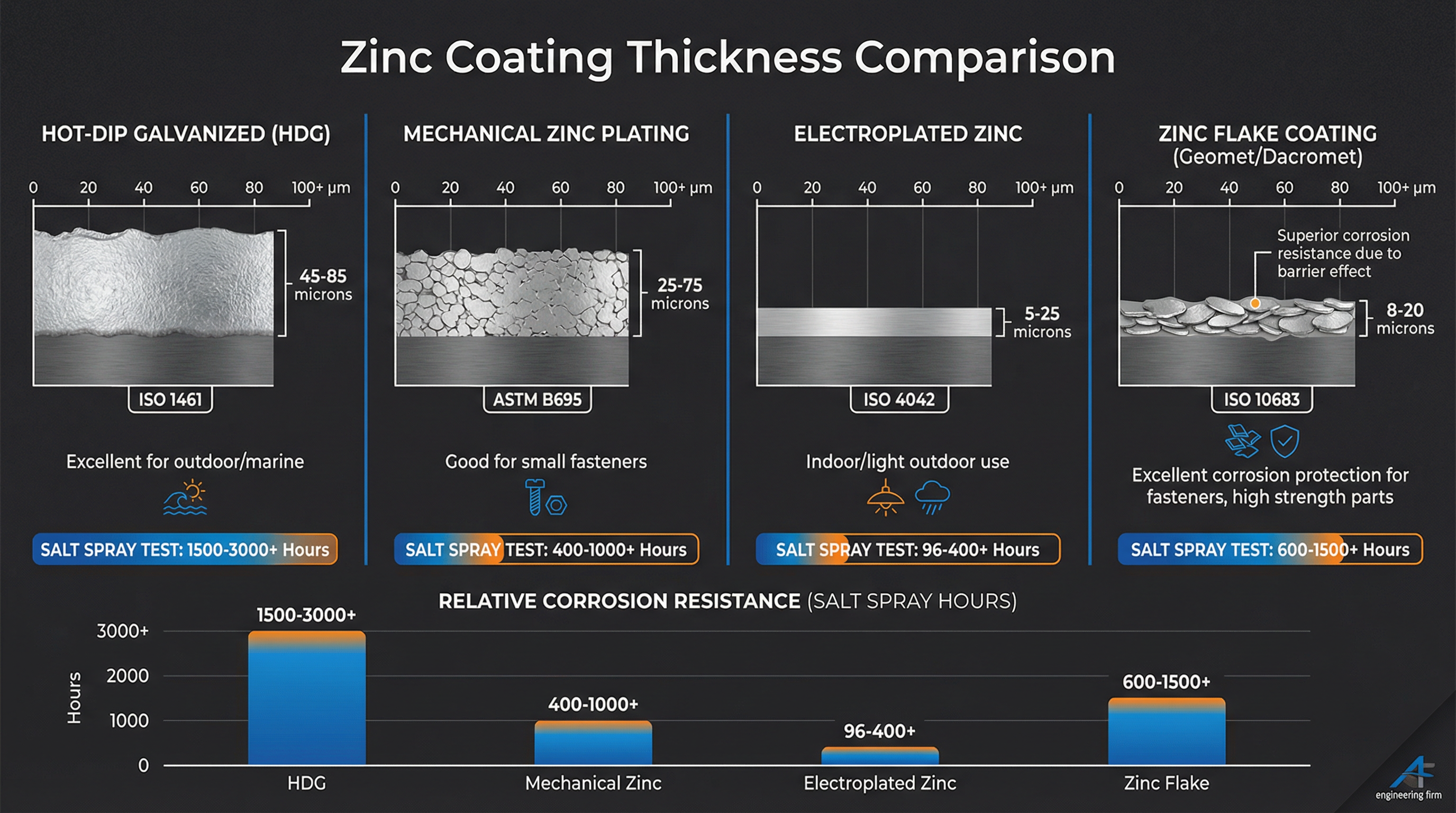
| Coating Method | Typical Thickness | Salt Spray Resistance | Best Application |
| Hot-Dip Galvanized (HDG) | 45 - 85 microns | 1500 - 3000+ Hours | Harsh outdoor, marine, structural |
| Mechanical Zinc Plating | 25 - 75 microns | 400 - 1000+ Hours | Small fasteners, avoiding hydrogen embrittlement |
| Electroplated Zinc | 5 - 25 microns | 96 - 400+ Hours | Indoor, light outdoor, aesthetic finish |
| Zinc Flake (Geomet/Dacromet) | 8 - 20 microns | 600 - 1500+ Hours | Automotive, high-strength fasteners |
HDG provides a coating that is significantly thicker than electroplating. Furthermore, the zinc-iron alloy layers formed during HDG are actually harder than the base steel, providing excellent abrasion resistance during installation.
The Golden Rule: Thread Tolerance and Nut Oversizing
The most critical engineering consideration when specifying HDG fasteners is thread fit. Because the HDG process adds a thick layer of zinc (45-85 microns) to the bolt threads, the overall diameter of the bolt increases significantly.
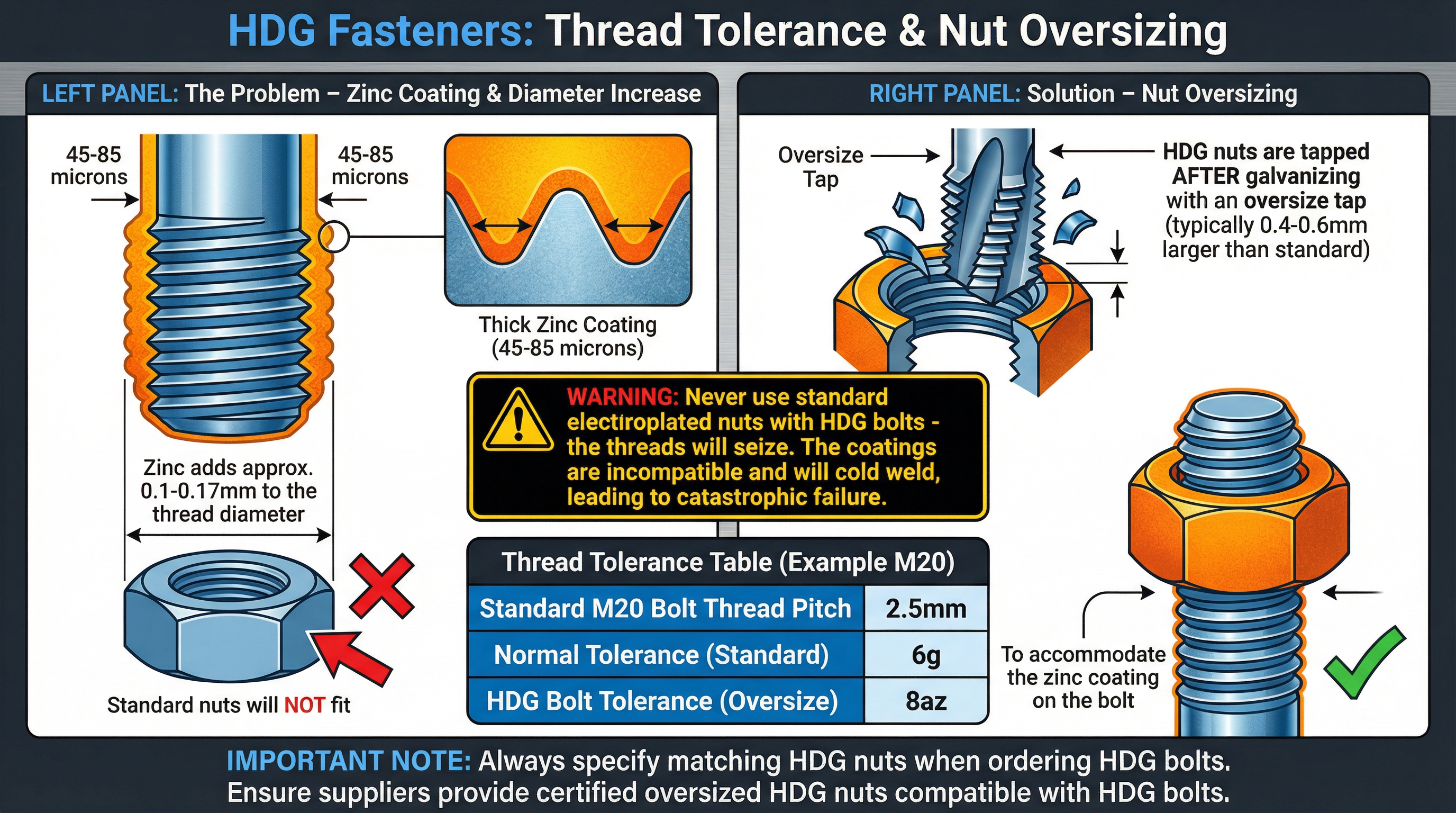
WARNING: A standard nut will NOT fit on a hot-dip galvanized bolt.
To solve this problem, the industry standard practice is Nut Oversizing:
1. The bolt is manufactured to standard tolerances and then hot-dip galvanized.
2. The nut is manufactured, hot-dip galvanized as a blank (no threads), and then tapped after galvanizing using an oversize tap (typically 0.4mm to 0.6mm larger than standard).
3. Because the nut threads are cut after galvanizing, they are bare steel. However, when the nut is threaded onto the galvanized bolt, the thick zinc coating on the bolt provides cathodic protection to the bare steel threads of the nut, preventing corrosion.
Always ensure you order HDG bolts and HDG nuts as a matched set from a reputable supplier to guarantee proper thread fit.
Essential Applications for HDG Fasteners
HDG fasteners are the standard choice for infrastructure and heavy industry.
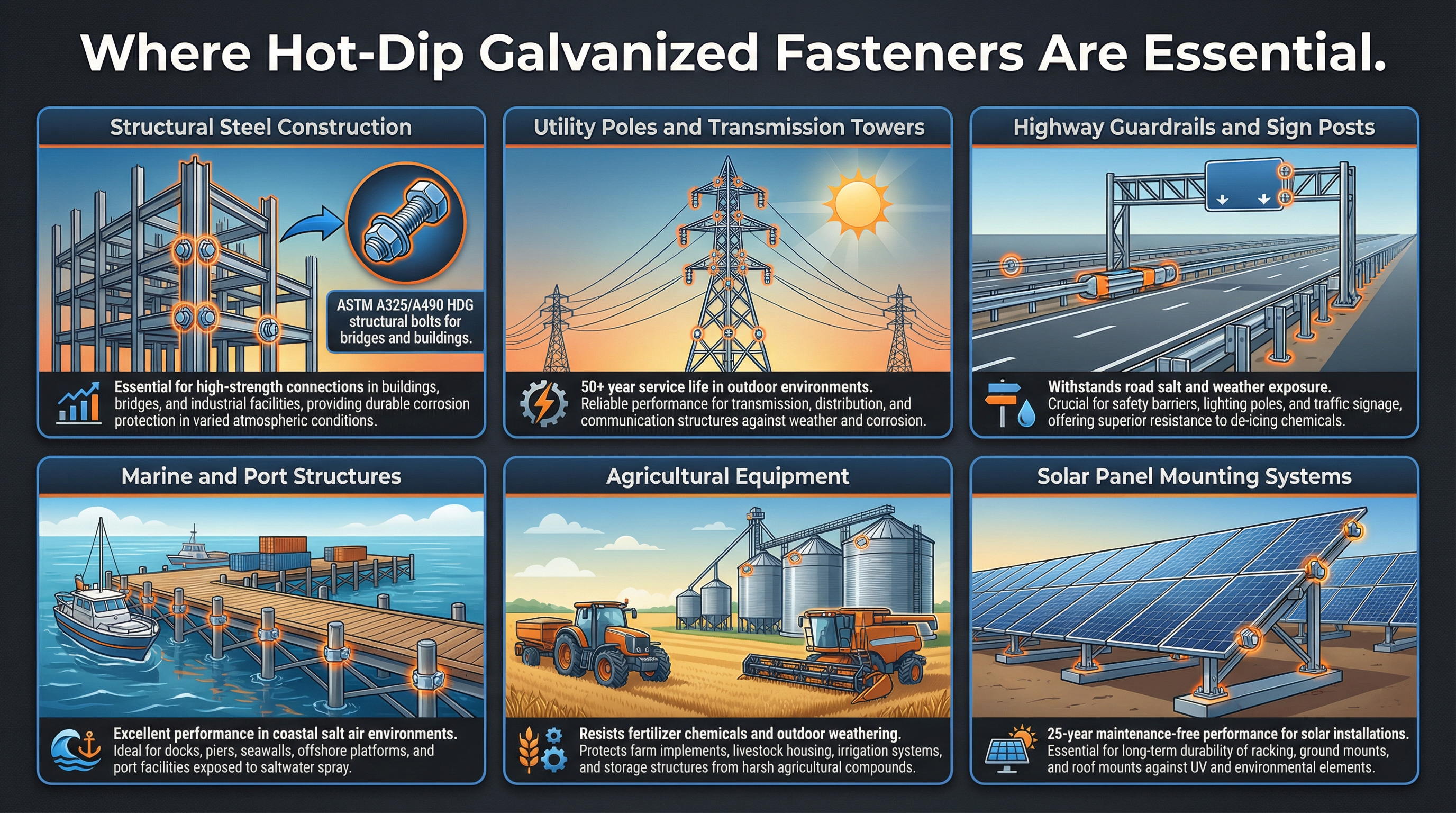
Structural Steel Construction: ASTM A325 and A490 structural bolts are frequently galvanized for bridges, stadiums, and industrial plants.
Utility and Transmission Towers: Providing 50+ years of maintenance-free life for electrical grid infrastructure.
Highway Infrastructure: Guardrails, signposts, and lighting poles exposed to road salt and weather.
Marine Environments: Docks, piers, and coastal structures exposed to salt spray.
Solar Panel Mounting: Ensuring the racking systems last as long as the solar panels themselves (25+ years).
SKDIN: Certified HDG Fasteners
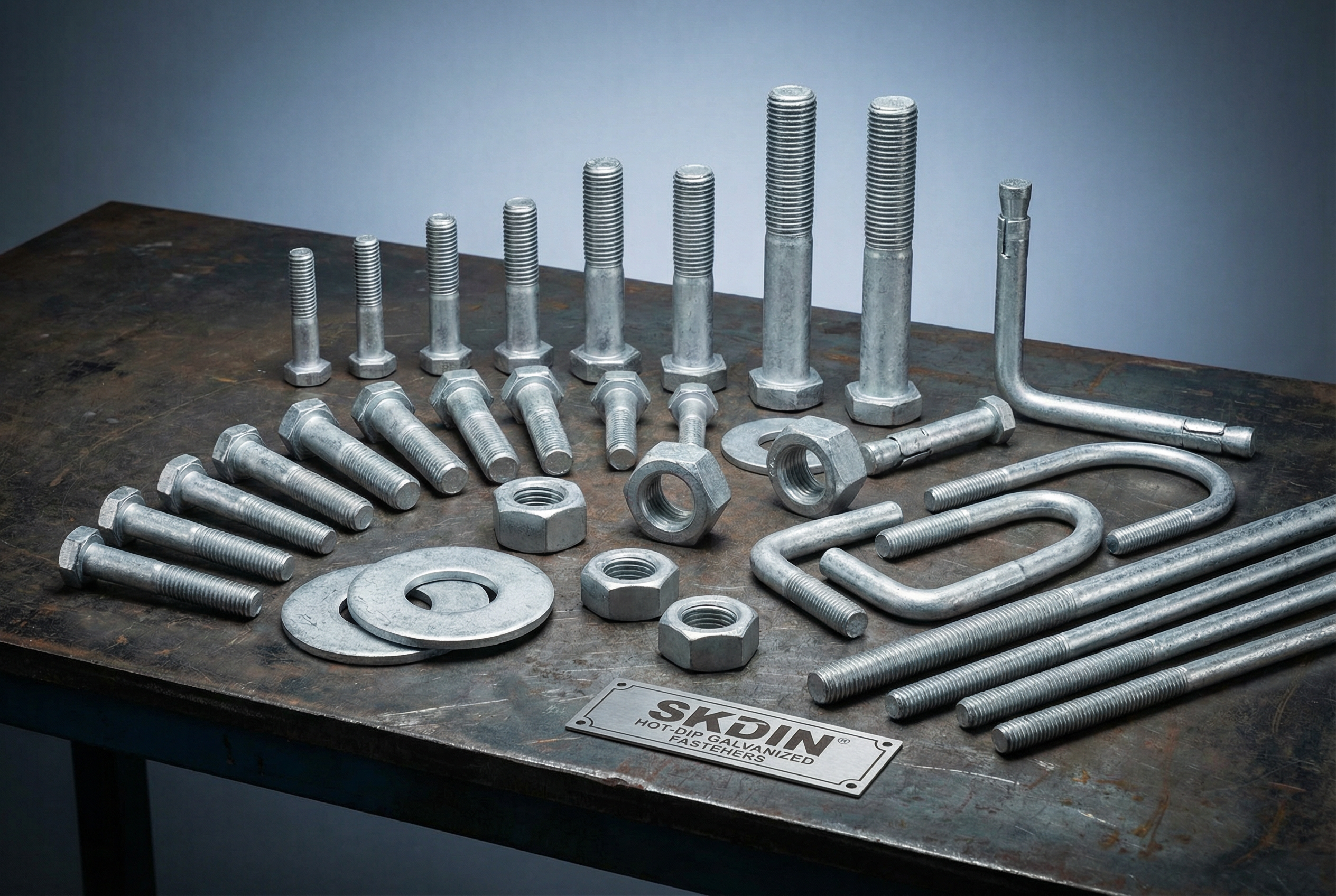
At SKDIN, we supply a complete range of certified Hot-Dip Galvanized fasteners, including structural bolts, hex nuts, washers, anchor bolts, and threaded rods. Our HDG fasteners strictly comply with ISO 1461 and ASTM A153 standards, ensuring precise thread tolerances and guaranteed coating thickness.
Explore the SKDIN HDG Fastener Catalog to secure your next outdoor project, or Contact Our Engineering Team for technical support on corrosion protection.