
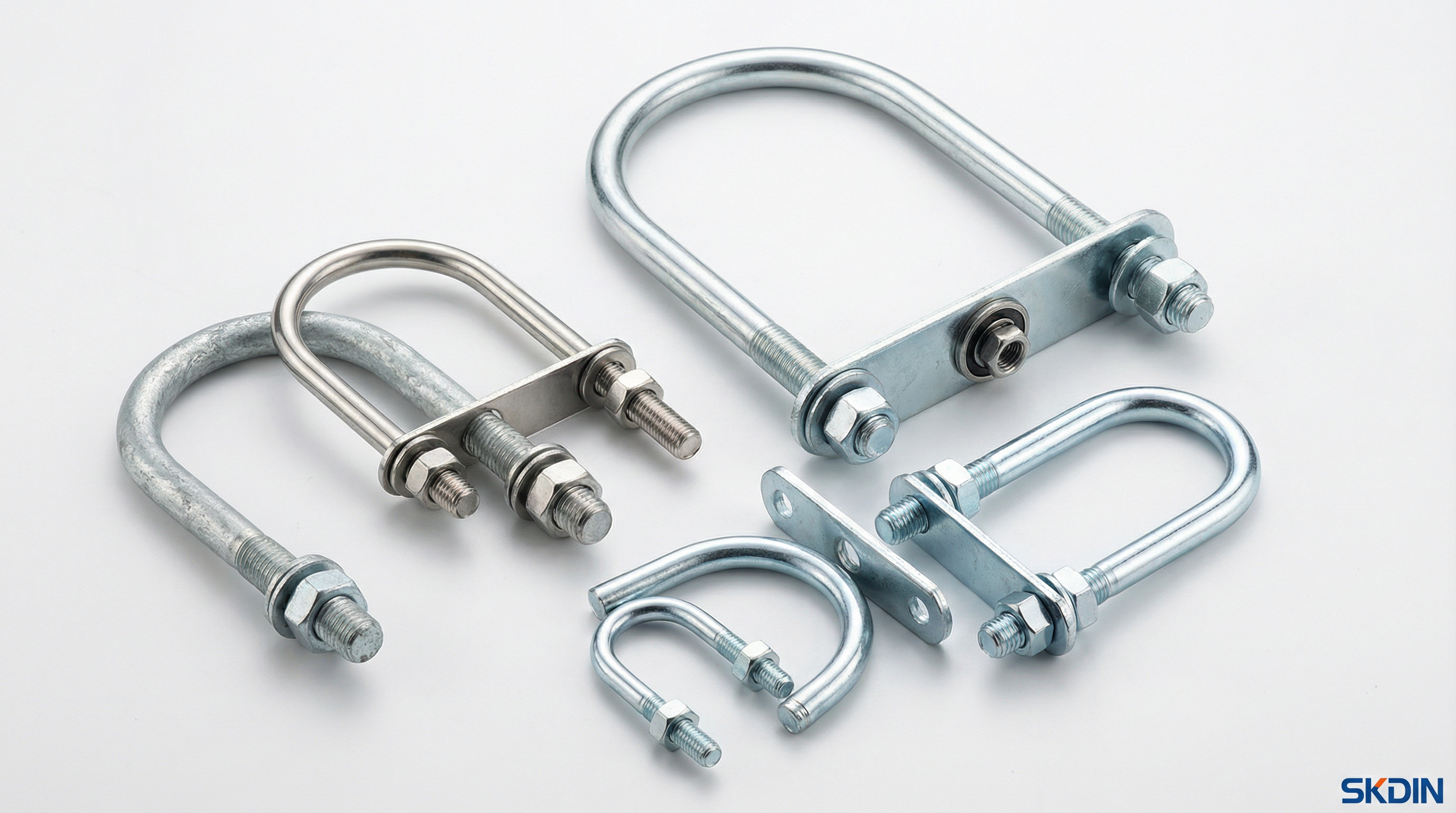
The Complete Guide to U-Bolts: Types, Sizing, Materials, and Installation
 Mia
Mia
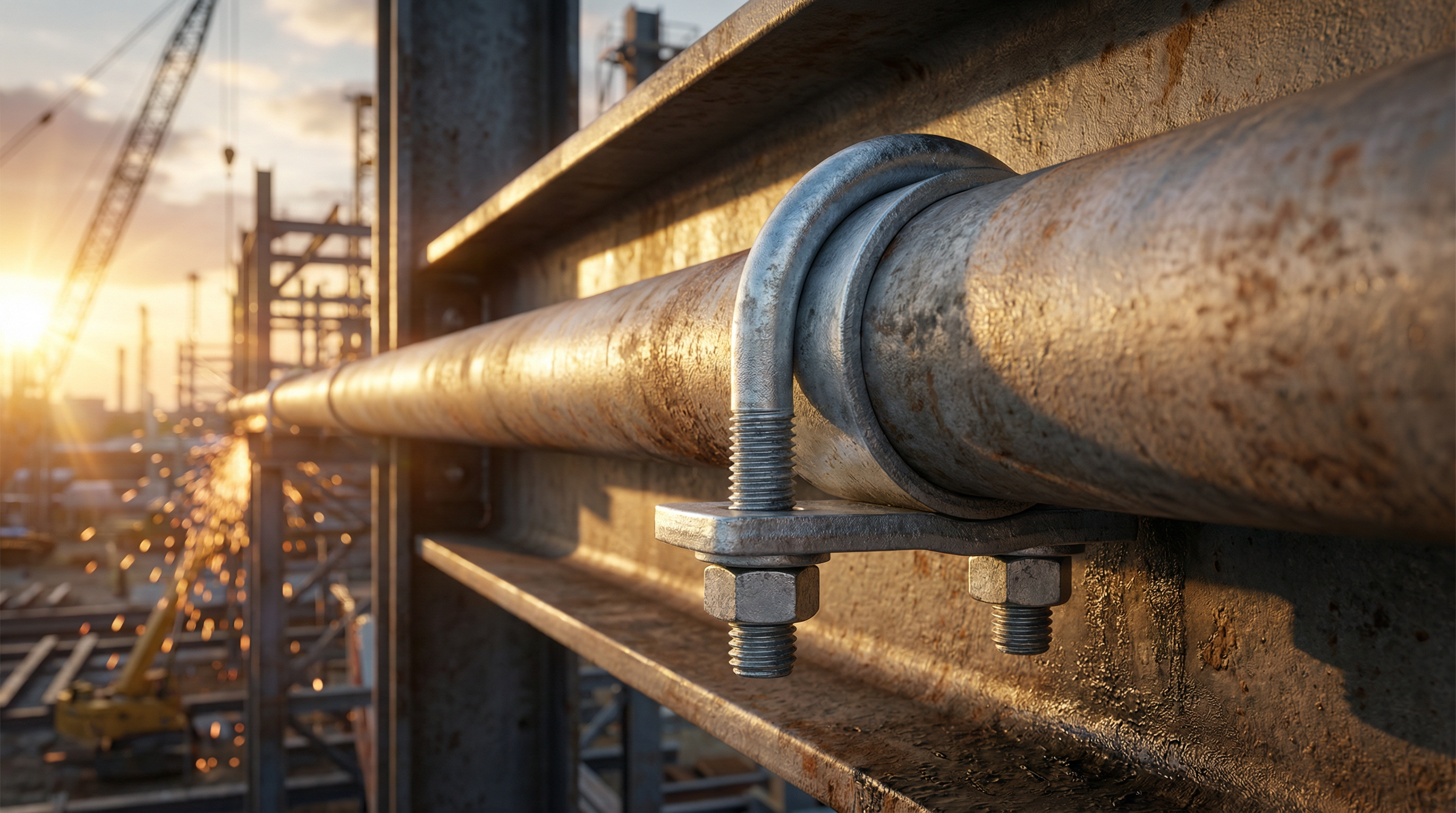
U-bolts are among the most deceptively simple fasteners in engineering — yet wrong selection causes catastrophic failures in pipelines, truck axles, and structural applications.
1. What Is a U-Bolt?
A U-bolt is a fastener bent into a U-shape with threaded legs on both ends. A bearing plate (also called a saddle or bridge) sits across the open end, and two nuts clamp everything together. The result is a simple, strong, and reliable clamp that can secure round or square objects — pipes, tubes, axles, and structural members — to a flat surface.
They look basic. They are not. The wrong U-bolt in a pipeline support can cause a catastrophic failure. The wrong U-bolt on a truck leaf spring can cause axle separation at highway speed. This guide gives you everything you need to get the selection right.
2. U-Bolt Anatomy: Every Part Explained
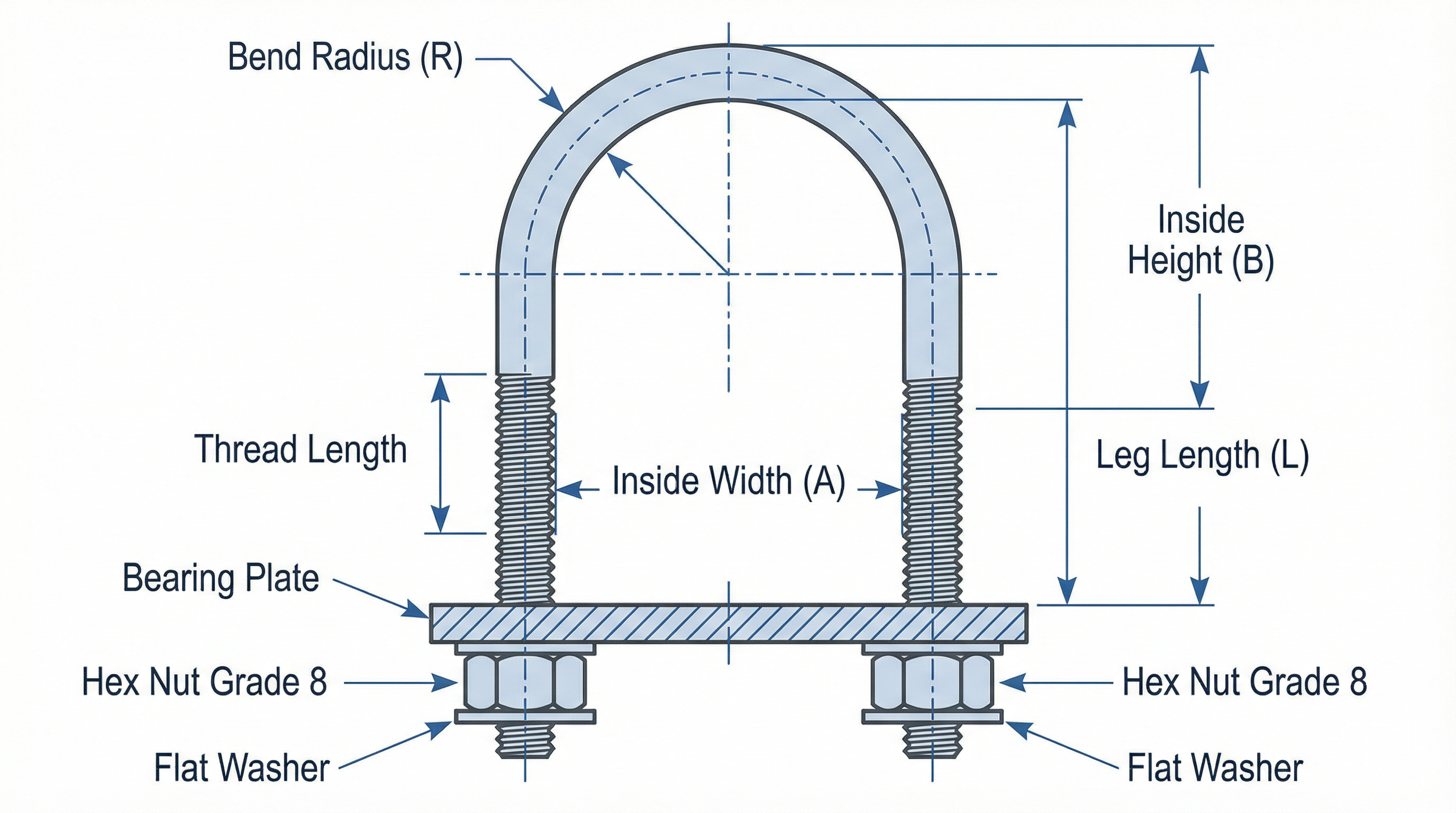
Every component of a U-bolt assembly has a specific engineering function.
| Component | Function |
| Bend (Saddle) | Wraps around the pipe or axle; the radius must match the pipe OD |
| Legs | The two threaded rods that pass through the bearing plate |
| Thread | Metric (M8–M30) or Imperial (3/8"–1-1/4"); must match the nut |
| Bearing Plate | Distributes the clamping load evenly across the pipe/surface |
| Nuts | Two nuts (one per leg); must be tightened evenly to equal torque |
| Washers | Optional; used under nuts on soft surfaces to prevent pull-through |
The bend radius is the most critical dimension. If the U-bolt bend radius is larger than the pipe OD, the clamp will rock and never achieve proper clamping force, no matter how tight you torque the nuts.
3. Types of U-Bolts
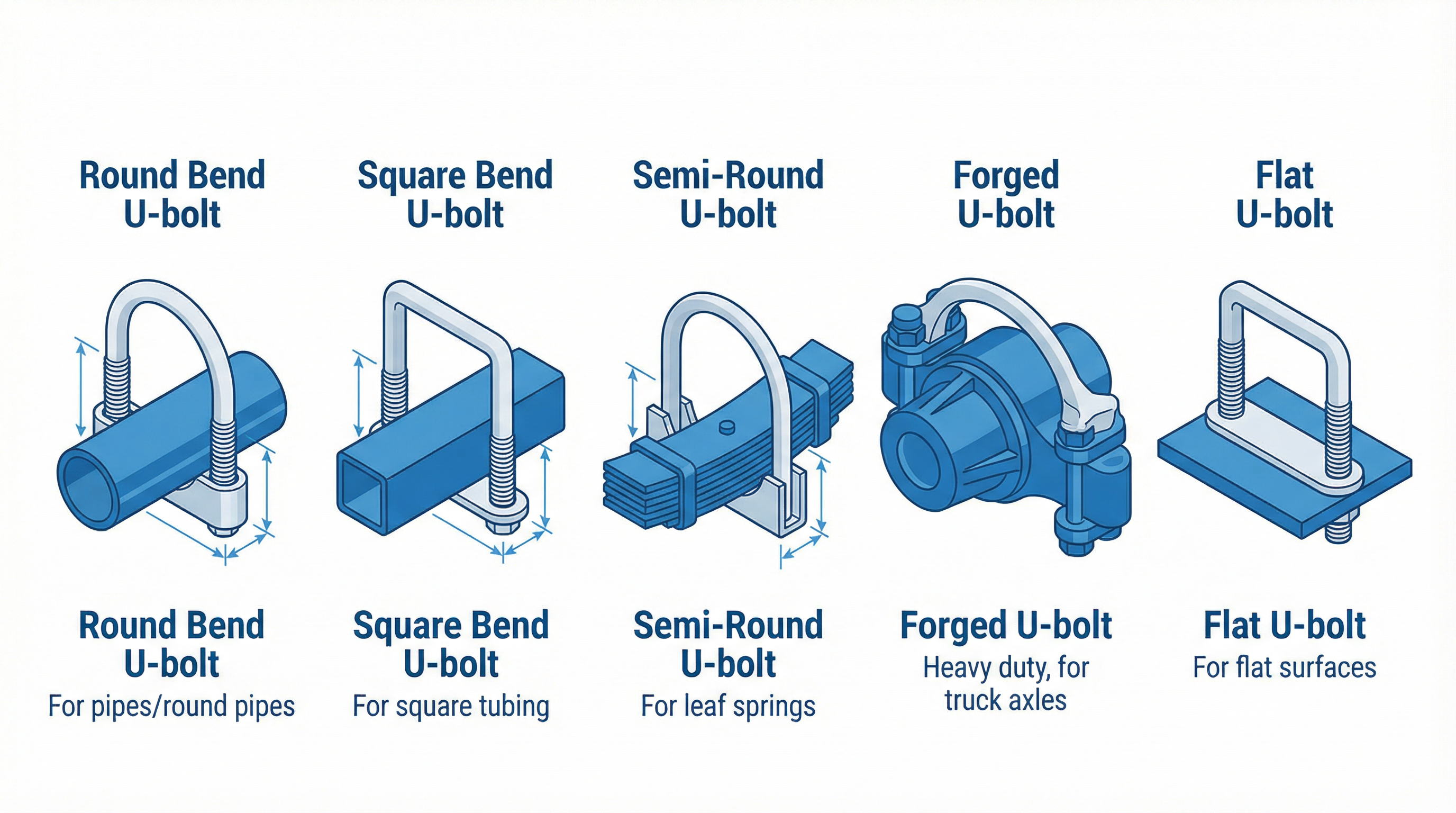
Not all U-bolts are round. The bend shape must match your application.
Round Bend U-Bolt
The most common type. The bend is a true semicircle. Used for round pipes, tubes, and cylindrical objects. The inside radius of the bend must equal the outside radius of the pipe.
Square Bend U-Bolt
The bend has 90° corners, forming a rectangular shape. Used for square tubing, rectangular structural sections, and wooden beams. Common in agricultural equipment and trailer construction.
Forged U-Bolt
Manufactured by hot forging rather than bending rod stock. The result is a U-bolt with 30–50% higher tensile strength and better fatigue resistance. Required for heavy-duty applications such as truck leaf springs and heavy pipeline supports.
Long Tangent U-Bolt
Has extended straight sections before the bend begins. Used when the pipe must be held at a distance from the mounting surface — for example, when pipe insulation is present.
Hook Bolt (J-Bolt variant)
Only one threaded leg. Used when access is limited to one side of the mounting surface. Common in roofing and purlins.
4. U-Bolt Materials and Finishes
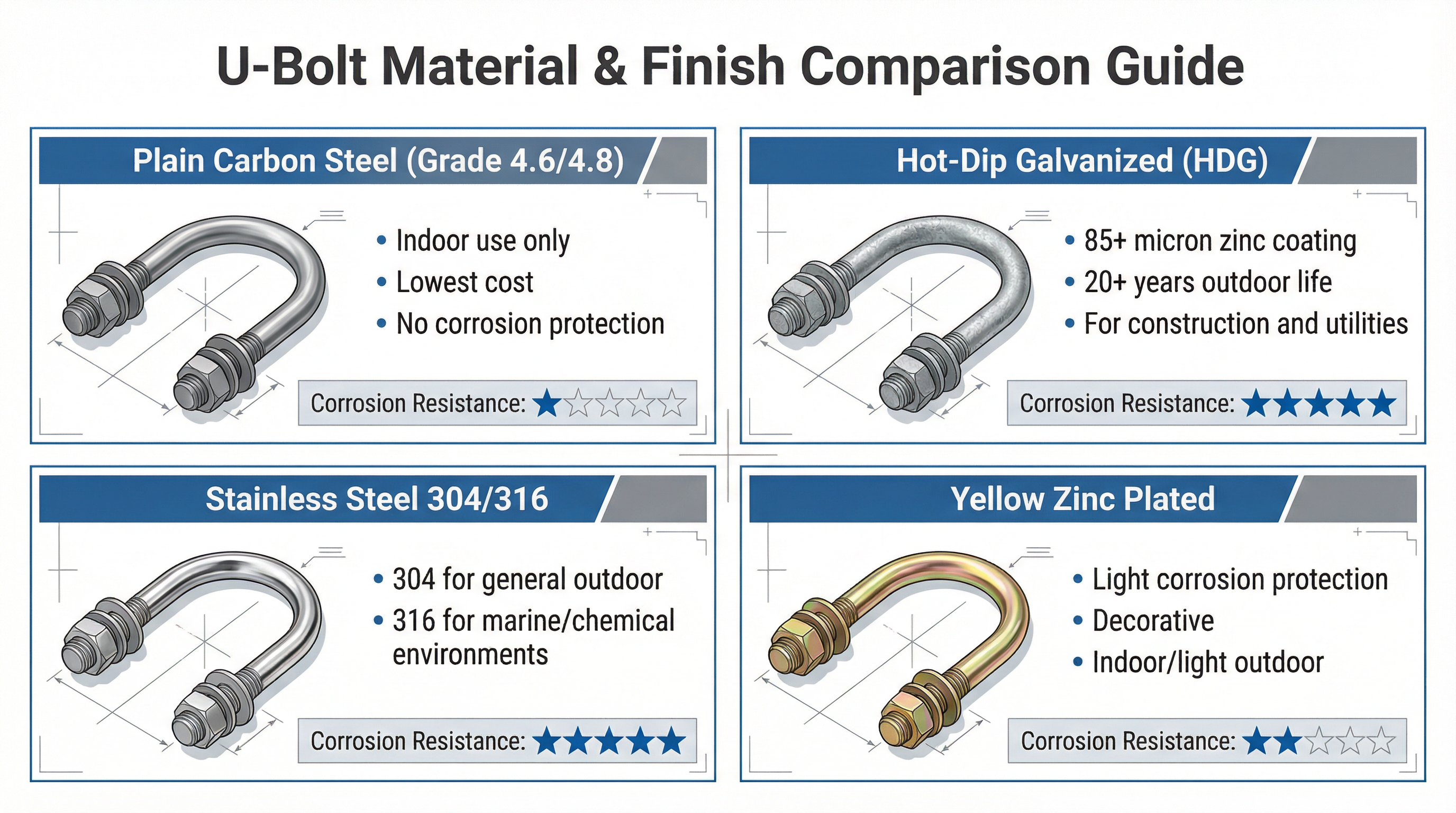
Material selection determines the service life of your U-bolt installation.
The material choice is driven by two factors: mechanical strength requirements and corrosion environment.
Plain Carbon Steel (Grade 4.6 / 4.8)
- Tensile strength: 400–500 MPa
- Corrosion protection: None
- Use case: Indoor, dry environments only
- Cost: Lowest
Plain carbon steel U-bolts should never be used outdoors without additional coating. Rust formation begins within weeks in humid environments, and the resulting corrosion can reduce the cross-sectional area of the threaded legs, leading to unexpected failure.
Hot-Dip Galvanized (HDG)
- Zinc coating thickness: 45–85+ microns (per ISO 1461)
- Salt spray resistance: 1,000–2,000+ hours
- Service life outdoors: 20–50 years depending on environment
- Use case: Construction, utilities, highway infrastructure, solar mounting
Hot-dip galvanizing is the gold standard for outdoor carbon steel U-bolts. The zinc coating is metallurgically bonded to the steel, not just surface-applied. Important: HDG U-bolts require oversized nuts (2H heavy hex) because the thick zinc coating adds 45–85 microns per surface, which reduces the thread fit. Always specify HDG nuts with HDG U-bolts.
Stainless Steel 304 / 316
- 304: Excellent general corrosion resistance; suitable for most outdoor environments
- 316: Contains 2% molybdenum; required for marine, coastal, and chemical environments
- Tensile strength: 500–700 MPa (depending on grade)
- Cost: 3–5× higher than carbon steel
For any application within 1 km of the ocean, or in contact with chlorides, chemicals, or food-grade environments, 316 stainless is the minimum specification.
Electro-Zinc Plated (Yellow Zinc / White Zinc)
- Zinc coating thickness: 5–12 microns
- Salt spray resistance: 96–200 hours
- Use case: Light indoor/outdoor, decorative applications
- Note: Not suitable for structural outdoor use
The thin zinc layer on electro-plated U-bolts provides only minimal corrosion protection. Do not use in outdoor structural applications.
5. How to Size a U-Bolt Correctly
Getting the size right requires four measurements:
Step 1 — Inside Diameter (ID) of the Bend
Measure the outside diameter (OD) of the pipe or tube you are clamping. The U-bolt inside diameter must equal the pipe OD. For example, a 2" nominal pipe (OD = 60.3 mm) requires a U-bolt with a 60 mm inside bend diameter.
> Common mistake: Engineers use nominal pipe size (NPS) instead of actual OD. A 2" NPS pipe has an OD of 60.3 mm, not 50.8 mm. Always use actual OD.
Step 2 — Thread Diameter
Select based on the load. For light pipe supports (< 500 kg), M10–M12 is typically sufficient. For heavy pipeline supports or structural applications (> 2,000 kg), M16–M24 is appropriate. Consult the manufacturer's load tables.
Step 3 — Leg Length
Leg length must be sufficient to pass through the bearing plate and allow full nut engagement (minimum 1× thread diameter of thread engagement). Add 10–15 mm for the bearing plate thickness plus nut height.
Step 4 — Leg Spacing (Inside Width)
For round pipes, the leg spacing equals the pipe OD plus twice the wall thickness of the U-bolt rod. For square tube, the leg spacing equals the tube width plus a small clearance.
| Pipe OD (mm) | Recommended U-Bolt ID (mm) | Min. Thread Size |
| 21.3 (DN15) | 21 | M8 |
| 26.9 (DN20) | 27 | M8 |
| 33.7 (DN25) | 34 | M10 |
| 42.4 (DN32) | 42 | M10 |
| 42.4 (DN40) | 48 | M10 |
| 60.3 (DN50) | 60 | M12 |
| 76.1 (DN65) | 76 | M12 |
| 88.9 (DN80) | 89 | M16 |
| 114.3 (DN100) | 114 | M16 |
| 168.3 (DN150) | 168 | M20 |
6. U-Bolt Applications by Industry
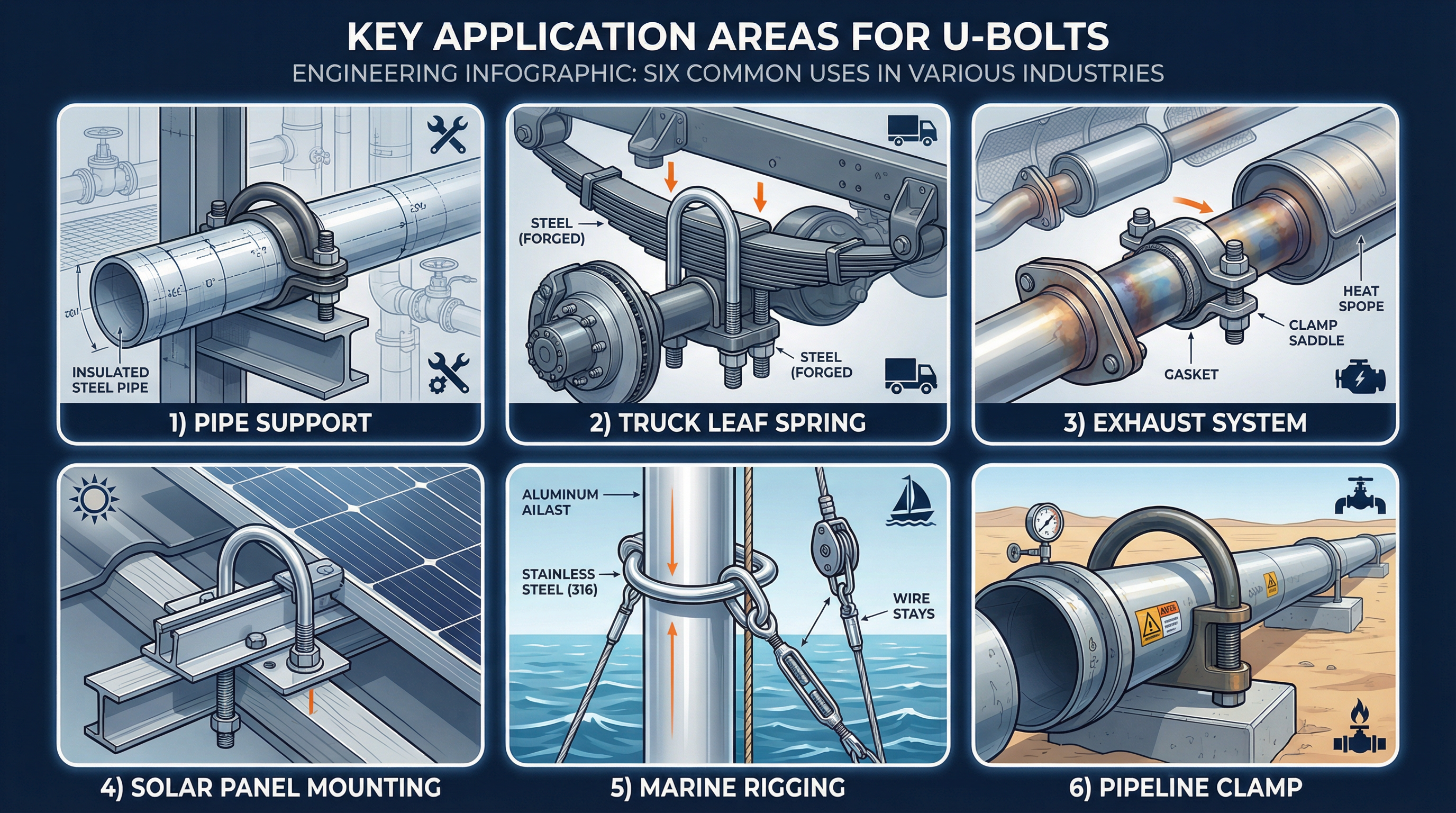
U-bolts appear in nearly every industry that involves pipe, tube, or structural clamping.
Pipe and Structural Support
The most common application. U-bolts secure horizontal and vertical pipes to structural beams, hangers, and wall brackets in industrial plants, water treatment facilities, and HVAC systems. Hot-dip galvanized U-bolts are the standard for outdoor pipe racks.
Truck and Trailer Leaf Springs
Forged U-bolts clamp the leaf spring pack to the axle. This is a safety-critical application — the U-bolt must resist both the static weight of the vehicle and the dynamic shock loads from road impacts. Forged Grade 8.8 or 10.9 U-bolts are required. Leaf spring U-bolts should be replaced every time the spring pack is disassembled.
Exhaust Systems
U-bolts (often called exhaust U-bolt clamps) secure exhaust pipes and mufflers. The high-temperature environment (up to 700°C for diesel exhaust) requires stainless steel 304 or 316 to prevent corrosion and seizure.
Solar Panel Mounting
U-bolts secure solar panel rails to roof purlins and structural steel. The outdoor environment and 25-year design life require hot-dip galvanized or stainless steel 316 U-bolts.
Marine Rigging
Stainless steel 316 U-bolts are used on boat masts, rigging, and deck hardware. The combination of saltwater, UV exposure, and dynamic loads demands the highest corrosion resistance.
Pipeline Infrastructure
Large-diameter U-bolts (M24–M36) secure major pipeline sections to concrete supports and structural steel. These are engineered to specific load calculations and often require third-party certification.
7. Step-by-Step Installation Guide
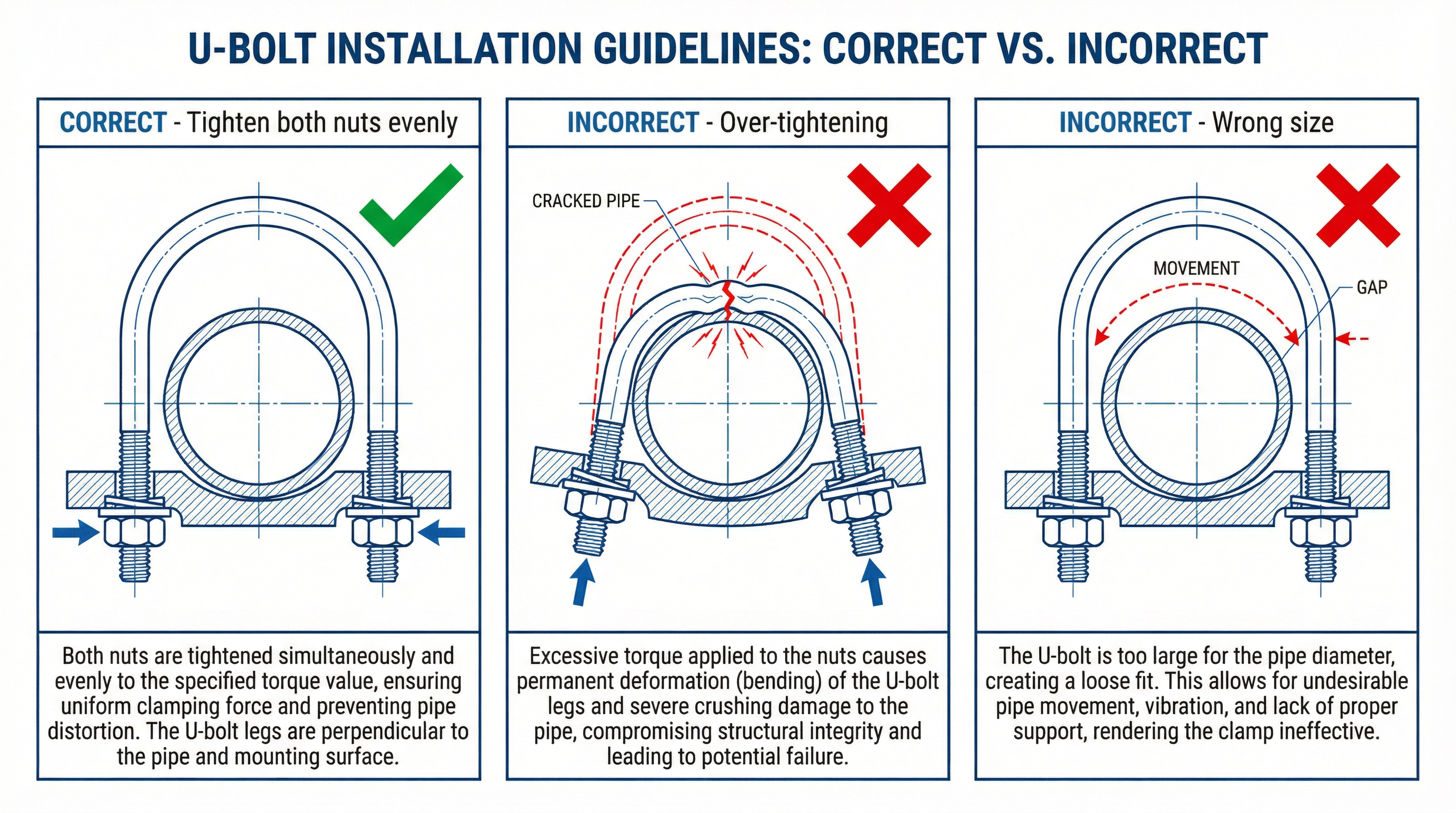
Correct installation is as important as correct selection.
Step 1 — Verify the fit before installing
Place the U-bolt around the pipe before threading any nuts. The bend should contact the pipe evenly around the full semicircle. If there is a gap at the top of the bend, the U-bolt ID is too large.
Step 2 — Position the bearing plate
Slide the bearing plate over both threaded legs. Ensure the plate is centered and flat against the mounting surface.
Step 3 — Thread the nuts by hand
Thread both nuts down until they are finger-tight. Both nuts must be at the same height before applying torque.
Step 4 — Tighten alternately and evenly
Using a torque wrench, tighten each nut in small increments, alternating between the two legs. Never fully tighten one leg before the other — this bends the U-bolt legs and creates uneven clamping force.
Step 5 — Apply final torque
Tighten to the specified torque value for the thread size. For M12 Grade 8.8, the typical torque is 70–80 Nm. For HDG U-bolts, reduce torque by 15–20% due to the increased friction from the zinc coating.
Step 6 — Re-torque after 24 hours
For new installations, re-check the torque after 24 hours. The zinc coating and bearing surfaces will have settled, and the clamping force may have reduced.
8. Common Mistakes and How to Avoid Them
Mistake 1: Using nominal pipe size instead of actual OD
A 2" NPS pipe has an OD of 60.3 mm, not 2" (50.8 mm). Always measure the actual pipe OD before ordering U-bolts.
Mistake 2: Mixing HDG U-bolts with standard nuts
Hot-dip galvanized U-bolts have a thick zinc coating that reduces thread fit. Using standard nuts will result in cross-threading or seized nuts. Always use oversized (2H heavy hex) HDG nuts with HDG U-bolts.
Mistake 3: Tightening one leg fully before the other
This bends the U-bolt legs, creates uneven clamping force, and can crack or deform the pipe. Always tighten alternately.
Mistake 4: Using electro-zinc plated U-bolts outdoors
The thin zinc coating (5–12 microns) on electro-plated U-bolts provides only 96–200 hours of salt spray resistance. For any outdoor application, use HDG or stainless steel.
Mistake 5: Not replacing leaf spring U-bolts after disassembly
Leaf spring U-bolts are pre-stressed during installation. Once removed, the pre-stress is lost and the bolt is permanently deformed. Always install new U-bolts when reassembling leaf spring packs.
9. U-Bolt Standards
| Standard | Region | Scope |
| DIN 3570 | Germany/Europe | Round bend U-bolts for pipe clamps |
| BS 4504 | UK | Pipe flanges and U-bolt clamps |
| ASTM F1554 | USA | Anchor bolts (including U-bolt variants) |
| ISO 1461 | International | Hot-dip galvanizing requirements |
| SAE J429 | USA | Mechanical properties for leaf spring U-bolts |
10. FAQ
Q: What is the difference between a U-bolt and a J-bolt?
A U-bolt has two threaded legs and requires a bearing plate and two nuts. A J-bolt (or hook bolt) has only one threaded leg and hooks around the object. U-bolts provide more clamping force and are used for structural applications; J-bolts are used for lighter-duty attachment where access is limited to one side.
Q: Can I reuse U-bolts after removing them?
For non-safety-critical pipe supports, U-bolts can be reused if they show no signs of corrosion, thread damage, or deformation. For safety-critical applications (leaf springs, structural), always replace with new U-bolts.
Q: Do I need a bearing plate with every U-bolt?
For pipe clamps and structural applications, yes — the bearing plate distributes the clamping load and prevents the pipe from being crushed. For some light-duty applications (e.g., securing cables), a bearing plate may not be required.
Q: What size U-bolt do I need for a 2-inch pipe?
A 2-inch nominal pipe (NPS 2) has an actual outside diameter of 60.3 mm. You need a U-bolt with an inside bend diameter of 60 mm. The thread size depends on the load — M12 is typical for standard pipe supports.
Q: How do I prevent U-bolt corrosion in outdoor applications?
Use hot-dip galvanized U-bolts (ISO 1461) for general outdoor use, or stainless steel 316 for marine and chemical environments. Avoid electro-zinc plated U-bolts outdoors — the thin coating provides insufficient protection.
Why Choose SKDIN U-Bolts?
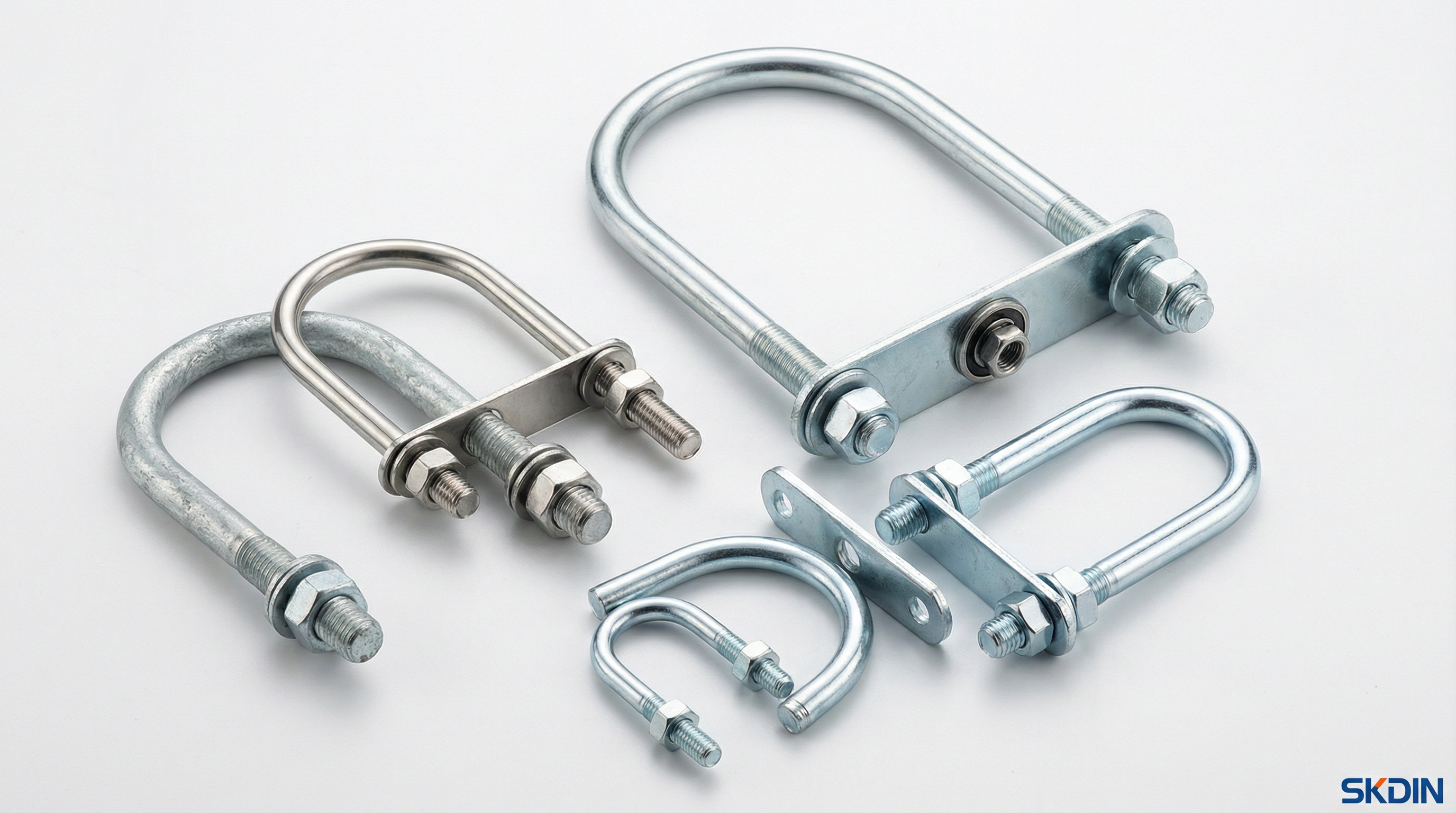
SKDIN supplies U-bolts in sizes from M8 to M30, in round bend, square bend, and forged configurations. All hot-dip galvanized U-bolts comply with ISO 1461 and are supplied with matching 2H heavy hex HDG nuts. Stainless steel U-bolts are available in 304 and 316 grades with full material certificates.