
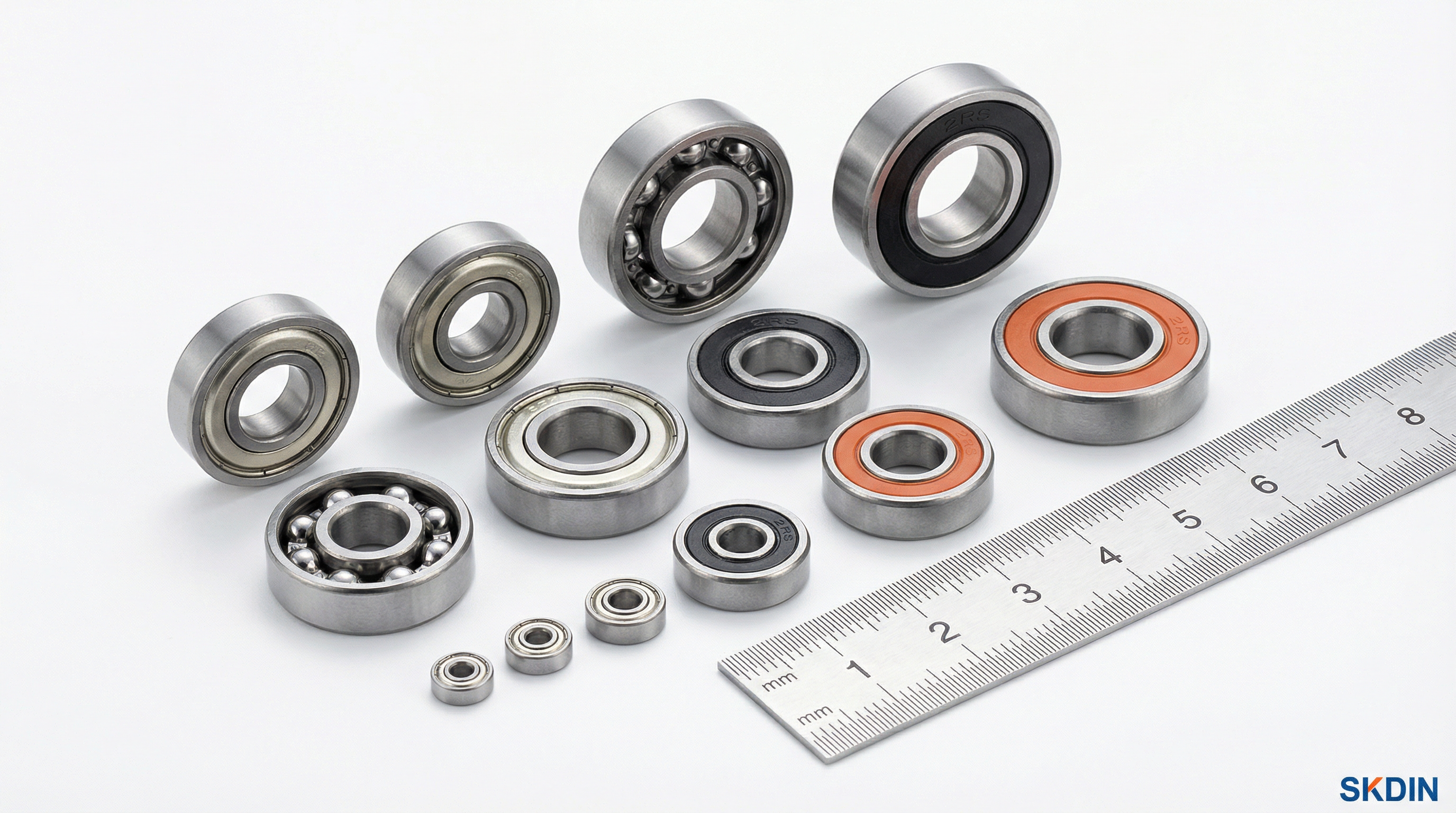
Miniature Ball Bearings: The Complete 2026 Engineering Guide
 Mia
Mia
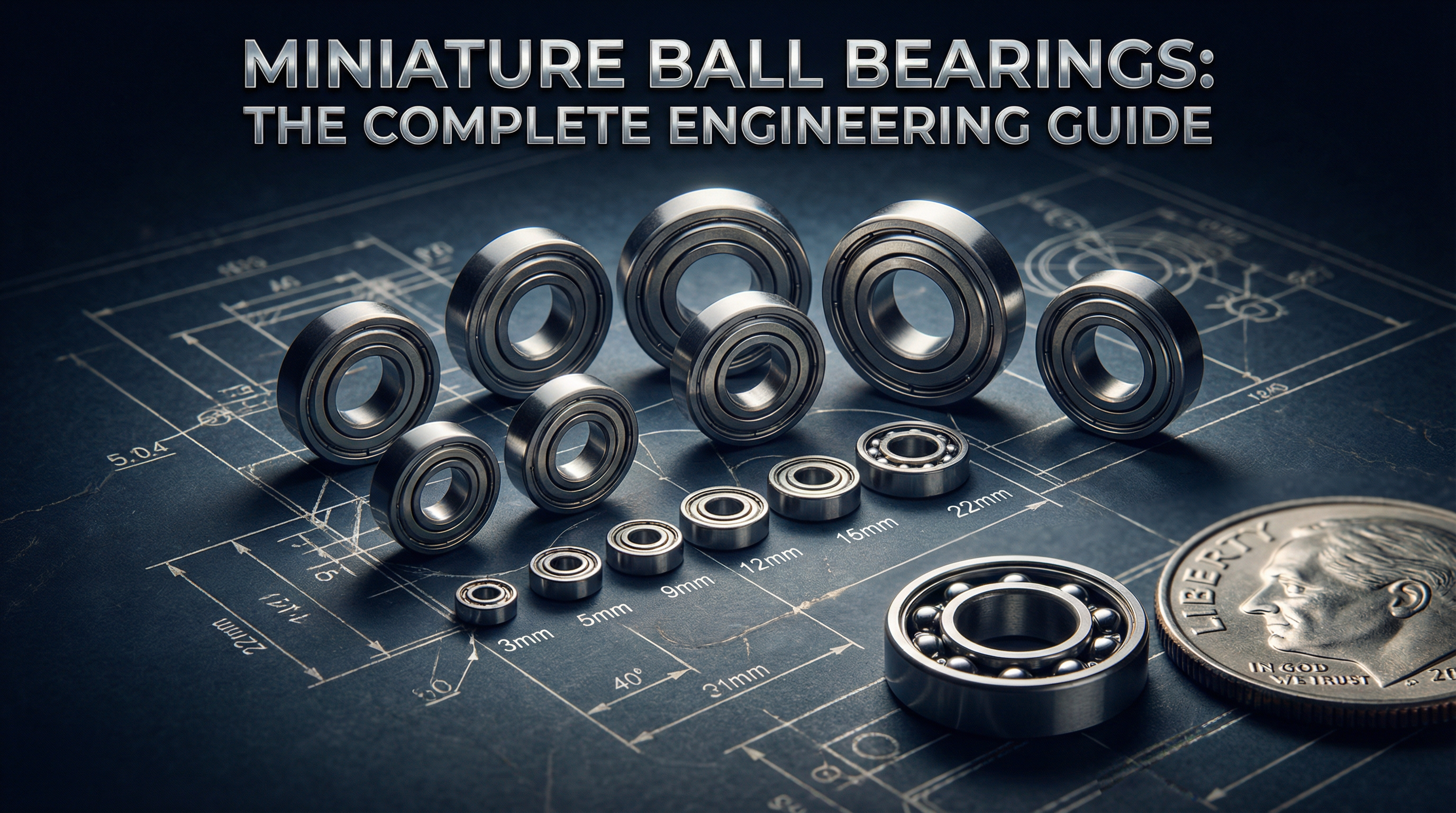
When engineering compact, high-speed, or ultra-precise mechanisms, standard bearings simply take up too much space. Miniature ball bearings solve this critical design challenge. Defined generally as bearings with an outer diameter (OD) of less than 22mm or a bore diameter under 10mm, these precision components are the invisible workhorses driving modern technology.
From the 400,000 RPM spindle of a dental drill to the precise articulation of a surgical robot, miniature bearings deliver massive performance in microscopic packages. However, selecting the right miniature bearing is significantly more complex than sizing a standard deep groove ball bearing. At these microscopic scales, minor variations in tolerance, lubrication, and material have outsized impacts on performance and lifespan.
This comprehensive engineering guide breaks down everything you need to know about miniature ball bearings in 2026. We will explore the different series (600, 6700, MR, R), analyze material and seal options, decode ABEC precision grades, and provide actionable selection criteria for your next compact design.
1. Anatomy of a Miniature Ball Bearing
Despite their tiny size, miniature ball bearings share the same fundamental architecture as their larger counterparts. They are essentially scaled-down deep groove ball bearings, optimized for low friction and high precision.
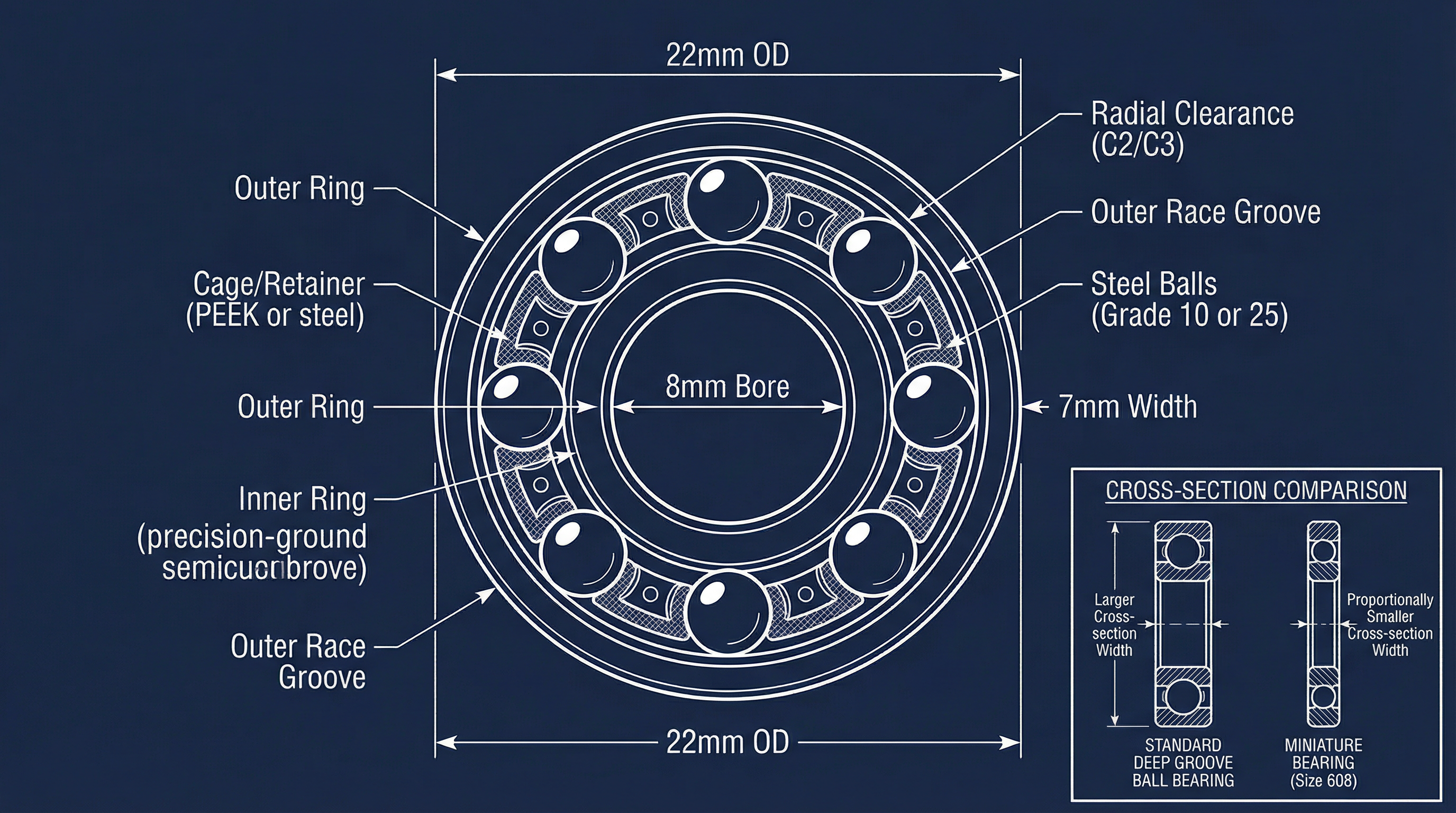
The core components include:
Outer Ring: The stationary or rotating outer raceway that houses the assembly.
Inner Ring: The raceway that mounts to the shaft. In miniature bearings, the raceway grooves are precision-ground to extremely tight tolerances to minimize vibration.
Steel Balls (Rolling Elements): The load-carrying elements. In high-precision miniature bearings, these balls are often Grade 10 or Grade 25, meaning they are perfectly spherical within millionths of an inch.
Cage (Retainer): Separates the balls to prevent them from rubbing against each other. In miniature bearings, cages are typically made of stamped steel or molded polymers like PEEK or Nylon for high-speed applications.
Shields or Seals: Optional covers that retain lubrication and keep out contaminants.
The critical difference lies in the cross-section width. As shown in the diagram above, miniature bearings maintain a proportionally smaller cross-section relative to their bore size compared to standard bearings, allowing them to fit into severely constrained radial spaces.
2. Decoding Miniature Bearing Series
The miniature bearing market is categorized into several distinct series, each designed for specific dimensional constraints and regional standards. Understanding these series is the first step in proper selection.
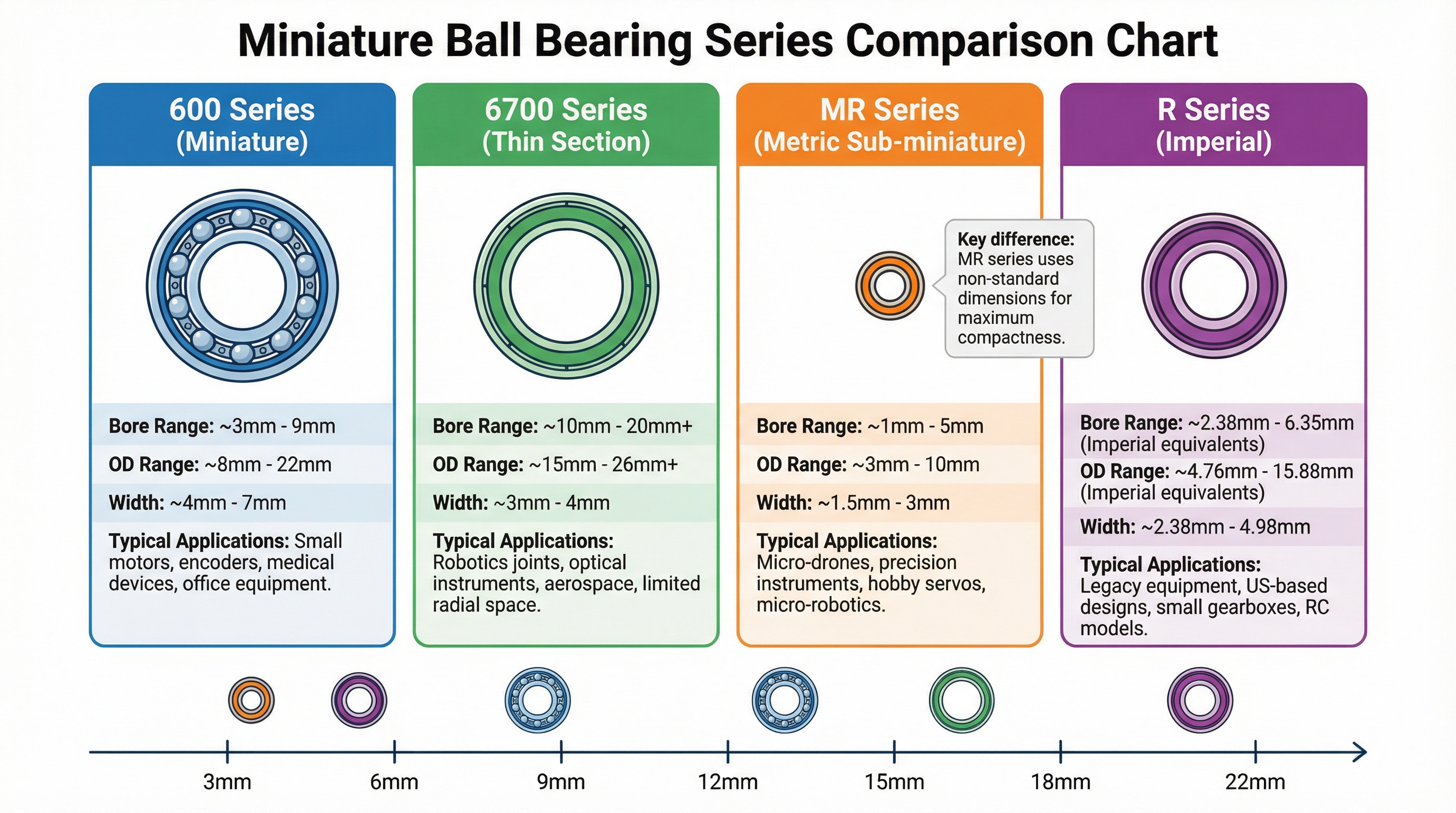
The 600 Series (Standard Miniature)
The 600 series (e.g., 608, 623, 624) represents the standard metric miniature bearing. They offer a balanced ratio of bore size to outer diameter, providing excellent radial load capacity and durability. The ubiquitous "608 bearing" (8mm bore, 22mm OD, 7mm width) is the most common size globally, famously used in skateboards, inline skates, and countless small electric motors.
The 6700, 6800, and 6900 Series (Thin Section Miniature)
When radial space is severely limited, engineers turn to the thin section series. These bearings feature a significantly reduced cross-sectional area.
6700 Series: Ultra-thin section. Extremely compact but with lower load capacity.
6800 Series: Extra-thin section. A popular balance of compactness and strength.
6900 Series: Thin section. Slightly more robust, often used in robotics and aerospace.
The MR Series (Metric Sub-Miniature)
The MR (Metric Radial) series is designed for maximum compactness. Unlike the 600 series, MR bearings use non-standard dimensional ratios to achieve the smallest possible outer diameter for a given bore size. For example, an MR105 bearing has a 5mm bore but only a 10mm OD, making it ideal for micro-drones, precision instruments, and hobby servos.
The R Series (Imperial/Inch)
The R series (e.g., R2, R3, R4) caters to legacy equipment and US-based designs that still utilize imperial measurements. An R4 bearing, for instance, has a 1/4" bore and a 5/8" OD. While metric bearings dominate new global designs, the R series remains essential for maintenance and specific aerospace applications.
| Series | Typical Bore Range | Typical OD Range | Key Characteristic | Common Applications |
| 600 Series | 3mm - 9mm | 8mm - 22mm | Balanced dimensions, high availability | Small motors, power tools, skateboards |
| 6700/6800/6900 | 10mm - 20mm+ | 15mm - 26mm+ | Reduced cross-section, space-saving | Robotics joints, optical instruments |
| MR Series | 1mm - 5mm | 3mm - 10mm | Ultra-compact, non-standard ratios | Micro-drones, precision servos |
| R Series | 1/8" - 3/8" | 3/8" - 7/8" | Imperial (inch) dimensions | Legacy US equipment, aerospace |
3. Seal Types and Material Selection
At microscopic scales, friction from a seal or a slight change in material properties can drastically alter performance. Selecting the right combination is critical.
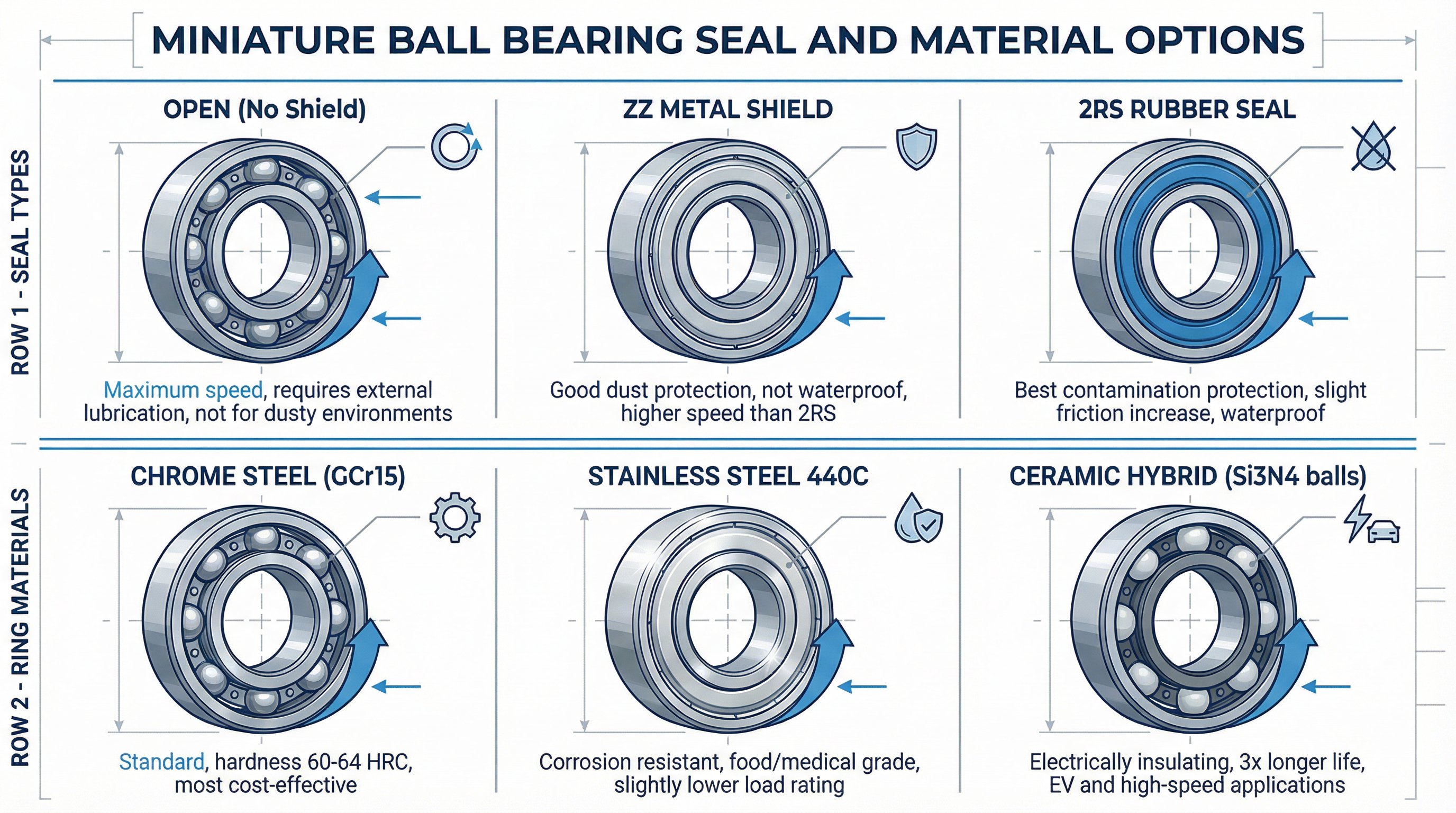
Seal and Shield Options
1. Open (No Shield/Seal): These bearings have exposed balls. They offer the absolute lowest starting and running torque, making them ideal for ultra-high-speed applications. However, they provide zero protection against dust or moisture and require a clean, externally lubricated environment (like inside a sealed gearbox).
2. ZZ (Metal Shields): Metal shields are pressed into the outer ring and do not make physical contact with the inner ring. This non-contact design provides good protection against larger dust particles while maintaining very low friction and high-speed capabilities. They are not waterproof.
3. 2RS (Rubber Seals): Rubber seals make physical contact with the inner ring. This provides the best protection against fine dust, moisture, and contamination. The tradeoff is a slight increase in friction (starting torque) and a lower maximum speed rating compared to ZZ or open types.
Ring and Ball Materials
1. Chrome Steel (GCr15 / 52100): The industry standard. Chrome steel offers excellent hardness (60-64 HRC), high load capacity, and low noise. It is the most cost-effective option for general-purpose applications where corrosion is not a primary concern.
2. Stainless Steel (440C): When moisture, mild chemicals, or frequent washdowns are present, 440C stainless steel is required. It is widely used in food processing equipment, medical devices, and marine applications. Note that 440C is slightly softer than chrome steel, resulting in a roughly 20% reduction in dynamic load capacity.
3. Ceramic Hybrid (Si3N4 Balls): Hybrid bearings use steel rings with Silicon Nitride (Si3N4) ceramic balls. Ceramic balls are 60% lighter, significantly harder, and smoother than steel. This allows for higher speeds, lower operating temperatures, and up to 3x longer lifespan. Furthermore, ceramic is electrically insulating, preventing electrical pitting in small EV motors and high-frequency spindles.
4. Understanding ABEC Precision Grades
The Annular Bearing Engineering Committee (ABEC) scale defines the manufacturing tolerances of a bearing. Higher ABEC numbers indicate tighter tolerances, meaning the bearing is closer to perfect geometric dimensions.
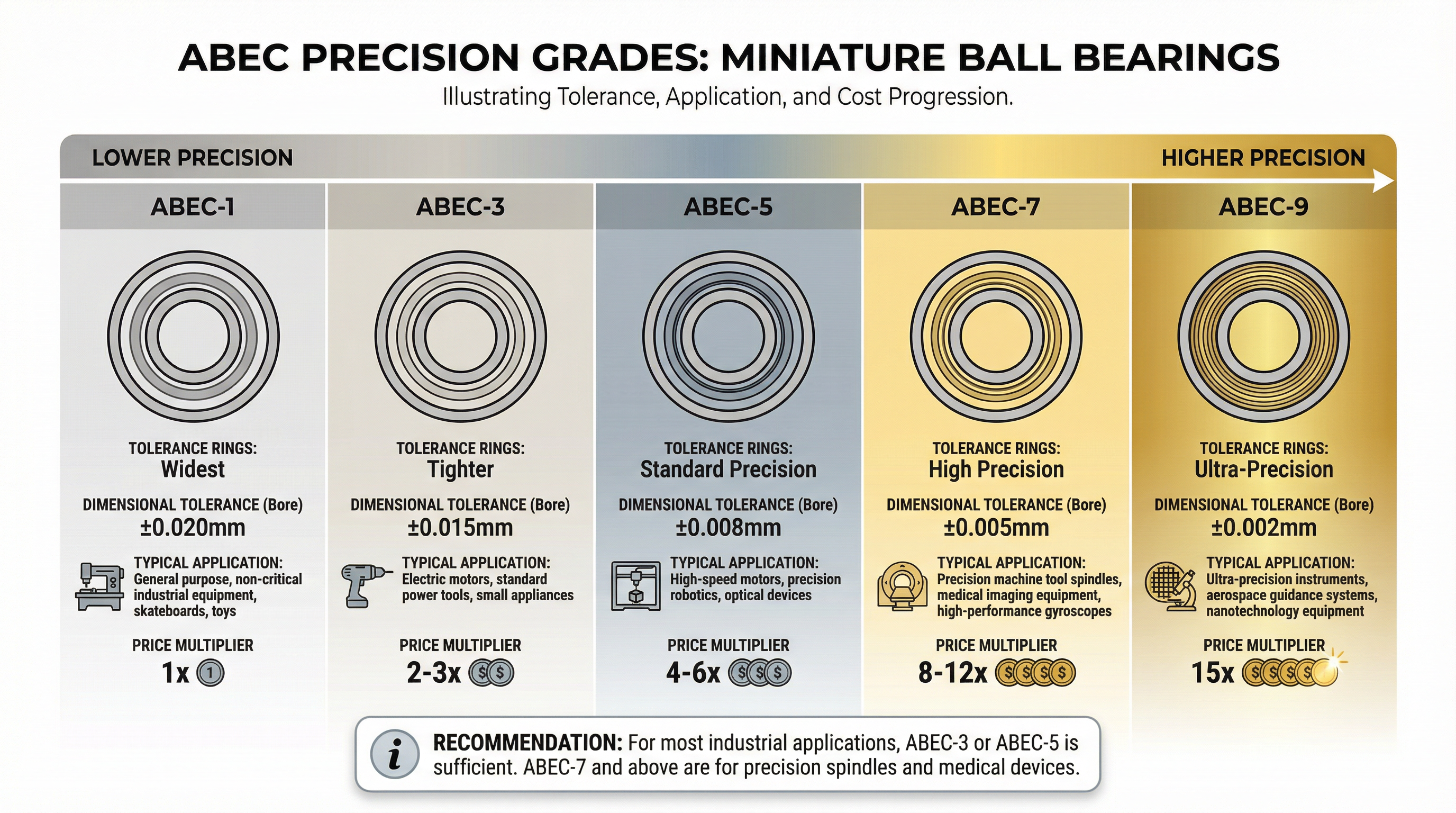
For miniature bearings, precision is paramount. A microscopic deviation in the raceway can cause significant vibration at 50,000 RPM.
ABEC-1 & ABEC-3: Standard precision. Suitable for most general-purpose applications, small electric motors, and consumer goods.
ABEC-5: High precision. Tighter runout tolerances ensure smoother operation. Ideal for high-speed motors, precision robotics, and optical devices.
ABEC-7: Ultra-high precision. Required for applications demanding extreme accuracy and minimal vibration, such as machine tool spindles, dental drills, and medical imaging equipment.
ABEC-9: Extreme precision. Used in aerospace guidance systems, nanotechnology equipment, and ultra-precision instruments.
Engineering Tip: Do not over-specify ABEC grades. An ABEC-7 bearing can cost 5 to 10 times more than an ABEC-3 bearing. If your application operates at low speeds and does not require extreme positional accuracy, an ABEC-3 bearing is usually sufficient. Furthermore, a high ABEC grade is useless if the shaft and housing are not machined to similarly tight tolerances.
5. Key Application Areas
Miniature ball bearings are the enablers of miniaturization across multiple high-tech industries.
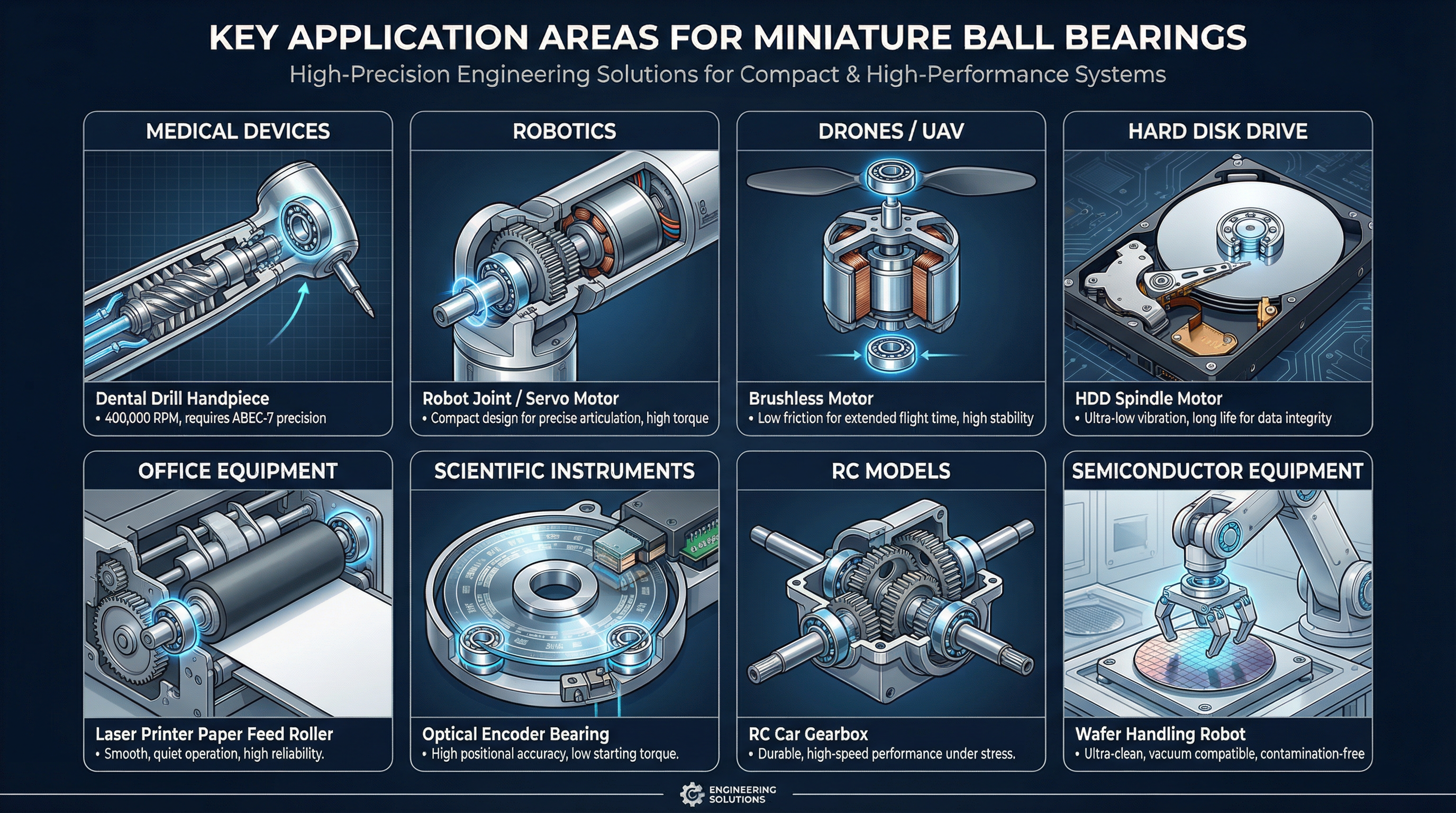
Medical Devices: Dental drill handpieces rely on specialized miniature bearings capable of withstanding sterilization autoclaves and operating at speeds exceeding 400,000 RPM. Surgical robots use thin-section bearings for precise, low-friction articulation.
Robotics and Automation: As robots become smaller and more agile, MR and thin-section series bearings are used in servo motors, encoders, and joint assemblies to maximize torque density while minimizing weight.
Drones and UAVs: Brushless motors in drones require lightweight, low-friction bearings to maximize battery life and flight time. Ceramic hybrid miniature bearings are increasingly popular here.
Semiconductor Manufacturing: Wafer handling robots operate in ultra-clean vacuum environments. They require specialized stainless steel or ceramic miniature bearings lubricated with vacuum-compatible fluorinated greases to prevent outgassing and contamination.
6. Installation and Handling Best Practices
Miniature bearings are delicate. Improper handling or installation is the leading cause of premature failure.
1. Clean Environment: Always handle miniature bearings in a clean, dust-free environment. A single particle of dust invisible to the naked eye can cause a miniature bearing to feel "rough" or fail prematurely.
2. Never Press Through the Balls: When press-fitting a bearing onto a shaft, apply force only to the inner ring. When pressing into a housing, apply force only to the outer ring. Pressing through the balls will instantly cause brinelling (micro-dents in the raceway), ruining the bearing.
3. Use Proper Tools: Use dedicated bearing installation presses or custom-machined sleeves that match the ring diameters perfectly. Never use a hammer directly on a miniature bearing.
4. Mind the Fit: Miniature bearings have very thin rings. An overly tight interference fit on the shaft or housing can compress the rings, eliminating the internal radial clearance and causing the bearing to bind and overheat.
Conclusion: Partnering with SKDIN for Precision
Selecting the right miniature ball bearing requires balancing size constraints, speed requirements, environmental factors, and budget. Whether you need a standard 608ZZ for a consumer product or a custom ABEC-7 ceramic hybrid for a medical device, precision matters.
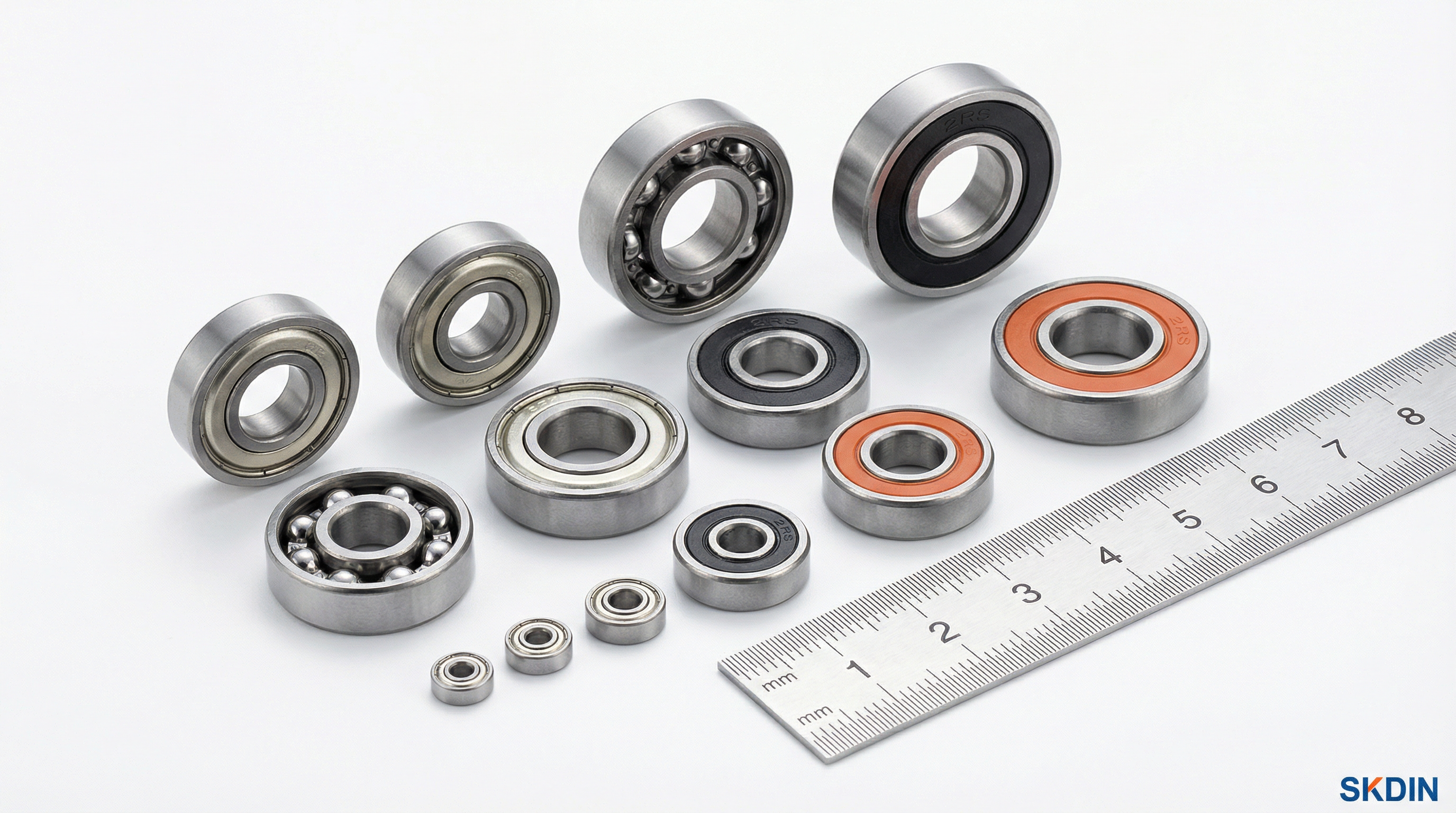
At SKDIN, we specialize in high-precision miniature ball bearings. Our extensive inventory covers the 600, 6700, MR, and R series in chrome steel, 440C stainless, and ceramic hybrid configurations. We offer ABEC-1 through ABEC-7 precision grades to meet the exact demands of your engineering project.
Are you designing a compact mechanism and need expert bearing advice? Contact the SKDIN engineering team today] to discuss your application, request CAD models, or get a quote on our precision miniature bearings.