
The Complete Guide to Thrust Bearings: Types, Selection, and Applications
 Mia
Mia
When designing rotating machinery, engineers must account for two primary types of forces: radial loads (forces acting perpendicular to the shaft) and axial loads (forces acting parallel to the shaft). While standard deep groove ball bearings can handle moderate radial loads, they quickly fail when subjected to heavy axial forces.
This is where thrust bearings come in.
Specifically designed to support massive axial loads, thrust bearings are the unsung heroes of automotive steering columns, ship propeller shafts, and heavy-duty industrial presses. In this comprehensive 2026 engineering guide, we will explore the anatomy of thrust bearings, compare the four main types, and provide a clear framework for selecting the right bearing for your application.
The Anatomy of a Thrust Bearing
Unlike radial bearings, which consist of an inner and outer ring, thrust bearings are typically composed of two "washers" and a rolling element assembly.
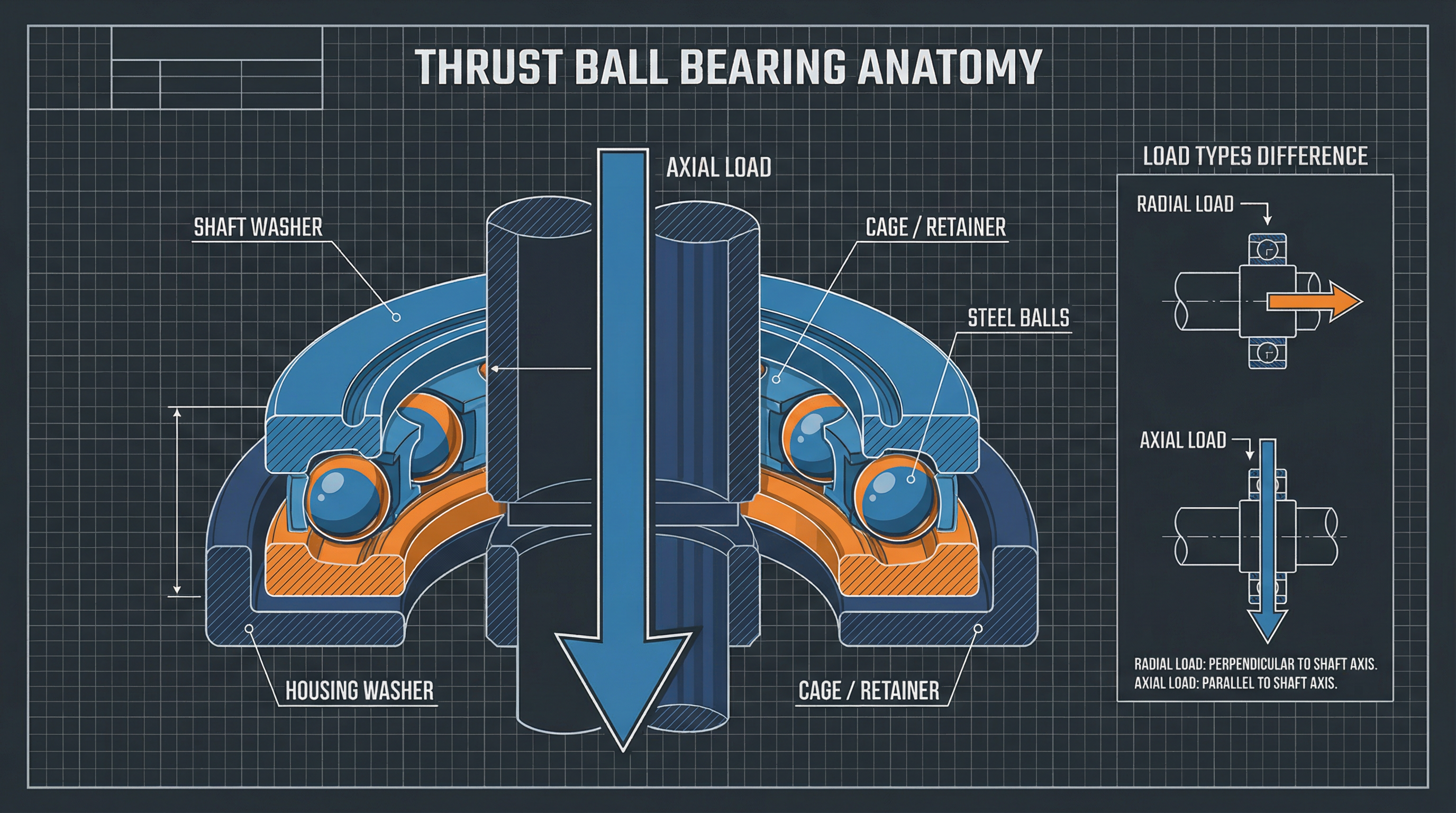
Shaft Washer (Inner Ring): This washer has a slightly smaller bore diameter and is designed to fit tightly onto the rotating shaft.
Housing Washer (Outer Ring): This washer has a slightly larger bore diameter and sits stationary within the machine housing.
Rolling Elements: Balls or rollers that carry the load and reduce friction.
Cage / Retainer: A metal or polymer structure that separates the rolling elements, preventing them from rubbing against each other and ensuring even load distribution.
Because the load is applied parallel to the shaft, the rolling elements are sandwiched between the two flat (or grooved) washers, allowing them to support immense downward or forward pressure.
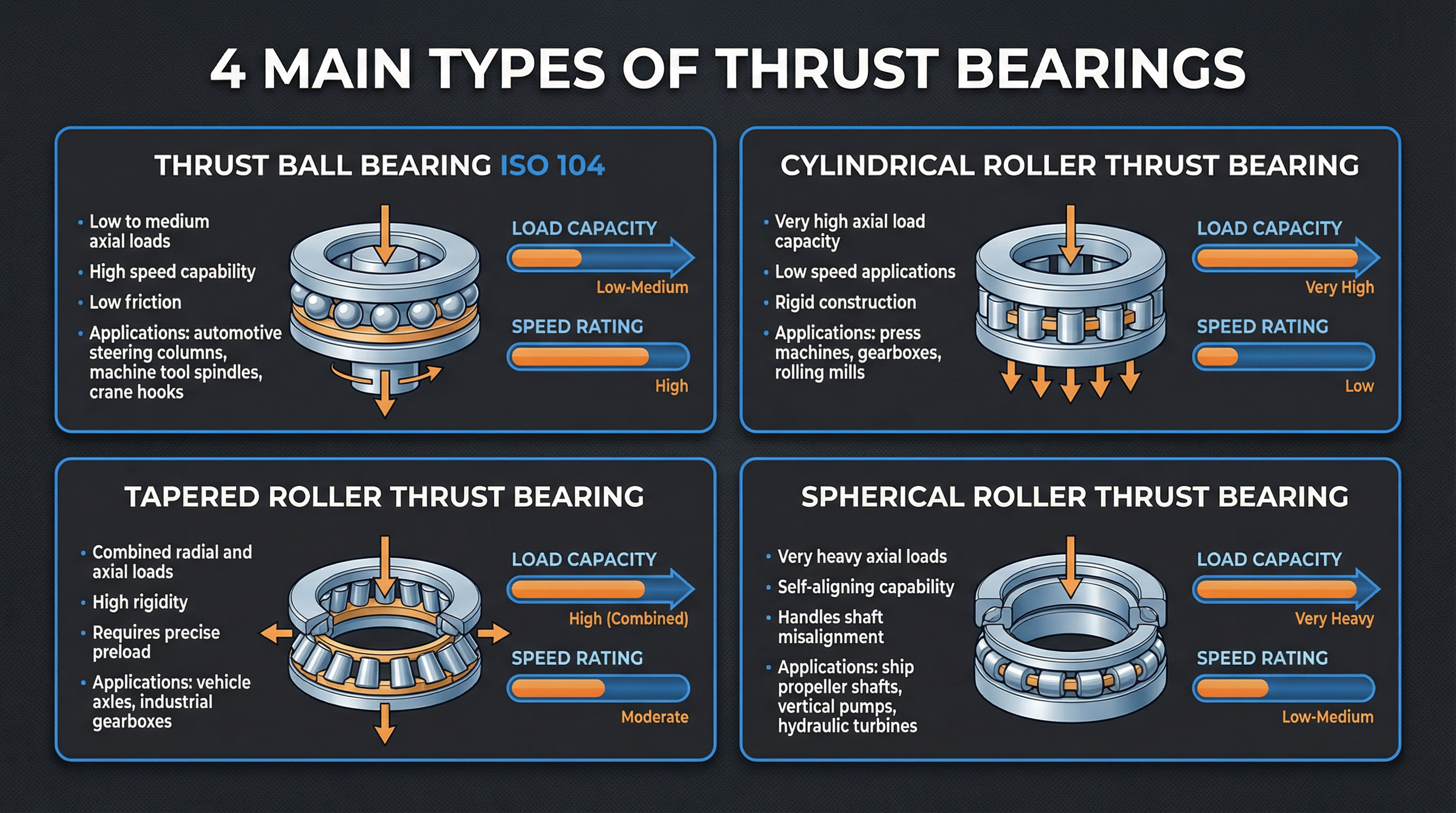
4 Main Types of Thrust Bearings
The type of rolling element used dictates the bearing's load capacity, speed rating, and ideal application.
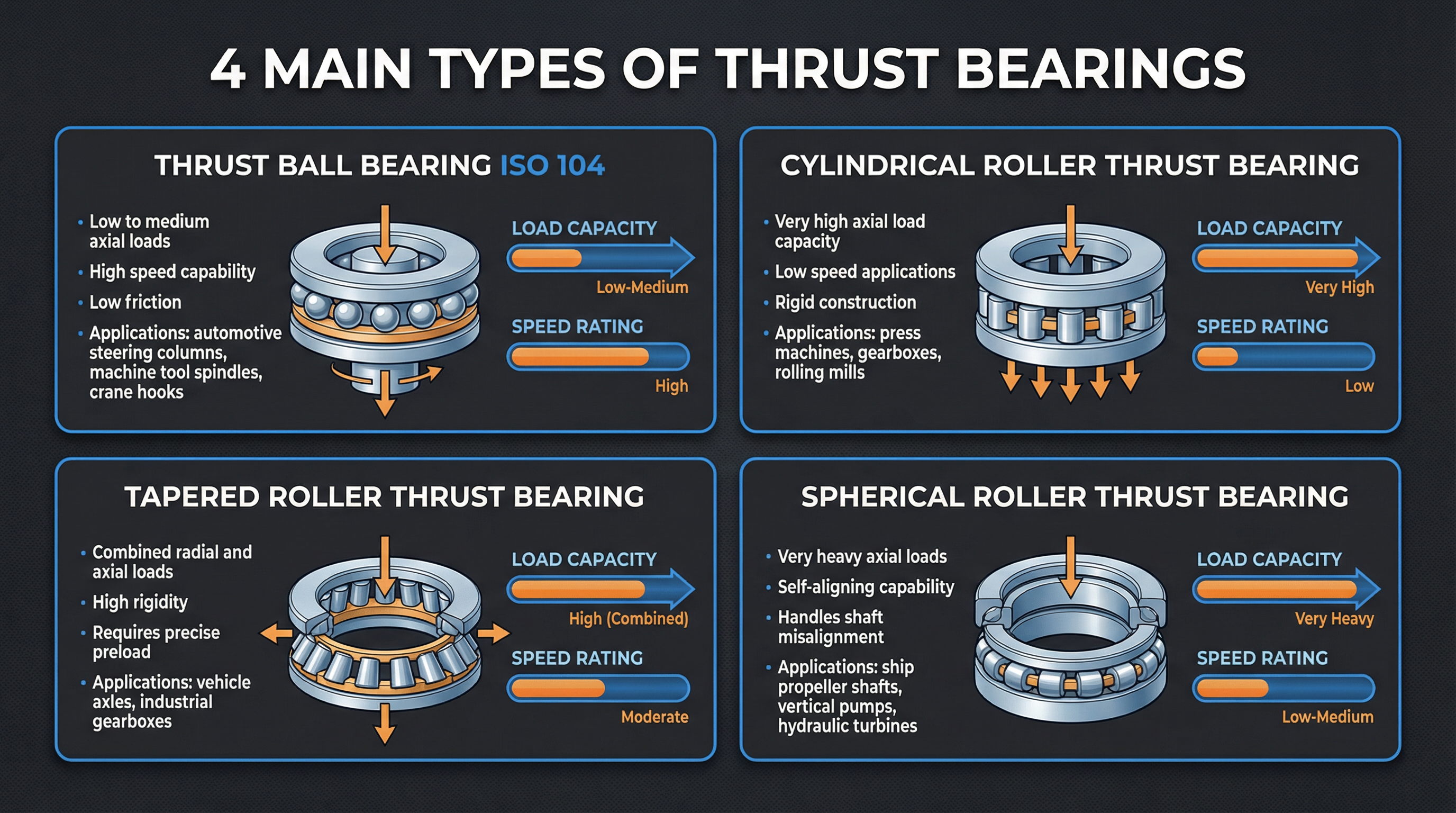
1. Thrust Ball Bearings (ISO 104)
These use spherical balls as the rolling elements. Because balls have a very small contact area (point contact), they generate minimal friction. Thrust ball bearings include single-row thrust ball bearings, double-row thrust ball bearings, miniature thrust ball bearings, and others.
Pros: Excellent for high-speed applications; very low friction.
Cons: Lower load capacity compared to roller types.
Applications: Automotive steering columns, machine tool spindles, crane hooks.
2. Cylindrical Roller Thrust Bearings
These use flat, cylindrical rollers. The line contact of the rollers provides a massive increase in load-carrying capacity.
Pros: Extremely high axial load capacity; very rigid construction.
Cons: Higher friction limits them to low-speed applications; sensitive to shaft misalignment.
Applications: Heavy press machines, industrial gearboxes, steel rolling mills.
3. Tapered Roller Thrust Bearings
These use conical rollers. The tapered design allows them to handle pure axial loads or a combination of heavy axial and moderate radial loads.
Pros: High rigidity; excellent for shock loads.
Cons: Requires precise preload adjustment during installation.
Applications: Heavy vehicle axles, crane swivels, extruder drives.
4. Spherical Roller Thrust Bearings
These use asymmetrical, barrel-shaped rollers operating on a spherical raceway in the housing washer. This unique geometry allows the bearing to self-align.
Pros: Very heavy axial load capacity; can accommodate shaft deflection and misalignment.
Cons: Higher friction than ball bearings; requires oil lubrication in most cases.
Applications: Ship propeller shafts, vertical water pumps, hydraulic turbines.
How to Select the Right Thrust Bearing
Choosing the correct thrust bearing requires balancing load, speed, and alignment requirements. Use this selection guide to narrow down your options:
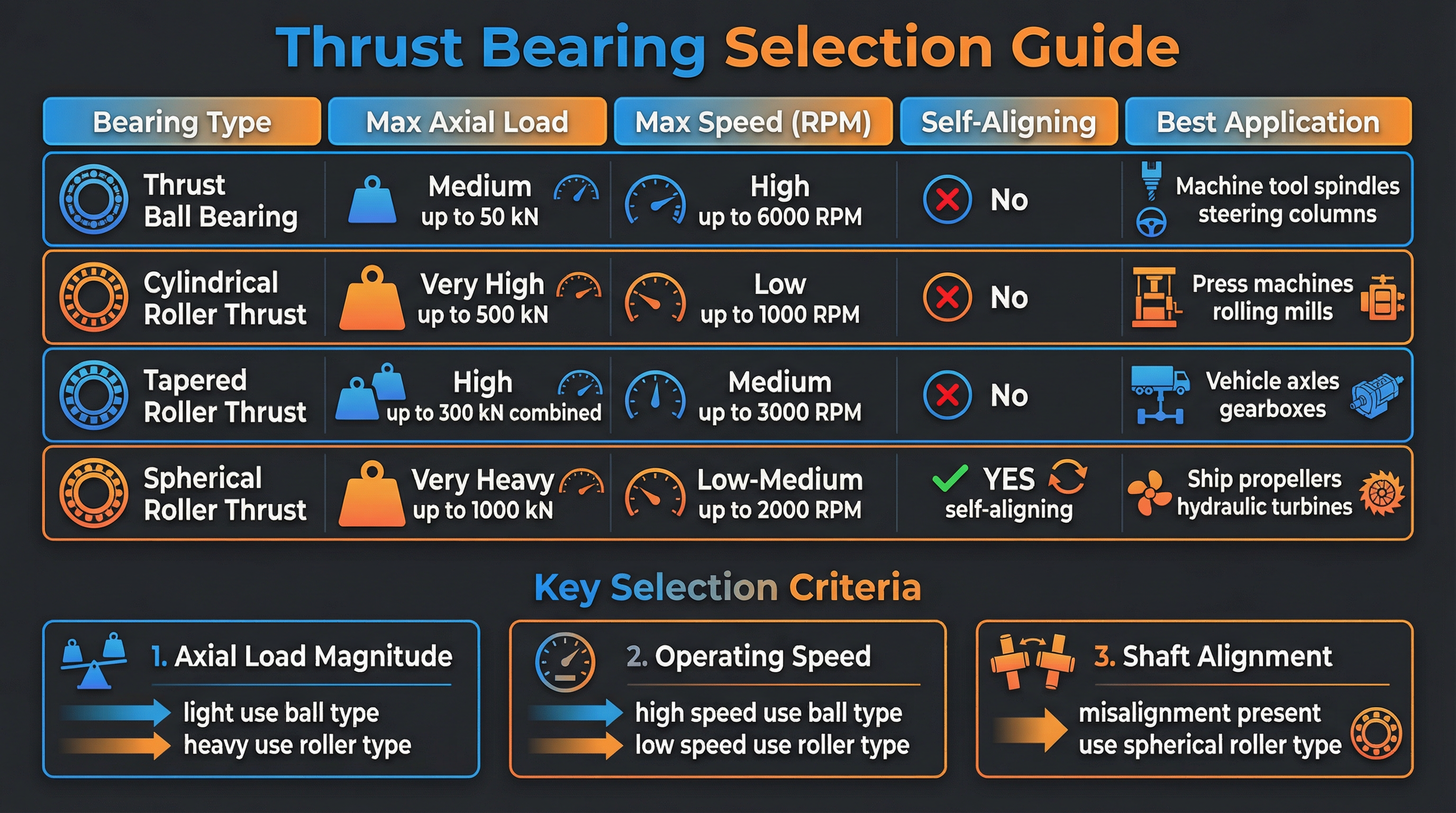
1. Determine the Load Magnitude: If the axial load is light to medium, a Thrust Ball Bearing is usually sufficient. If the load is massive (e.g., a heavy industrial press), you must upgrade to a Cylindrical or Spherical Roller Thrust Bearing.
2. Check the Operating Speed: Roller bearings generate more heat due to line contact. If your application runs at high RPMs (like a CNC spindle), a Thrust Ball Bearing is required to prevent overheating.
3. Assess Shaft Alignment: Long shafts or heavy loads can cause the shaft to bend slightly during operation. If misalignment is expected, a Spherical Roller Thrust Bearing is the only option, as rigid bearings will suffer from edge loading and premature failure.
Common Industrial Applications
Thrust bearings are critical components in any system where heavy weights must rotate smoothly.
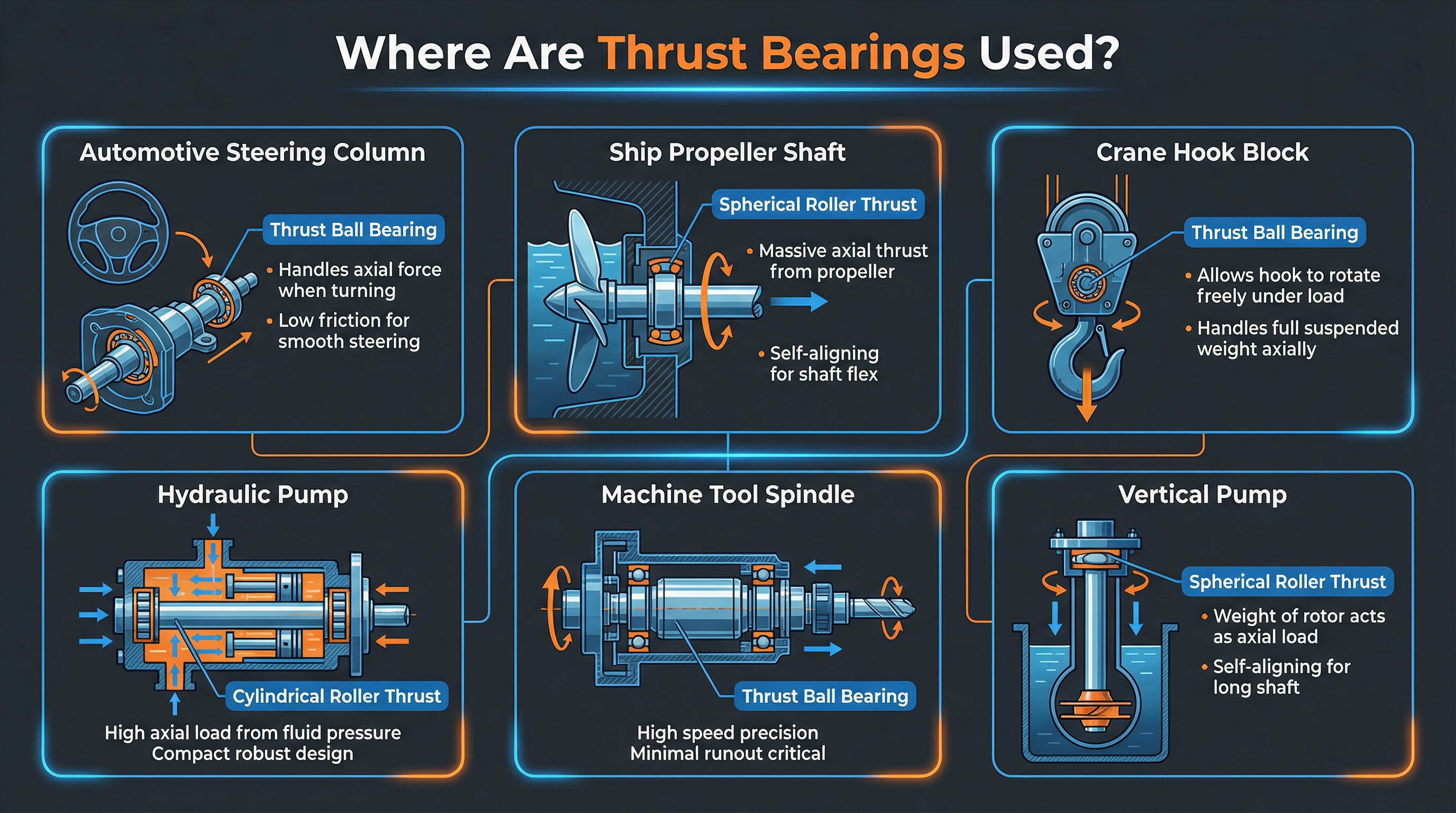
Automotive: Inside the steering column, thrust ball bearings allow the steering wheel to turn smoothly while supporting the axial weight of the column.
Marine: The massive forward thrust generated by a ship's propeller must be transferred to the hull without pushing the engine block forward. Spherical roller thrust bearings handle this immense force while accommodating hull flex.
Fluid Handling: In large vertical pumps, the entire weight of the rotor and impeller acts as a downward axial load, supported entirely by a heavy-duty thrust bearing at the top of the assembly.
SKDIN: Precision Thrust Bearings for Heavy Industry
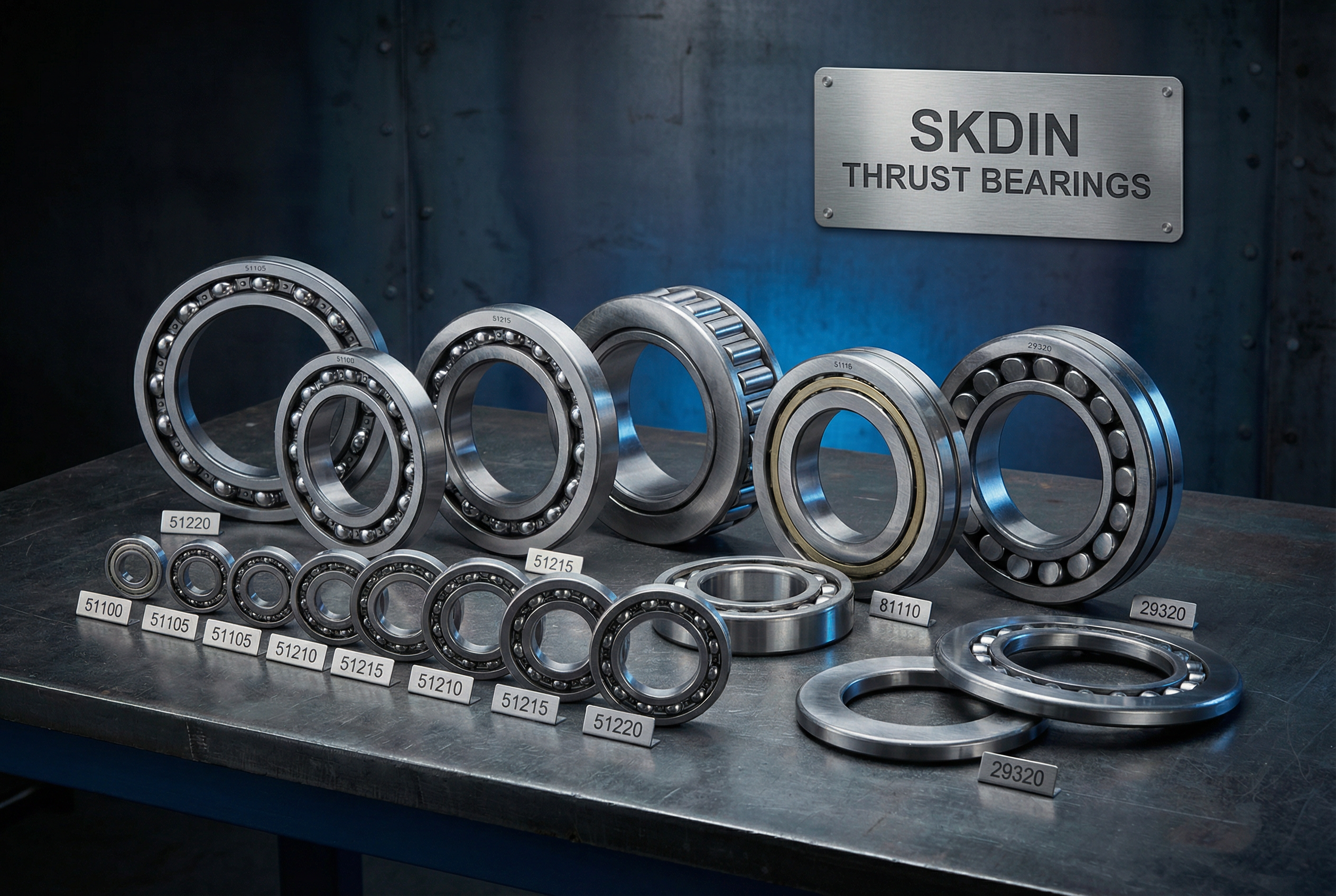
At SKDIN, we manufacture thrust bearings designed to handle the world's heaviest loads. From high-speed 51100 series thrust ball bearings to massive 29400 series spherical roller thrust bearings, our products are engineered for maximum reliability and extended service life.
Browse the SKDIN Thrust Bearing Catalog to find the exact specifications for your project, or Contact Our Engineering Team for custom bearing solutions and selection advice.