
Tapered Roller Bearings: The Ultimate 2026 Engineering Guide
 Mia
Mia
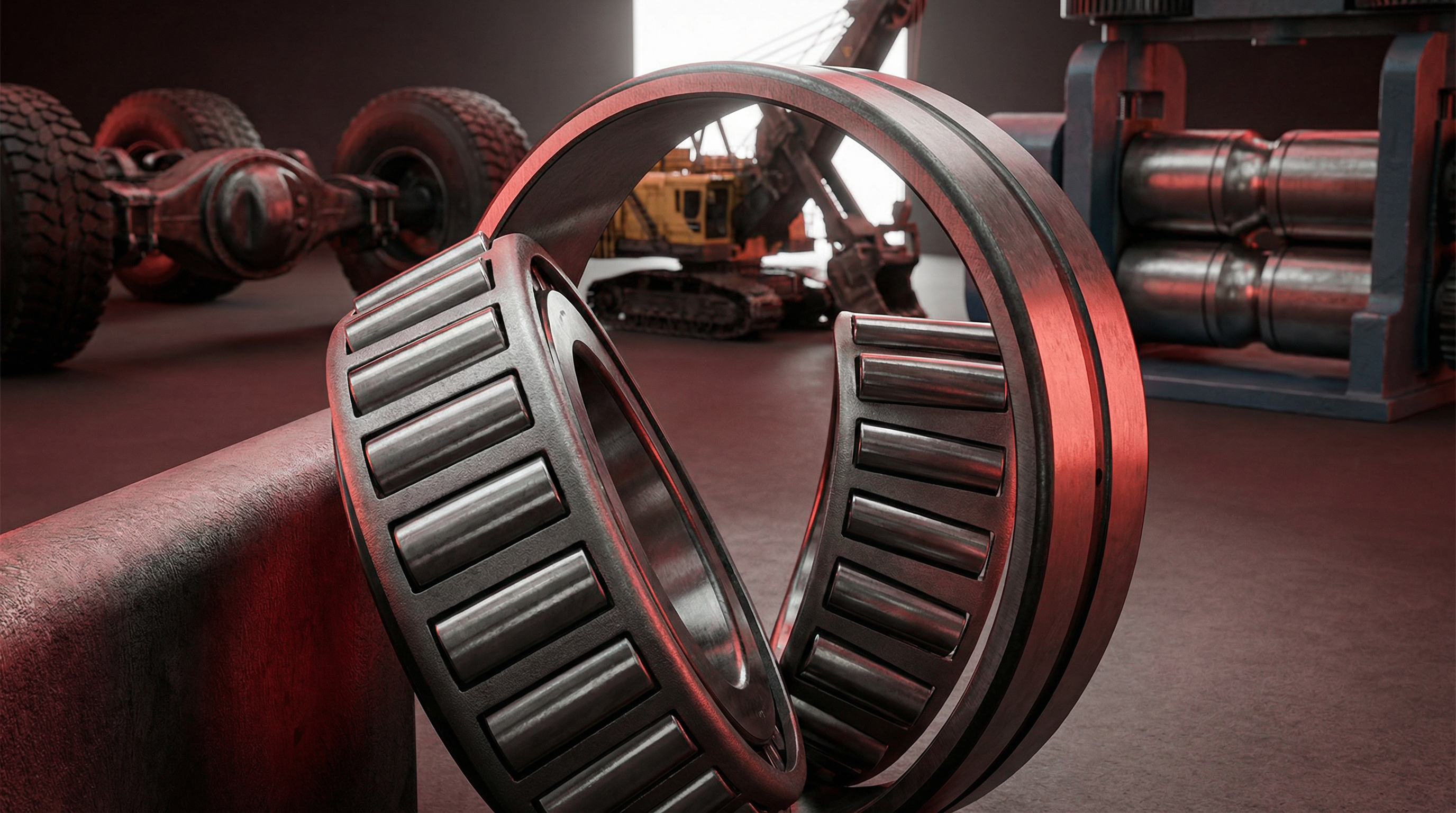
When an application demands the ability to support massive radial loads simultaneously with heavy axial (thrust) loads, standard ball bearings will quickly fail. In the world of heavy-duty transportation, mining, and industrial gearboxes, engineers turn to one specific solution: the Tapered Roller Bearing (TRB).
Unlike ball bearings that use point contact, tapered roller bearings use line contact, distributing immense forces over a much larger surface area. Their unique conical geometry allows them to manage complex combined loads with exceptional reliability.
In this comprehensive 2026 engineering guide, we will explore the internal structure of tapered roller bearings, compare them directly against ball bearings, explain how to decode their designation numbers, and highlight their most critical industrial applications.
The Genius of Conical Geometry: Internal Structure
The fundamental design principle of a tapered roller bearing is based on pure geometry. If you extend the angles of the tapered rollers and the raceways, all these lines will converge at a single point on the bearing's central axis. This ensures true rolling motion without any sliding or skidding along the raceway.
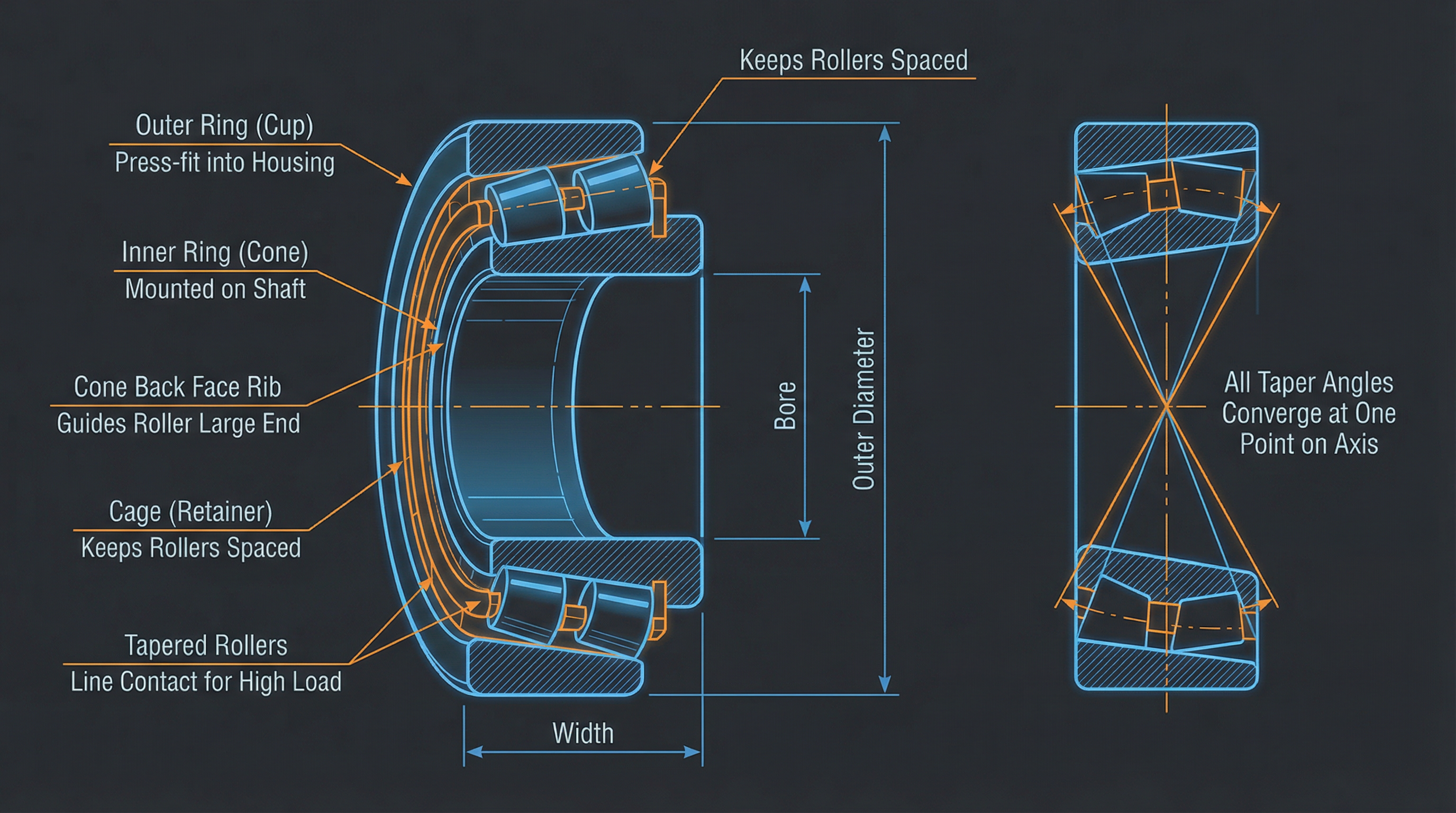
A standard single-row tapered roller bearing consists of two separable main parts:
1. The Cone Assembly (Inner Ring): This includes the inner ring (cone) with its tapered raceway, the tapered steel rollers, and the cage (retainer) that holds the rollers in place. The cone features a "back face rib" which guides the large end of the rollers and prevents them from sliding out.
2. The Cup (Outer Ring): This is a simple, separable outer ring with a matching tapered internal raceway.
Because the cup and cone assembly are separable, they can be mounted individually. The cup is typically press-fit into the machine housing, while the cone assembly is mounted onto the rotating shaft.
Tapered Roller Bearings vs. Ball Bearings
Why choose a tapered roller bearing over a standard deep groove ball bearing? The answer lies in load capacity and contact area.
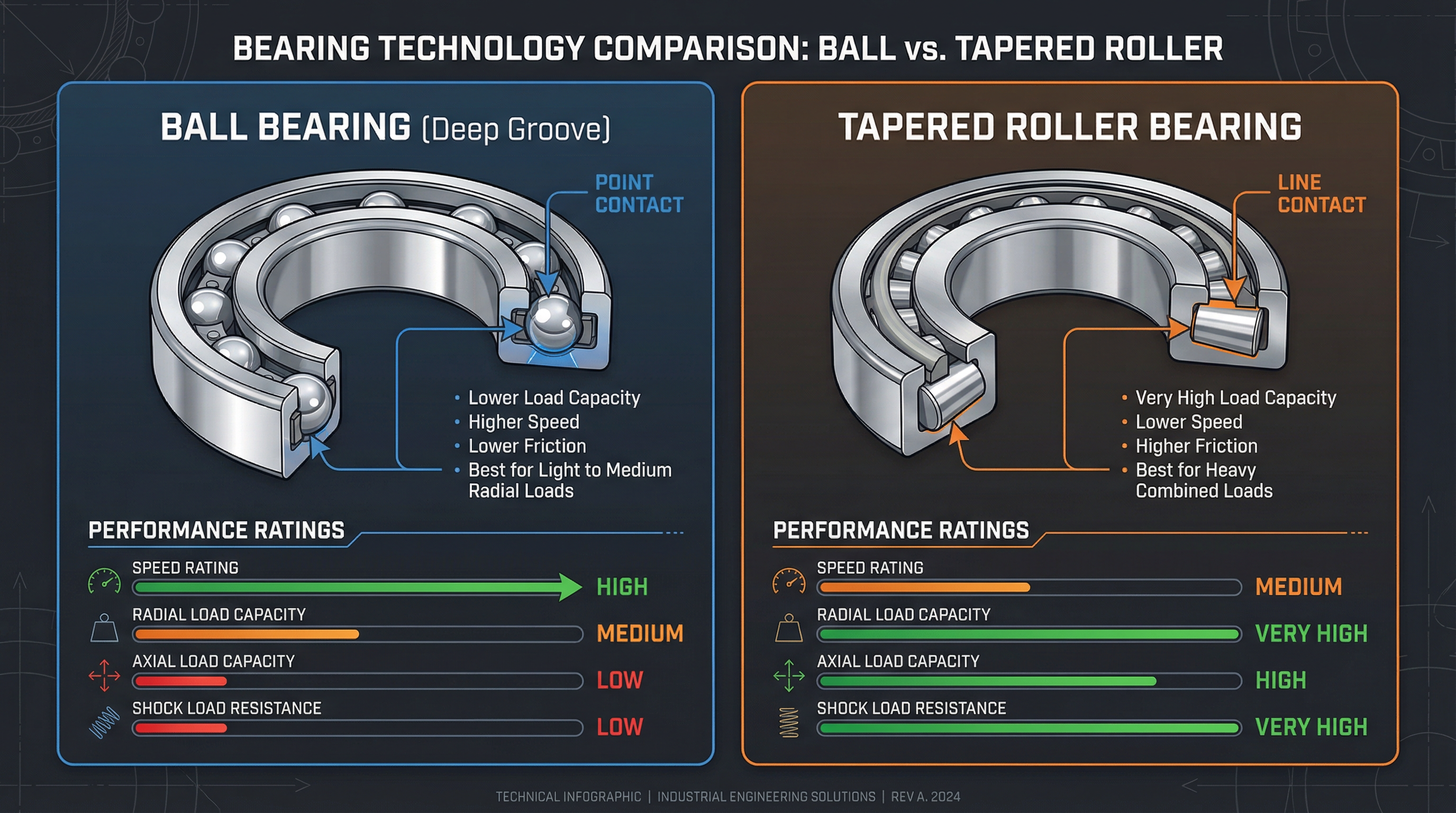
Ball Bearings (Deep Groove)
Contact Type: Point Contact. The spherical ball touches the raceway at a microscopic point.
Strengths: Extremely low friction, allowing for very high-speed rotation. Excellent for light to medium radial loads.
Weaknesses: Low axial load capacity. Highly susceptible to damage from heavy shock loads.
Tapered Roller Bearings
Contact Type: Line Contact. The cylindrical (tapered) roller touches the raceway along a continuous line.
Strengths: Massive load-carrying capacity. Can handle extreme radial loads, heavy axial loads (in one direction), and severe shock loads simultaneously.
Weaknesses: Higher friction than ball bearings, which limits their maximum operating speed.
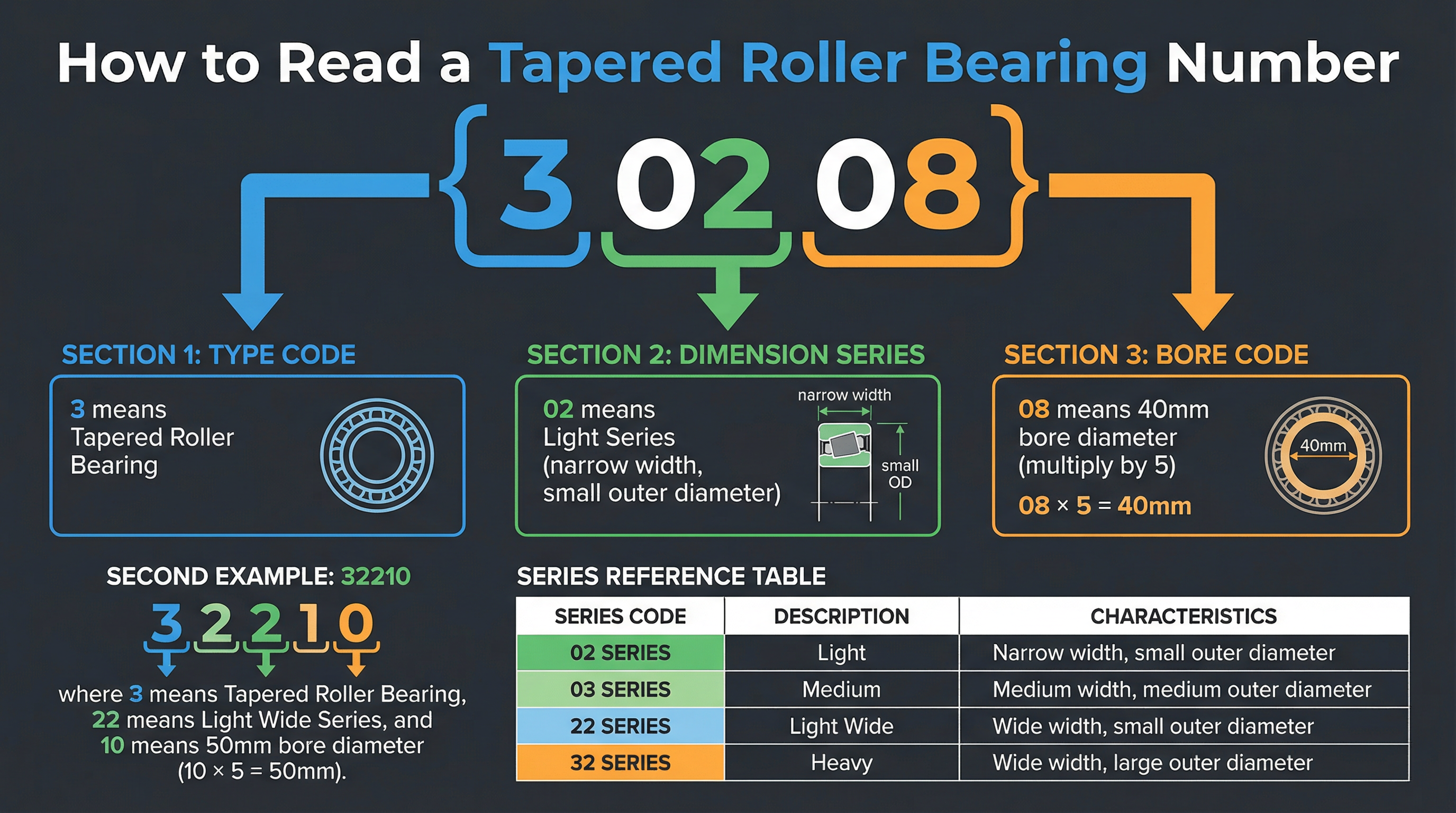
Decoding the Bearing Number: What Does "30208" Mean?
Tapered roller bearings use a specific metric designation system (ISO 355) that differs slightly from standard ball bearings. Let's break down a common example: "30208".
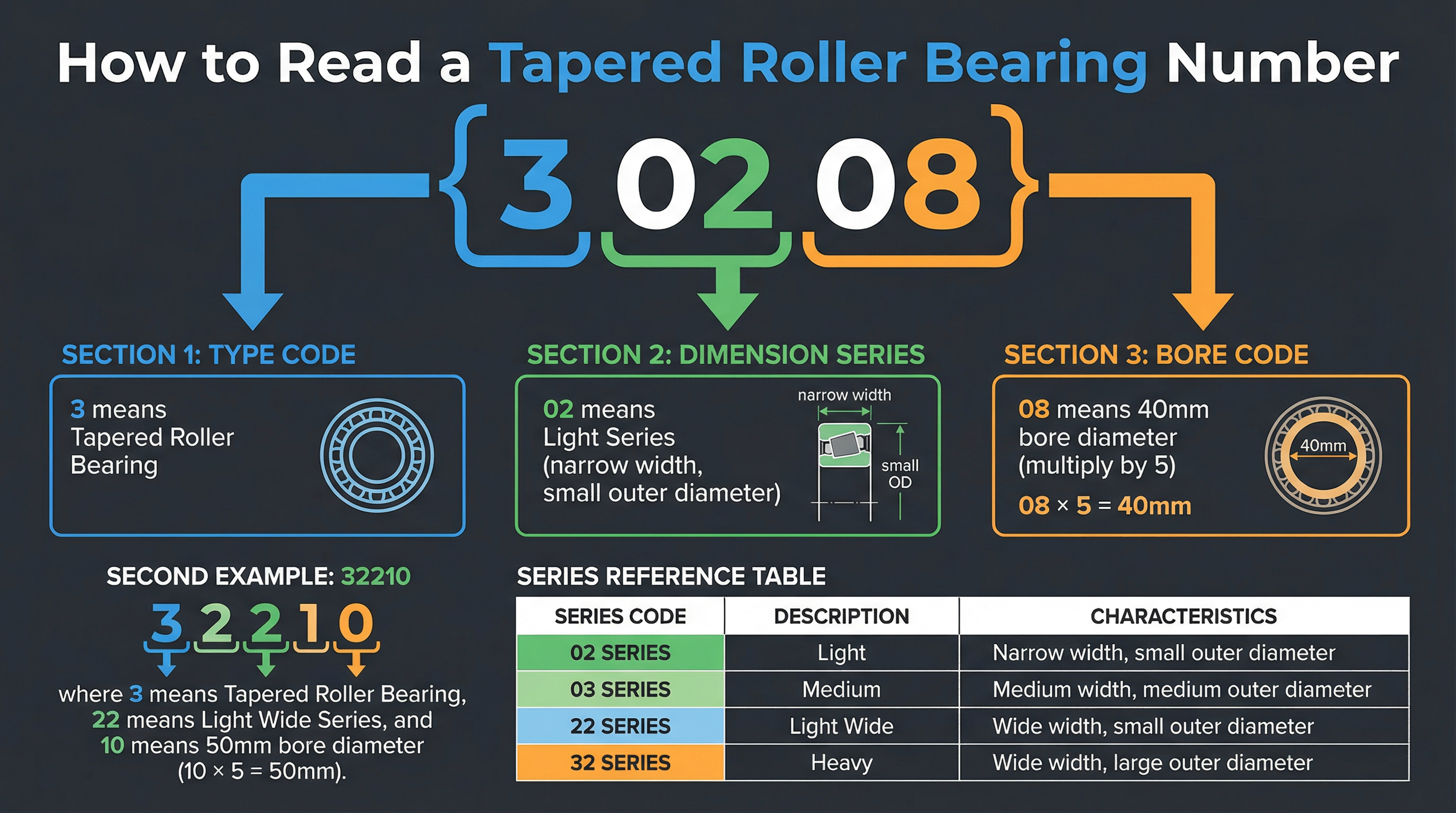
3 (Type Code): The first digit "3" universally indicates a Tapered Roller Bearing.
02 (Dimension Series): This two-digit number indicates the width and outer diameter proportions. "02" represents the Light Series (narrow width, relatively small outer diameter). Other common series include 03 (Medium), 22 (Light Wide), and 32 (Heavy).
08 (Bore Code): Just like ball bearings, multiply this number by 5 to get the bore diameter in millimeters. Therefore, 08 x 5 = 40mm bore diameter.
Example 2: A "32210" bearing is a Tapered Roller Bearing (3), Heavy Series (22), with a 50mm bore (10 x 5).
Key Industrial Applications
Because a single-row tapered roller bearing can only handle axial loads in one direction, they are almost always mounted in pairs (facing opposite directions) to handle thrust from both sides and maintain shaft rigidity.
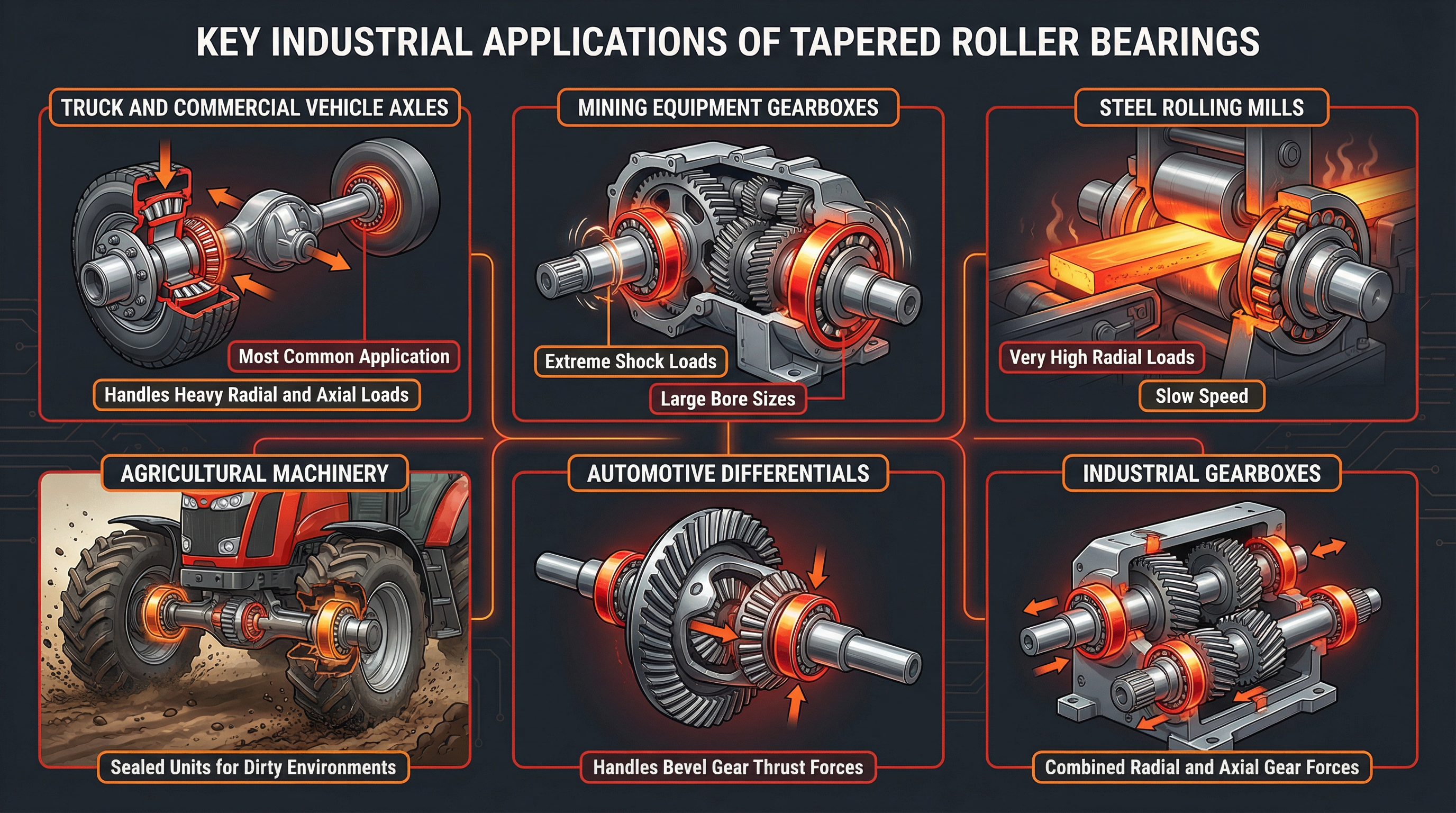
1. Truck and Commercial Vehicle Axles: The most common application globally. TRBs are used in wheel hubs to support the massive weight of the vehicle (radial load) while absorbing the severe cornering forces (axial load).
2. Mining Equipment Gearboxes: The extreme shock loads generated by rock crushers and mining excavators require the line-contact durability of heavy-series TRBs.
3. Steel Rolling Mills: Roll neck bearings endure thousands of tons of radial pressure at relatively slow speeds, making TRBs the perfect choice.
4. Automotive Differentials: The bevel gears inside a differential generate significant thrust forces that try to push the gears apart. TRBs hold the gears in precise alignment.
5. Agricultural Machinery: Tractors and harvesters operate in brutal, high-torque environments where bearing failure means lost harvest time.
SKDIN: Heavy-Duty Tapered Roller Bearings
When your equipment is subjected to extreme loads and punishing environments, you need bearings engineered for survival.
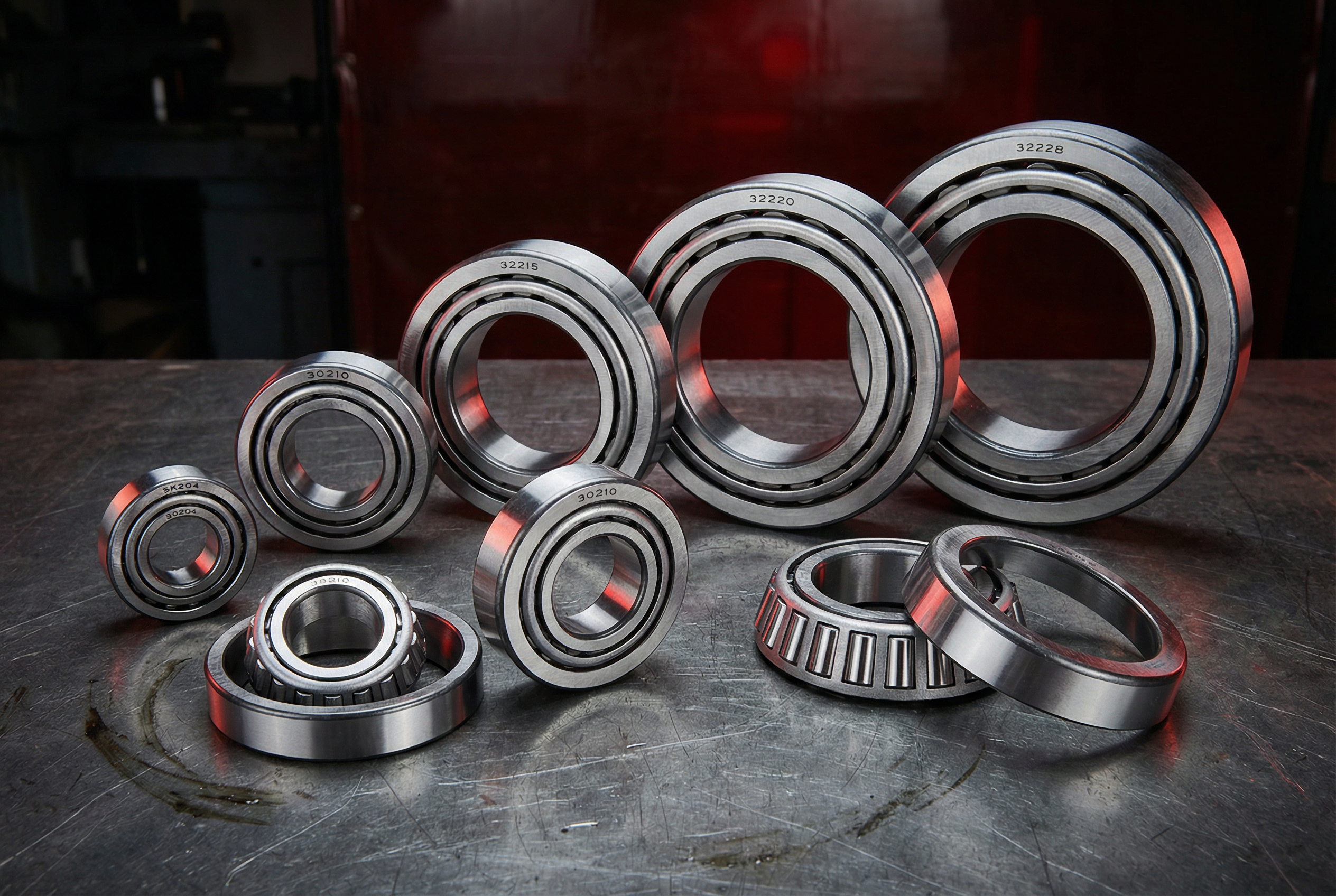
At SKDIN, we manufacture premium tapered roller bearings using high-purity, through-hardened chrome steel. Our advanced crowning profiles on the rollers prevent edge-loading stress, significantly extending bearing fatigue life under heavy loads.
From standard 30200 series for automotive applications to massive 32000 series for industrial gearboxes, SKDIN provides the uncompromising durability your heavy machinery demands. We also offer matched assemblies (face-to-face or back-to-back) with pre-set internal clearances for drop-in installation.
Equip your machinery for the heaviest loads. Browse the SKDIN Tapered Roller Bearing Catalog today, or Contact Our Engineering Team for custom load calculations and application support.