
The Complete Guide to Nut Types: Selection, Grades, and Materials
 Mia
Mia
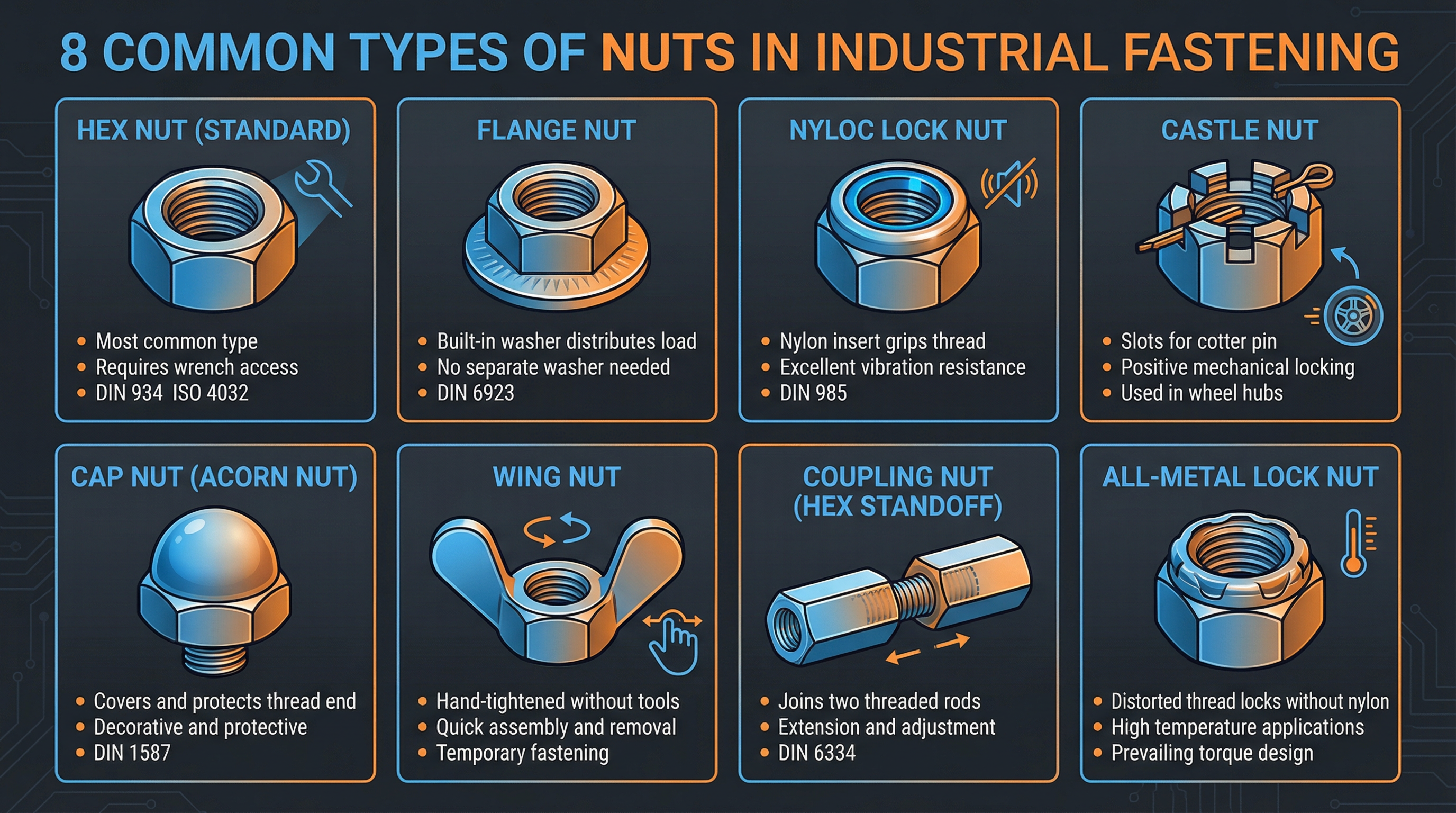
While bolts often get all the glory in structural engineering, the nut is equally critical to the integrity of a bolted joint. A nut is not just a piece of metal with internal threads; it is a precisely engineered component designed to hold massive tension, resist vibration, and distribute loads evenly.
Choosing the wrong type of nut—or mismatching the nut's strength grade with the bolt—can lead to thread stripping, joint loosening, and catastrophic structural failure.
In this comprehensive 2026 engineering guide, we will explore the 8 most common types of industrial nuts, explain how to match nut property classes to bolt grades, compare material options, and provide a simple flowchart for selecting the perfect nut for your application.
8 Common Types of Industrial Nuts
The standard hex nut is just the beginning. Modern engineering requires specialized nuts for vibration resistance, load distribution, and rapid assembly.
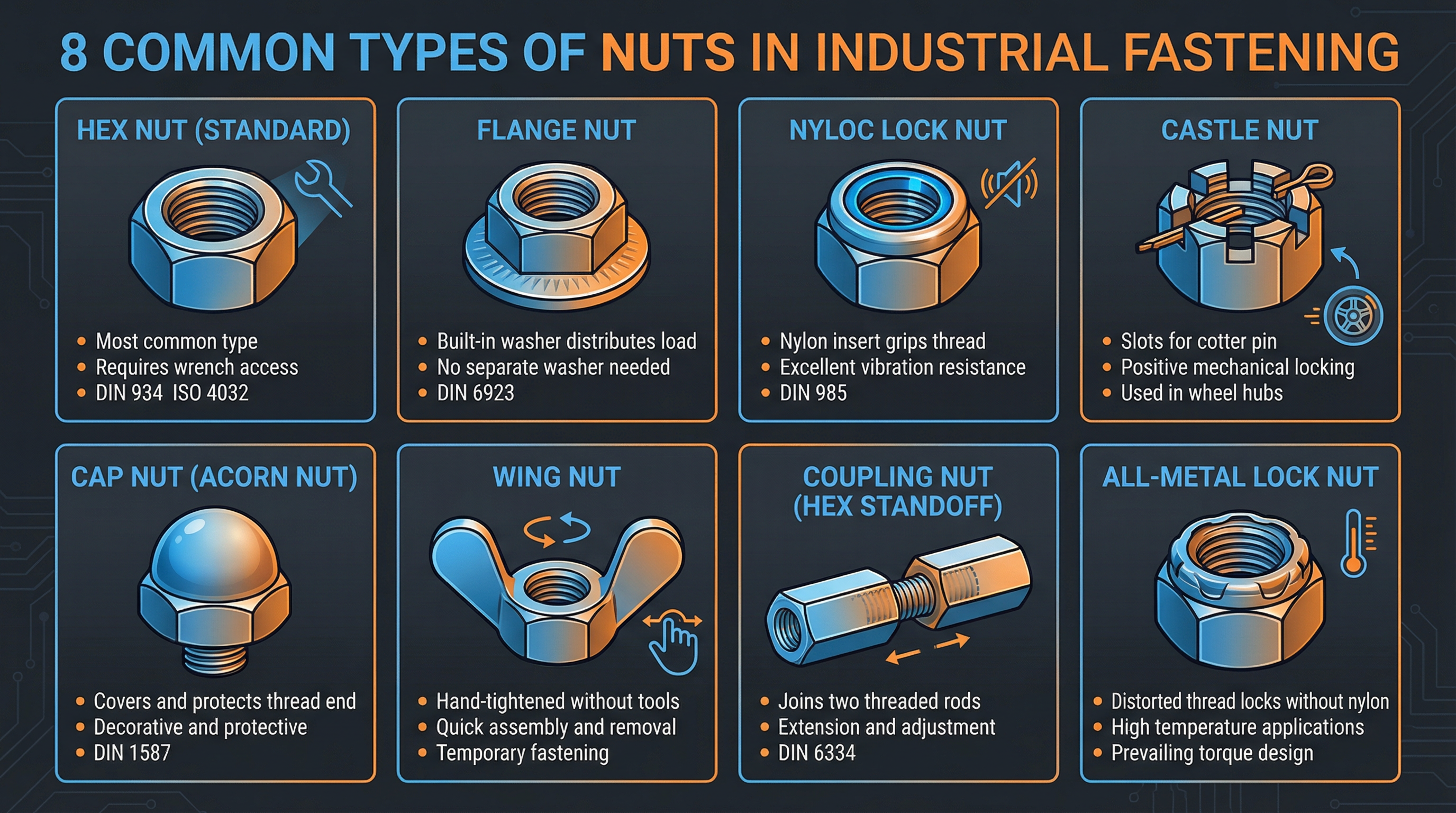
1. Hex Nut (Standard): The universal standard (DIN 934 / ISO 4032). It has six sides for easy wrench access. Used in 90% of general fastening applications.
2. Flange Nut: Features an integrated, wide flange at the base that acts as a built-in washer. This distributes the clamping load over a wider area, preventing damage to the mating surface and eliminating the need for a separate washer.
3. Nyloc Lock Nut: Contains a nylon collar insert at the top. As the bolt threads through the nylon, it creates heavy friction, providing excellent resistance to vibration loosening. Note: The nylon melts at high temperatures (above 120°C).
4. All-Metal Lock Nut (Prevailing Torque): For high-temperature or extreme-vibration environments where nylon would fail. The top threads of the nut are intentionally deformed to grip the bolt tightly.
5. Castle Nut (Castellated Nut): Features slots (castellations) cut into the top. A cotter pin is passed through the bolt and the slots, creating a positive mechanical lock that cannot vibrate loose. Common in automotive wheel hubs.
6. Cap Nut (Acorn Nut): Features a domed top that covers the exposed threads of the bolt. Used for aesthetic purposes and to protect personnel from sharp thread ends.
7. Wing Nut: Designed with two large "wings" to be tightened and loosened entirely by hand. Used in applications requiring frequent, tool-free adjustments.
8. Coupling Nut (Hex Standoff): An elongated hex nut used exclusively to join two threaded rods together end-to-end, often used in suspended ceiling installations.
The Critical Rule: Matching Nut Classes to Bolt Grades
One of the most dangerous mistakes in fastening is using a weak nut on a high-strength bolt.
The Golden Rule of Fastening: The specified proof load stress of the nut must be equal to or greater than the ultimate tensile strength of the bolt. If the joint is overloaded, the bolt should break before the nut threads strip. A broken bolt is obvious; a stripped nut is a hidden, deadly failure.
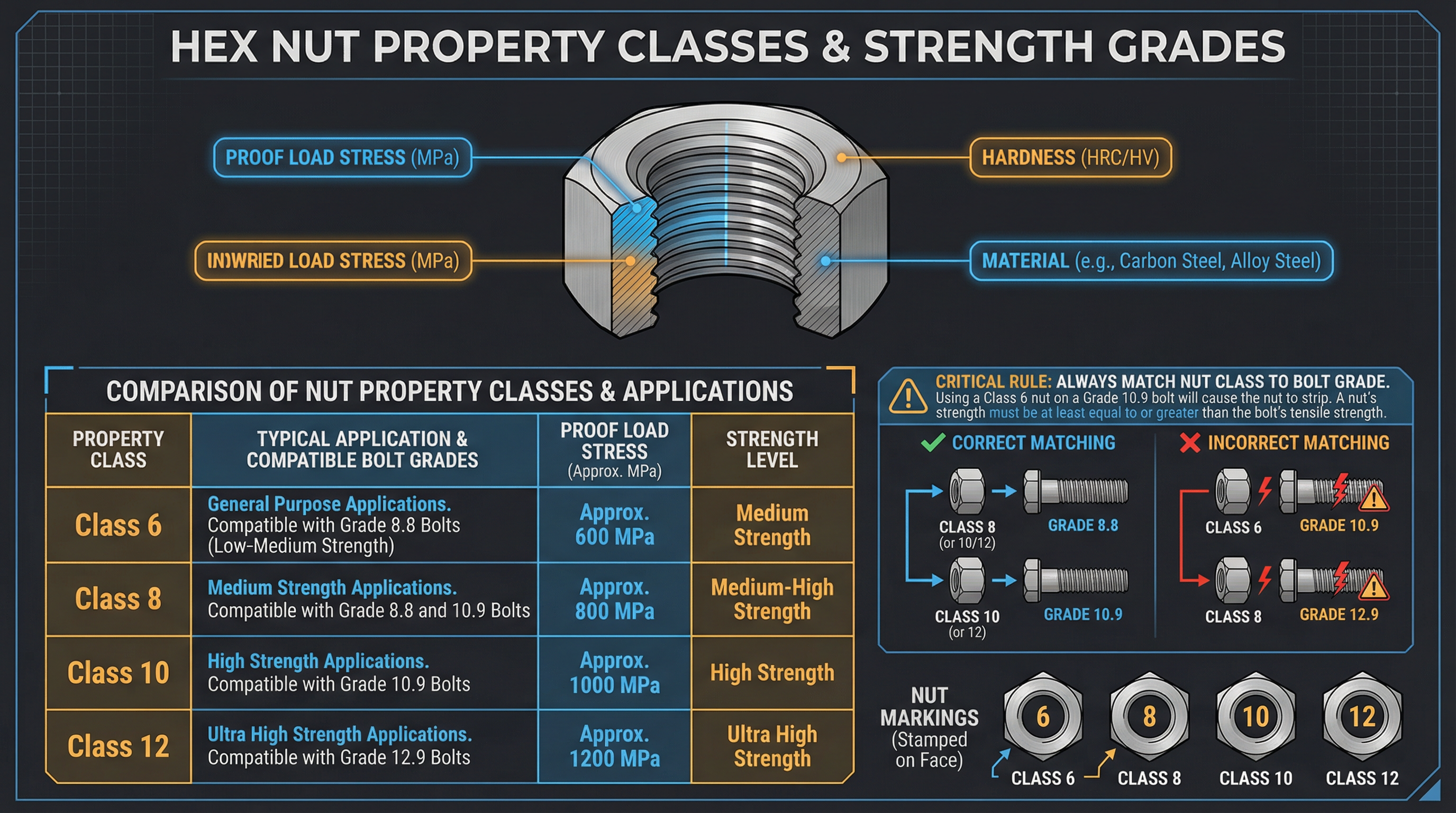
Metric nuts are marked with a Property Class number (e.g., 6, 8, 10, 12) stamped on the face. This number corresponds to the compatible bolt grade:
Class 6 Nut: Compatible with Grade 8.8 bolts (Low to Medium Strength).
Class 8 Nut: Compatible with Grade 8.8 and 10.9 bolts (Medium to High Strength).
Class 10 Nut: Compatible with Grade 10.9 bolts (High Strength).
Class 12 Nut: Compatible with Grade 12.9 bolts (Ultra-High Strength).
Never use a Class 6 nut on a Grade 10.9 bolt.
Material Selection: Balancing Strength and Corrosion
The material of the nut must match the environmental conditions of the application.
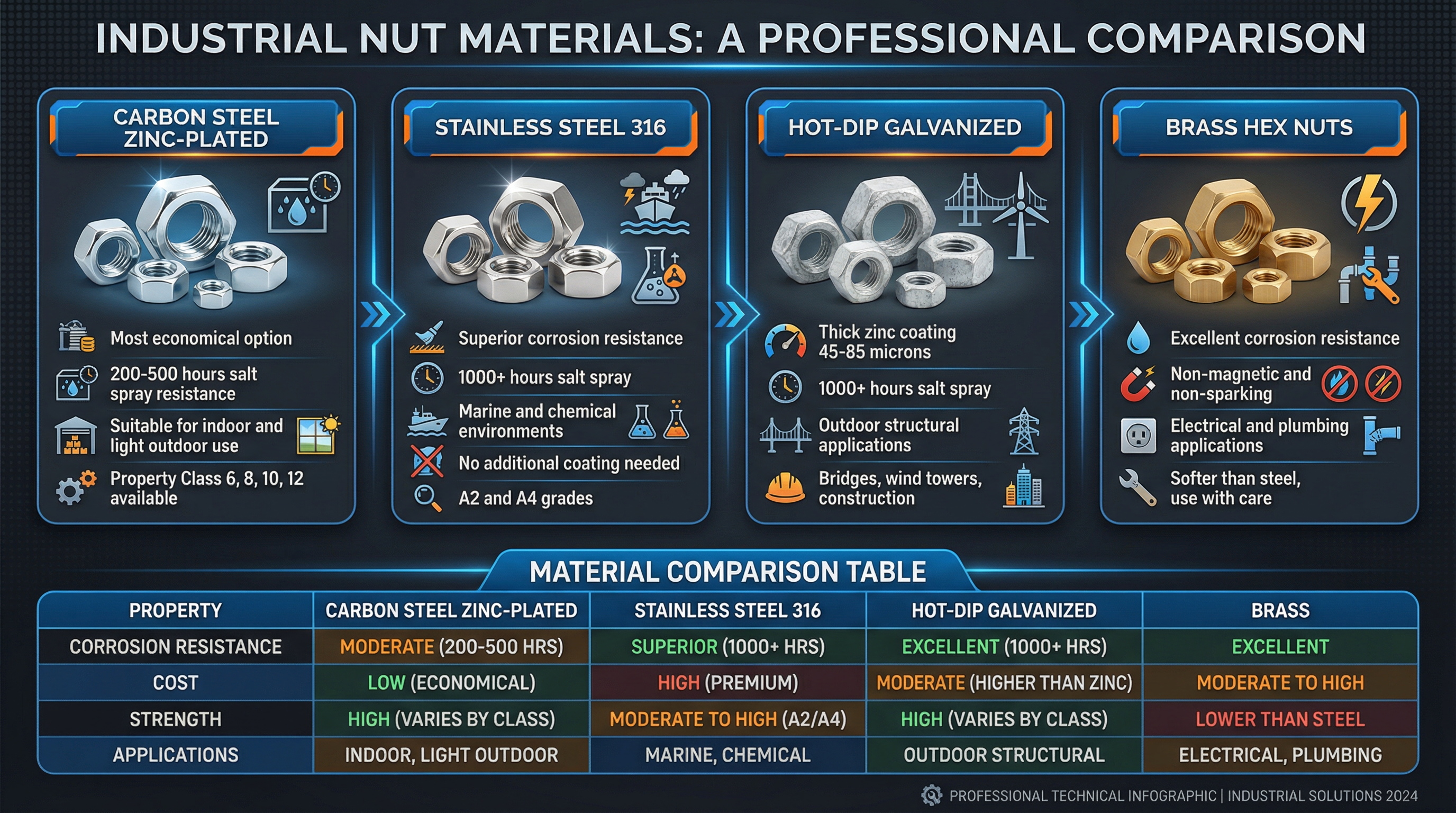
Carbon Steel (Zinc-Plated): The most common and economical choice. Provides basic corrosion resistance (200-500 hours salt spray) suitable for indoor or light outdoor use. Available in all high-strength classes (8, 10, 12).
Hot-Dip Galvanized (HDG): Coated with a thick layer of zinc (45-85 microns). Provides excellent outdoor corrosion resistance. Crucial Note: HDG nuts are tapped oversize to accommodate the thick zinc coating on HDG bolts. You cannot mix HDG nuts with standard zinc-plated bolts.
Stainless Steel (316 / A4): Offers superior corrosion resistance for marine, chemical, and food-processing environments. However, stainless steel is generally weaker than high-strength carbon steel (equivalent to Class 8 at best) and is prone to thread galling.
Brass: Non-magnetic, non-sparking, and highly corrosion-resistant. Used primarily in electrical applications and plumbing.
How to Select the Right Nut (Decision Flowchart)
Use this simple logic to specify the correct nut for your next project:
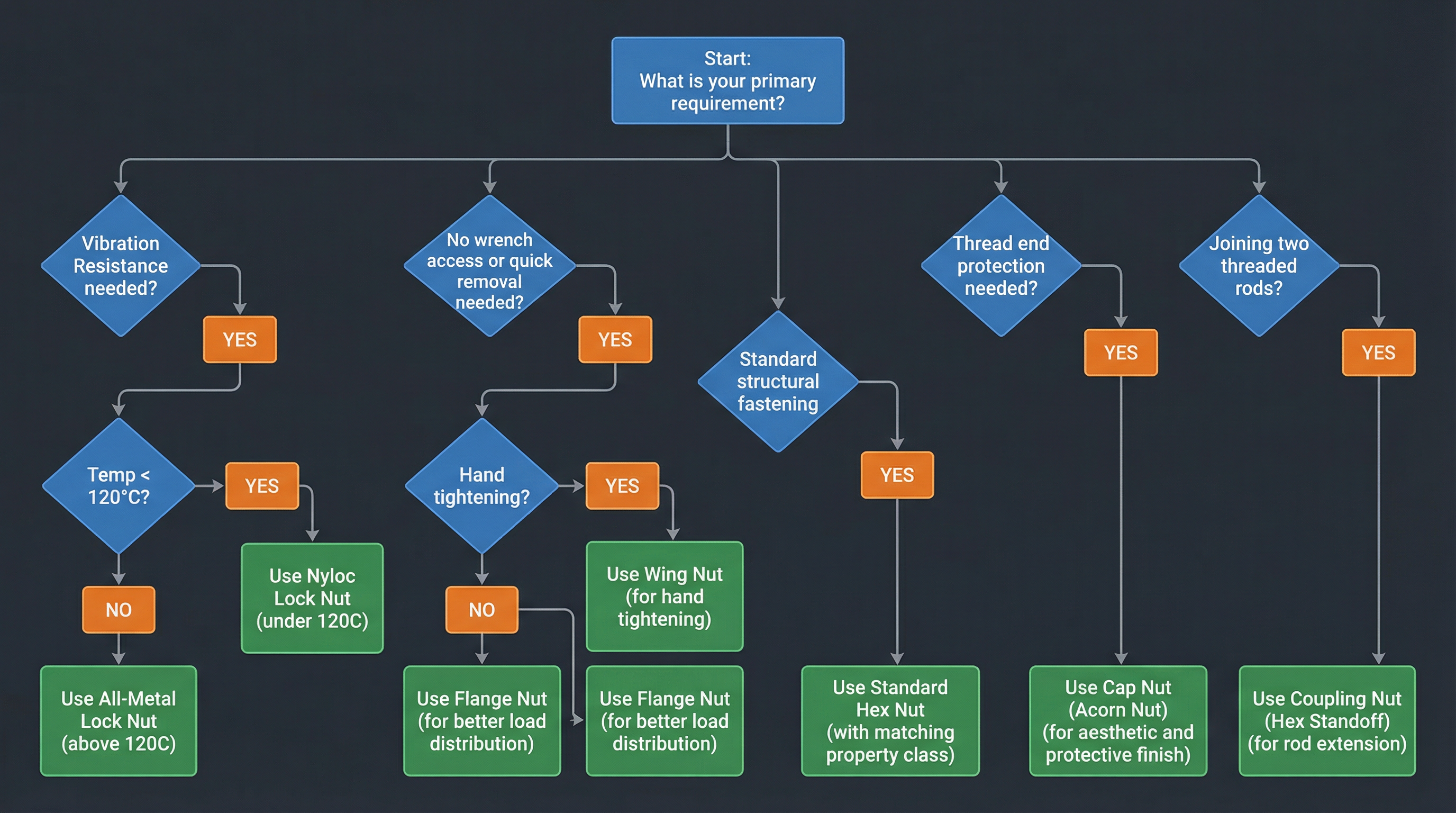
1. Is severe vibration present?
Yes, and temp < 120°C → Nyloc Lock Nut
Yes, and temp > 120°C → All-Metal Lock Nut
2. Do you need to distribute load over a soft material (like aluminum)?
Yes → Flange Nut
3. Does the application require frequent hand adjustment?
Yes → Wing Nut
4. Is it a standard structural connection?
Yes → Standard Hex Nut (Ensure the Property Class matches the bolt!)
SKDIN: Precision Nuts for Every Application
At SKDIN, we manufacture millions of nuts annually, adhering to strict DIN, ISO, and ASME standards.
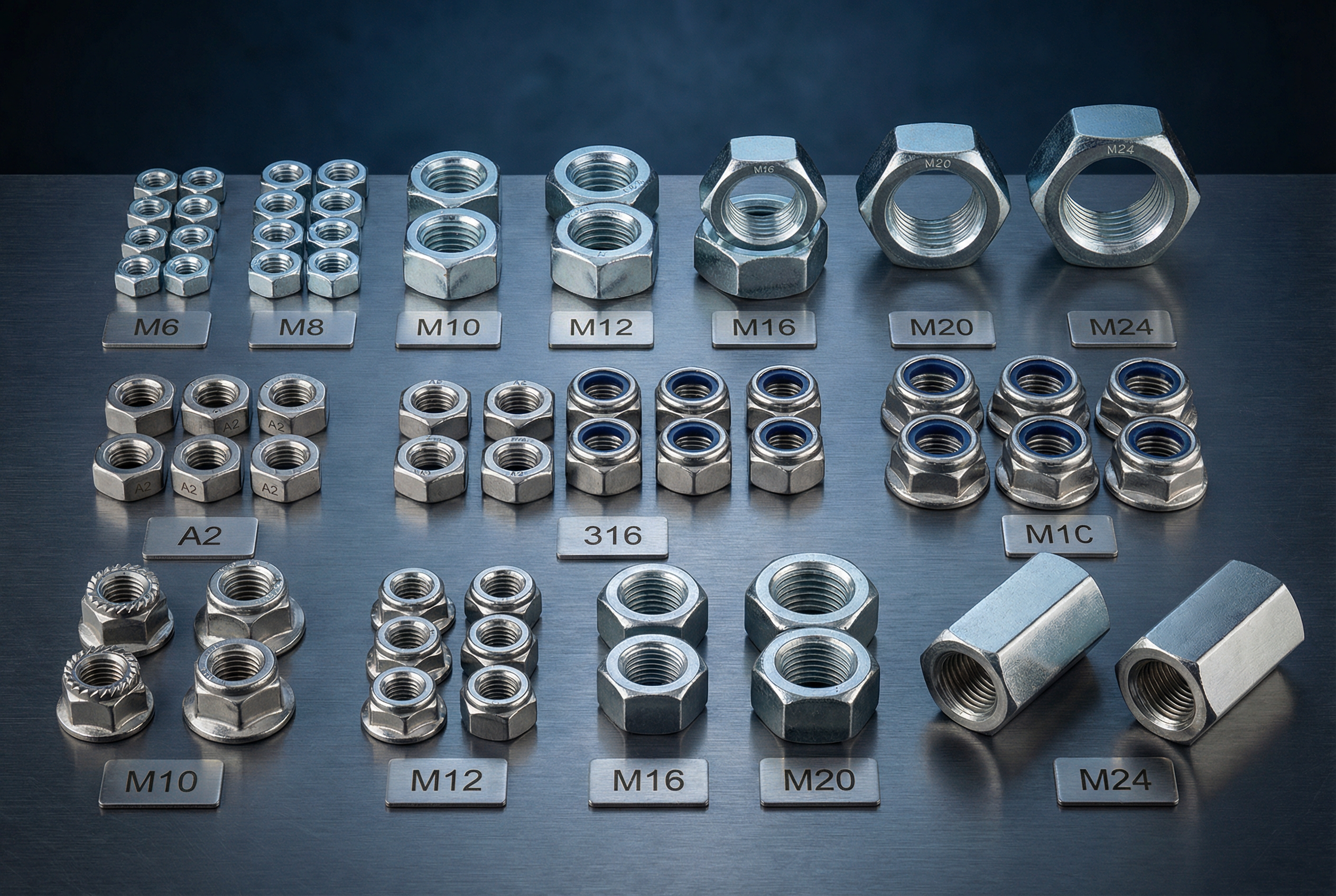
Whether you need ultra-high-strength Class 12 hex nuts for heavy machinery, vibration-proof Nyloc nuts for automotive assemblies, or premium 316 stainless steel flange nuts for marine environments, we have the inventory and the engineering expertise to support your production.
Explore the SKDIN Nut Catalog today, or Contact Our Fastener Experts to ensure you are specifying the safest, most reliable connection for your project.