
The Complete Guide to Self-Lubricating Bearings: Types, Mechanisms, and Applications
 Mia
Mia
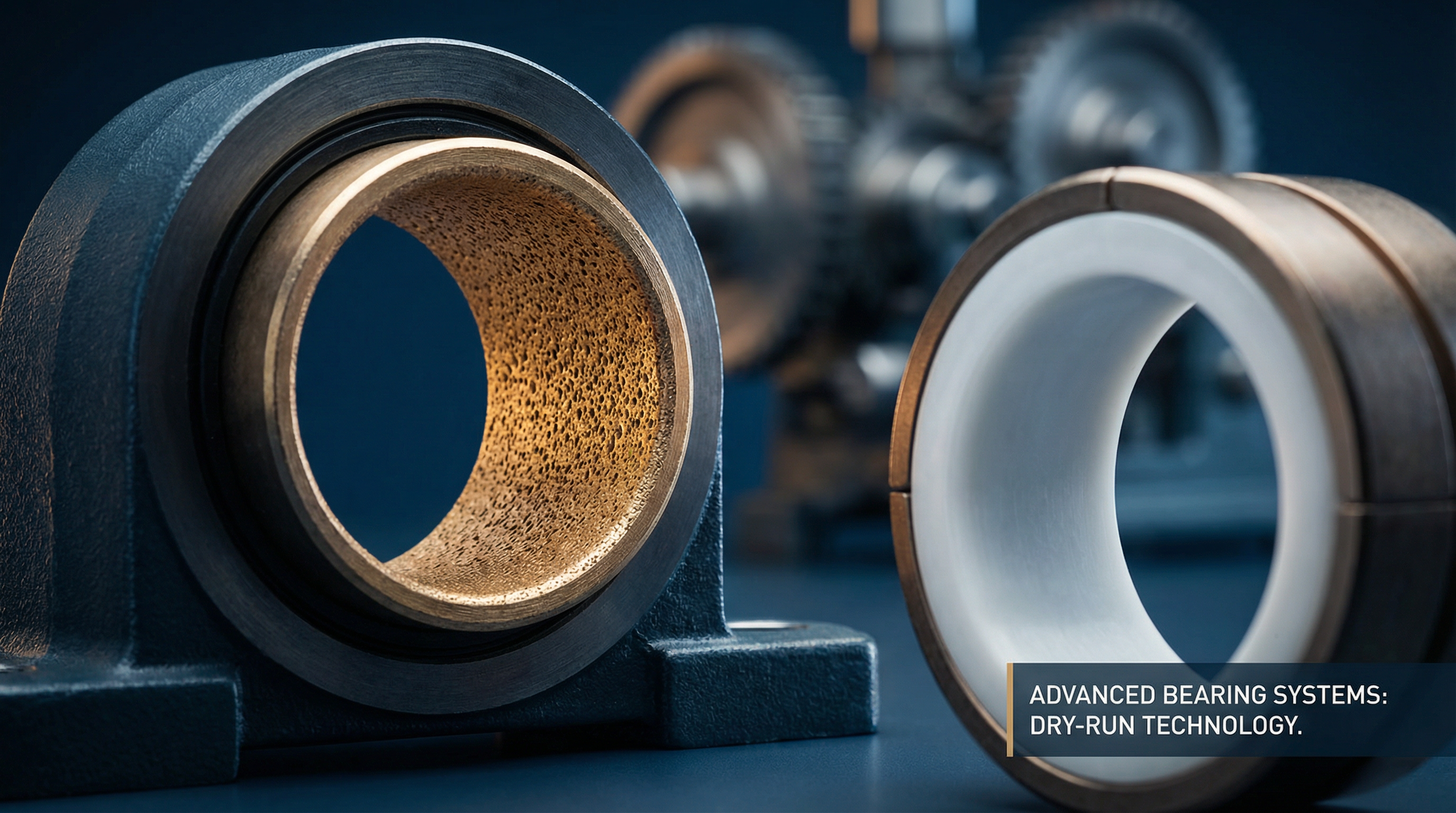
In many industrial applications, regular maintenance and manual lubrication are simply not possible. Whether a bearing is hidden deep inside a complex machine, operating in a clean room where oil contamination is unacceptable, or working in extreme temperatures that would destroy standard grease, engineers need a reliable, maintenance-free solution.
Enter the self-lubricating bearing
Unlike traditional rolling-element bearings that require external grease or oil, self-lubricating plain bearings (often called bushings) have the lubricant built directly into their material structure. They provide silent, reliable operation without the need for ongoing maintenance.
In this comprehensive 2026 guide, we will explore the four main types of self-lubricating bearings, explain the fascinating science behind how they work, and help you choose the right type for your specific application.
4 Main Types of Self-Lubricating Bearings
Self-lubricating bearings come in several distinct materials, each engineered to solve specific environmental challenges.
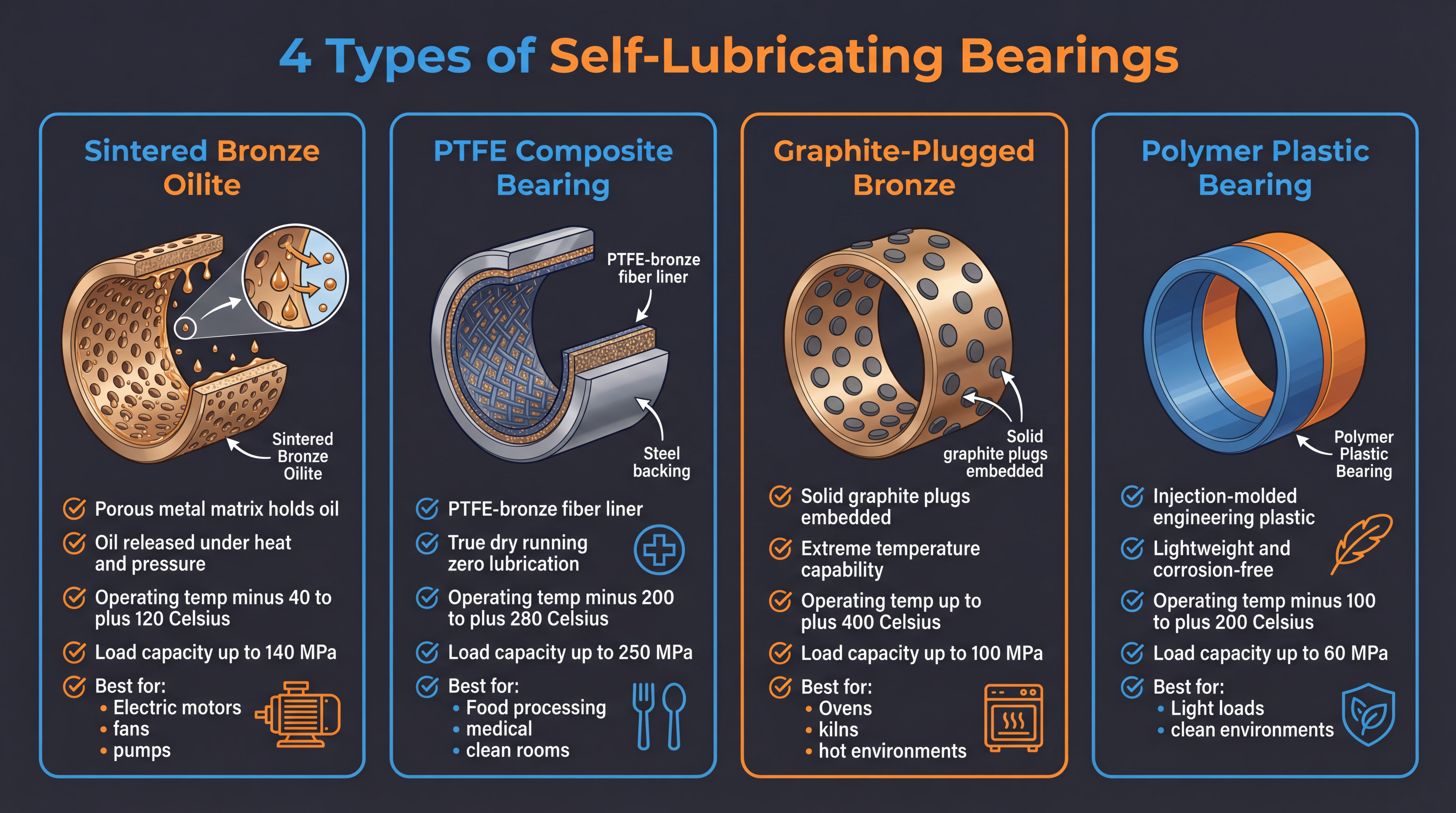
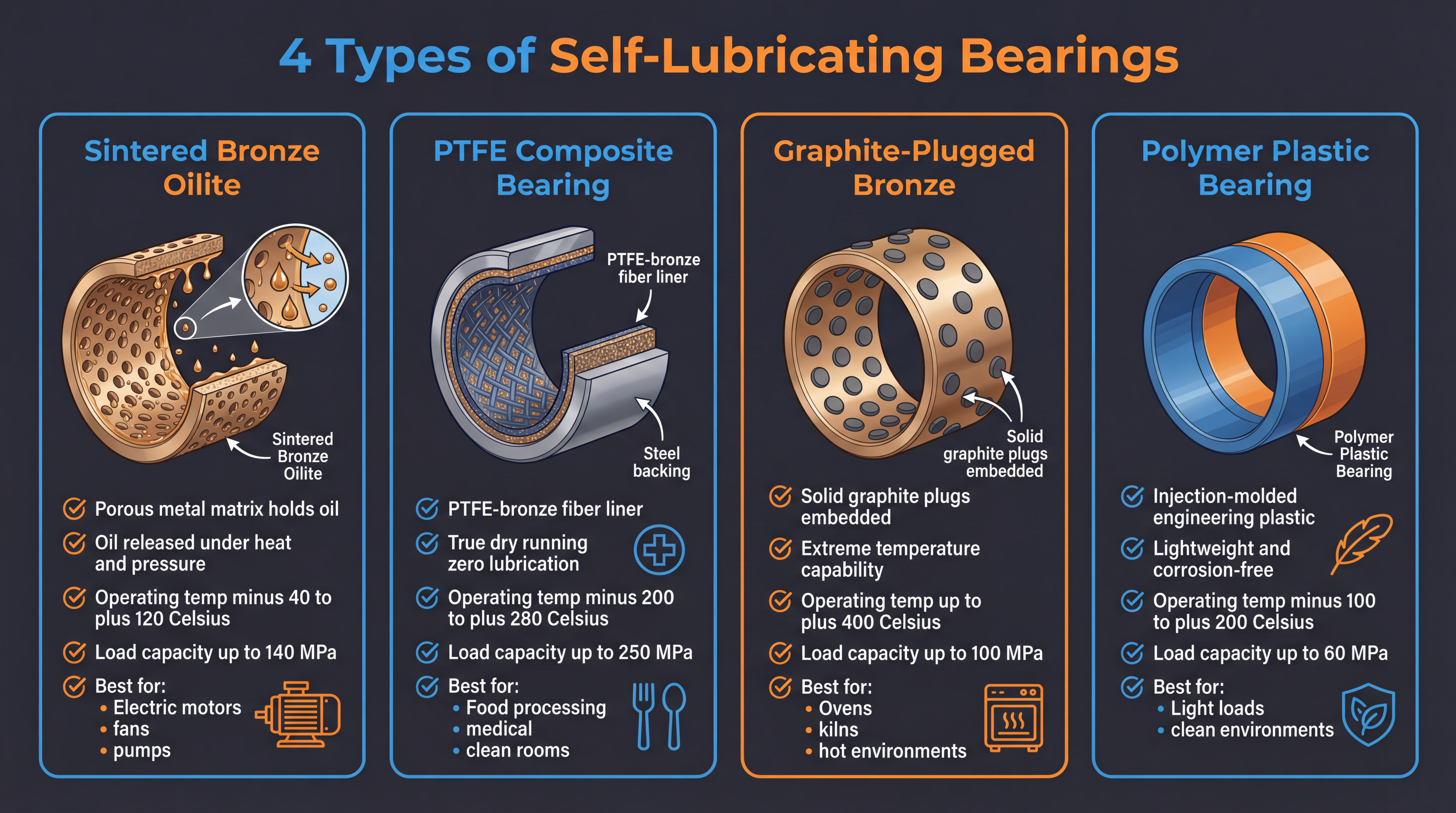
1. Sintered Bronze (Oilite): The most common type. These are made from bronze powder pressed and heated (sintered) to create a porous metal sponge. The pores are vacuum-impregnated with oil, which makes up about 20% of the bearing's volume.
2. PTFE Composite Bearings: These feature a steel or bronze backing with a thin inner liner made of PTFE (Teflon) and bronze fibers. They operate completely dry, offering extremely low friction and zero risk of oil contamination.
3. Graphite-Plugged Bronze: Designed for heavy loads and extreme heat. These are solid cast bronze bearings with holes drilled into them, which are then tightly packed with solid graphite plugs. The graphite acts as a dry lubricant.
4. Polymer Plastic Bearings: Made from advanced injection-molded engineering plastics. They are lightweight, completely corrosion-resistant, and ideal for washdown environments or light-duty applications.
How Do Sintered Bronze Bearings Actually Work?
It might seem like magic that a solid-looking piece of metal can lubricate itself, but it is actually a brilliant application of thermodynamics and capillary action.
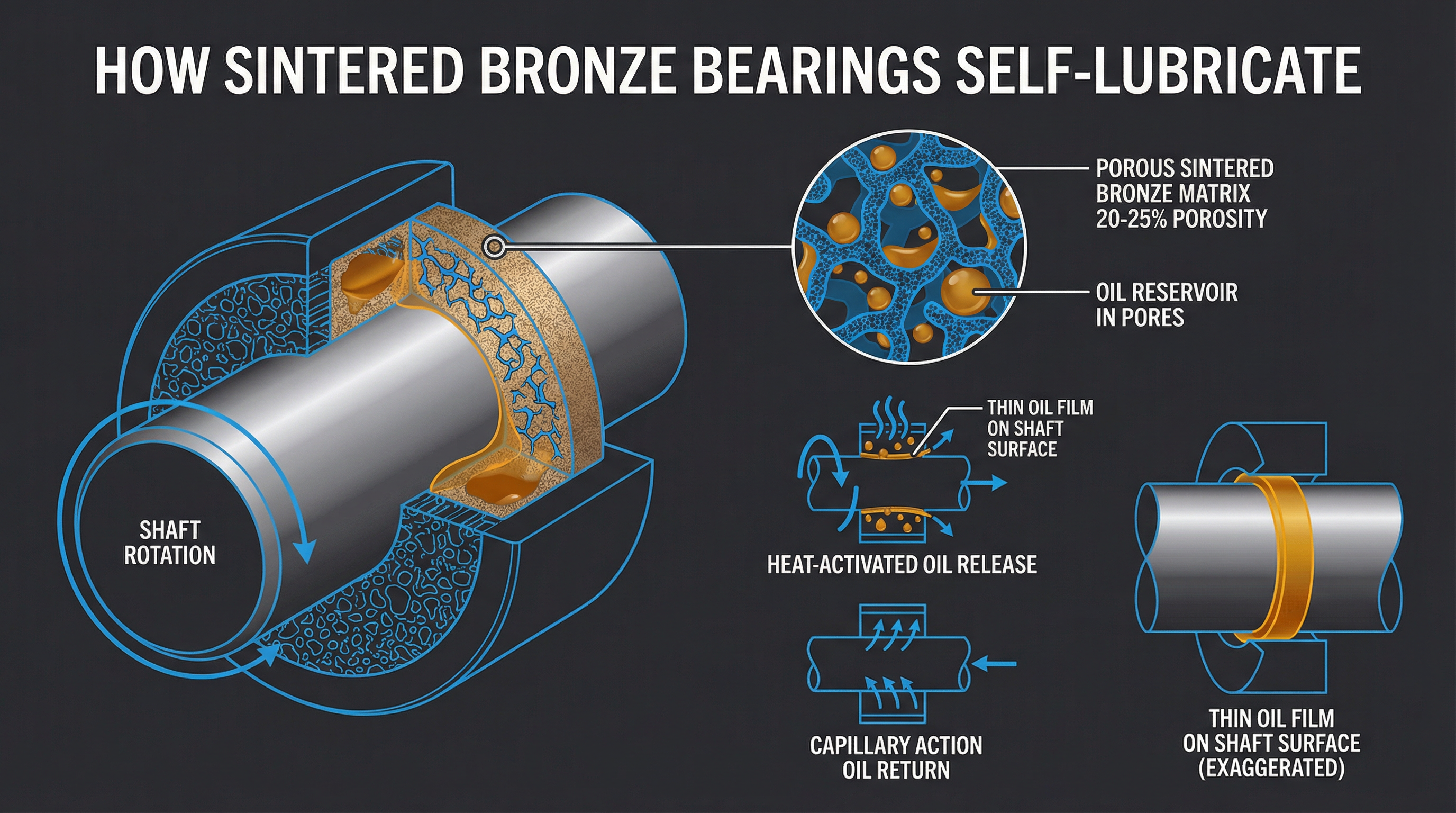
When a shaft begins to rotate inside a sintered bronze bearing, the friction generates a small amount of heat. This heat causes the oil trapped inside the microscopic pores of the bronze to expand. Because the oil expands more than the metal, it is forced out of the pores and onto the surface of the shaft, creating a thin, protective lubricating film.
When the machine stops and the shaft cools down, the process reverses. Capillary action draws the oil back into the porous bronze matrix, storing it safely until the next time the machine is turned on. This cycle can repeat thousands of times, providing years of maintenance-free operation.
Self-Lubricating Plain Bearings vs. Rolling Element Bearings
When designing a new machine, engineers must choose between self-lubricating plain bearings and traditional rolling element bearings (like ball or roller bearings). Here is how they compare:
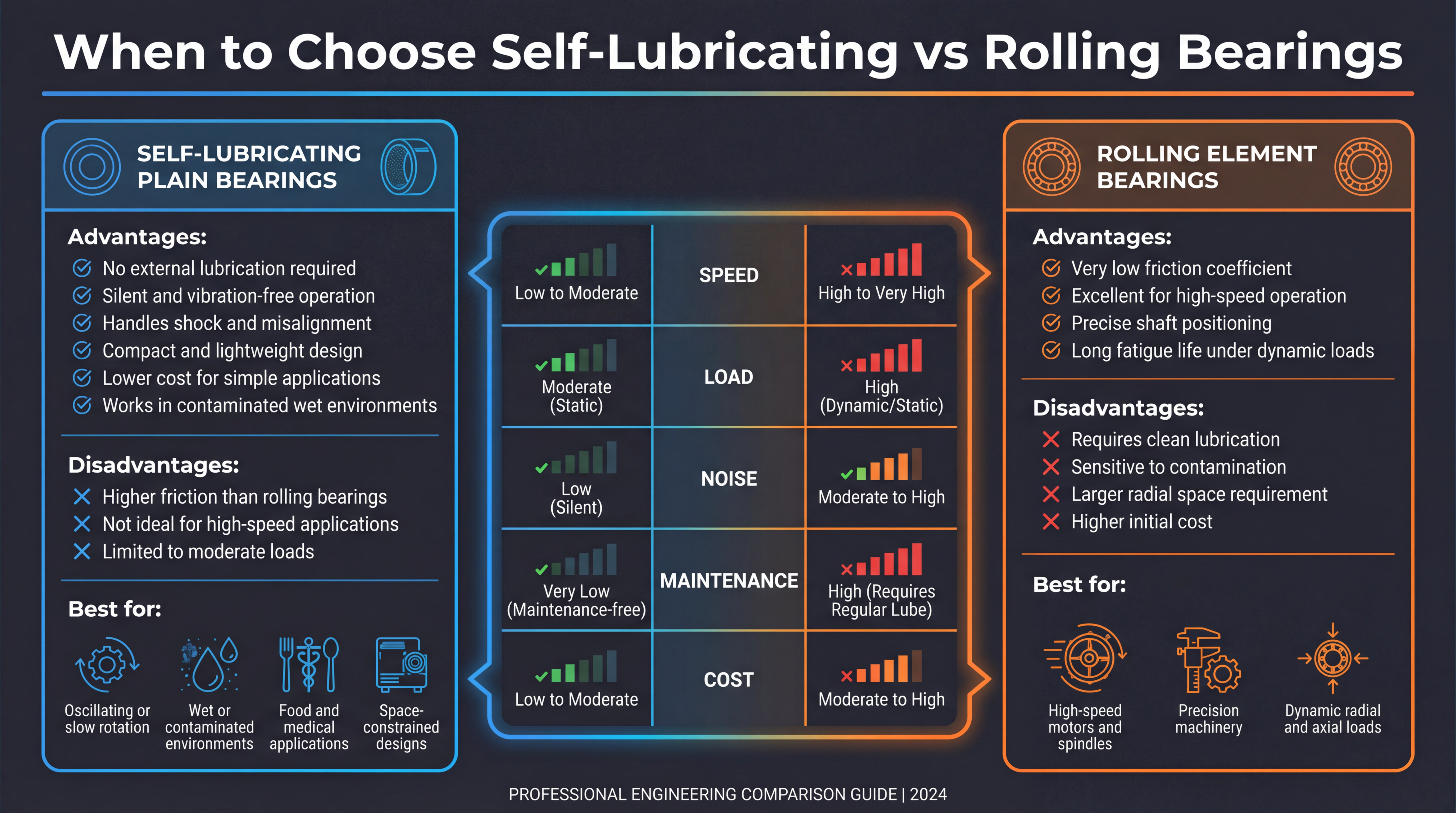
Maintenance: Self-lubricating bearings are truly "install and forget." Rolling bearings require regular regreasing to prevent premature failure.
Space and Weight: Plain bearings have a much smaller radial profile. They take up less space and weigh significantly less than bulky ball bearings.
Shock Loads: Because plain bearings have a larger contact area with the shaft, they can absorb heavy shock loads and vibrations much better than the point-contacts of a ball bearing.
Speed Limitations: This is where rolling bearings win. Self-lubricating bearings generate more friction and heat at high speeds. They are best suited for slow rotation, oscillating movements, or intermittent use.
Where Do Self-Lubricating Bearings Excel?
Because of their unique properties, self-lubricating bearings are the preferred choice in several demanding industries.
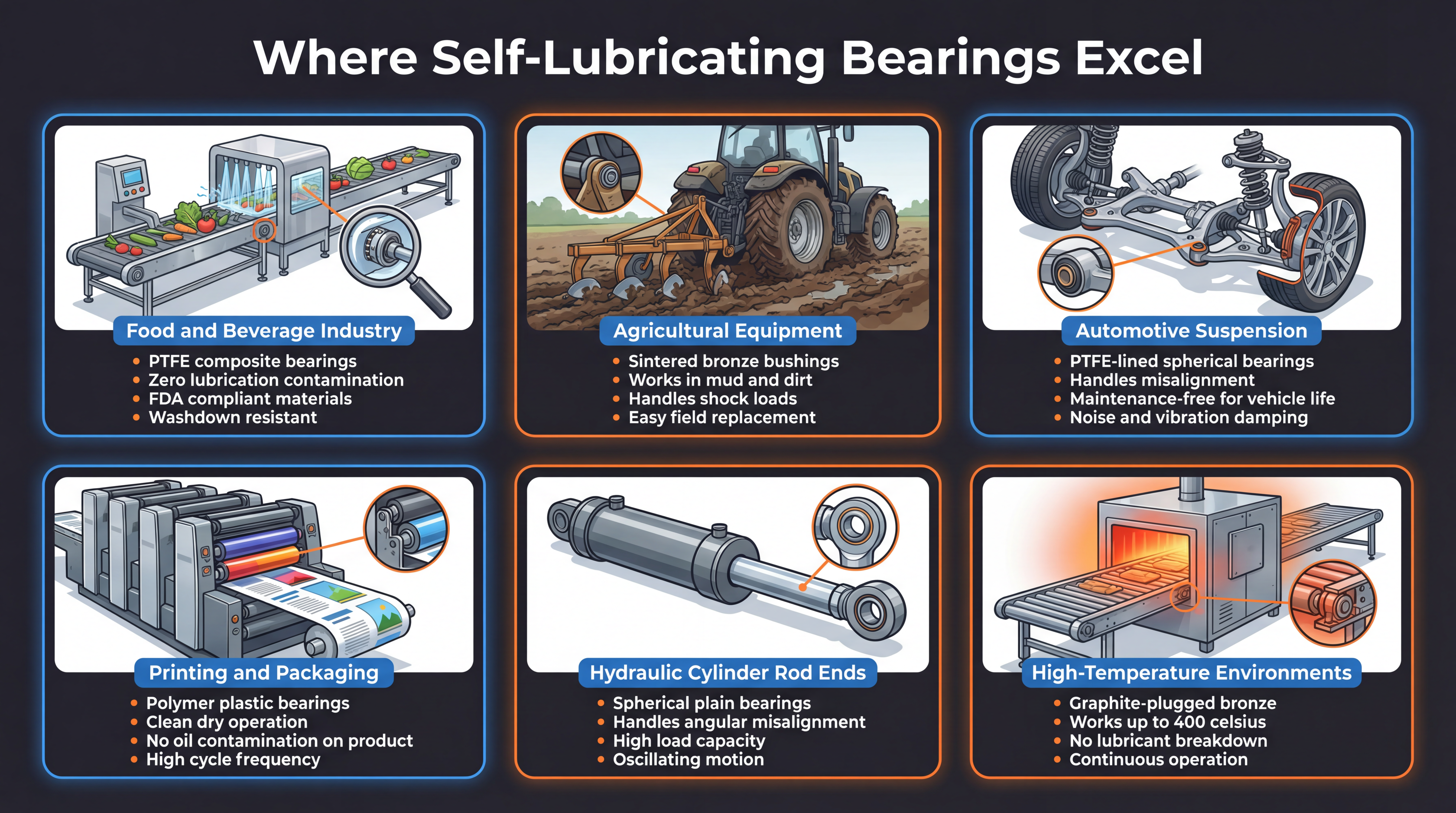
Food and Beverage Processing: PTFE composite bearings are used extensively here because they run completely dry. There is zero risk of oil dripping onto food products, and they can withstand harsh chemical washdowns.
Agricultural and Construction Equipment: Tractors and excavators operate in mud, dust, and grit. Sintered bronze and graphite-plugged bearings handle these abrasive environments and heavy shock loads without failing.
High-Temperature Ovens: Standard bearing grease burns off at around 150°C. Graphite-plugged bronze bearings can operate continuously in industrial ovens and kilns at temperatures up to 400°C.
Automotive Suspension: PTFE-lined spherical plain bearings are used in suspension linkages to handle angular misalignment and provide a smooth, noise-free ride for the life of the vehicle.
SKDIN: Your Partner in Maintenance-Free Solutions
Choosing the right self-lubricating bearing requires a careful analysis of load, speed, temperature, and environmental factors.
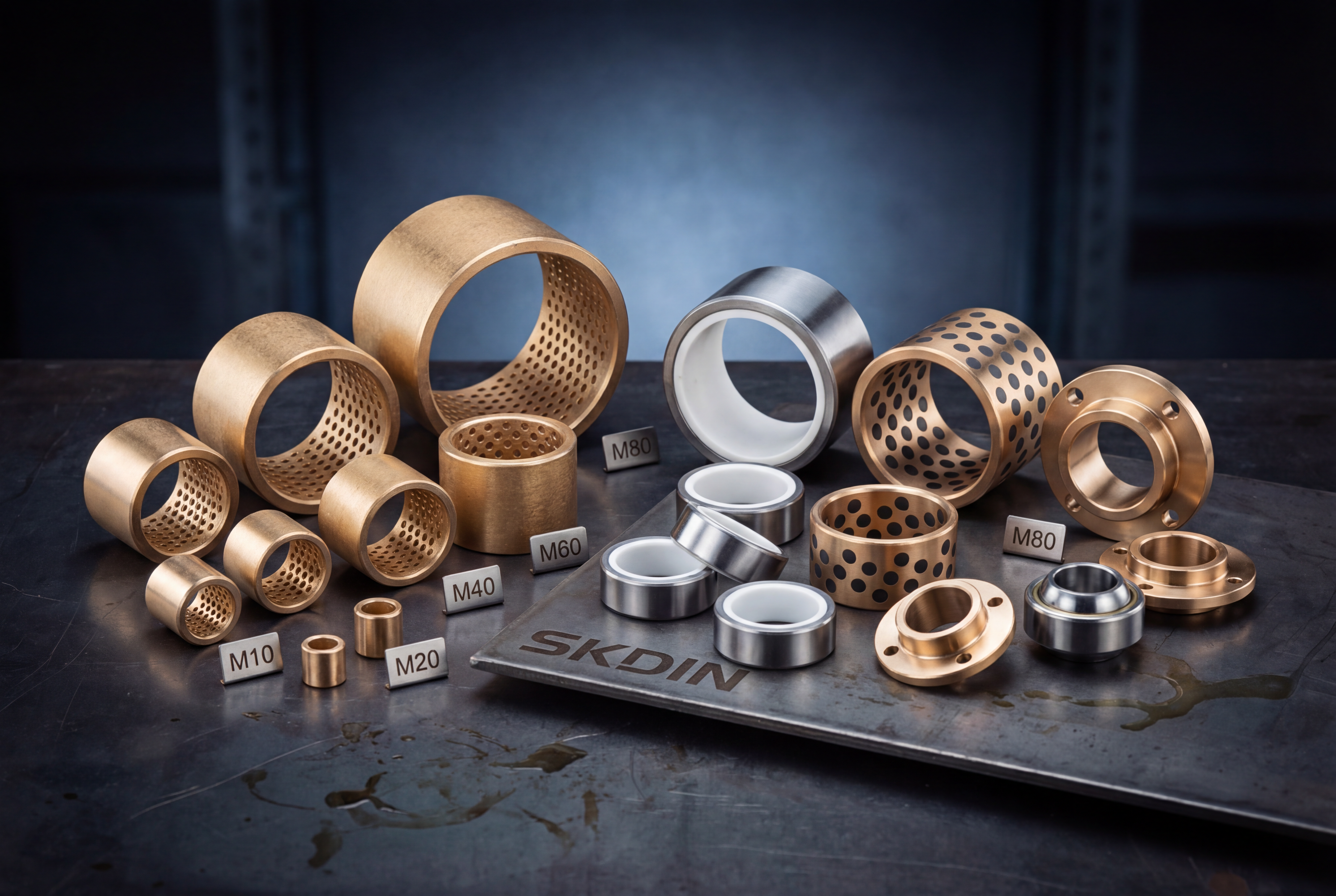
At SKDIN, we manufacture a complete range of high-quality self-lubricating solutions. From standard sintered bronze Oilite bushings to advanced PTFE composite liners and heavy-duty graphite-plugged bronze, our products are engineered to keep your machinery running smoothly without the need for constant maintenance.
Explore the SKDIN Self-Lubricating Bearing Catalog today, or Contact Our Engineering Team to discuss a custom maintenance-free solution for your next project.