
Bearing Failure Analysis: How to Diagnose and Prevent Premature Failures
 Mia
Mia
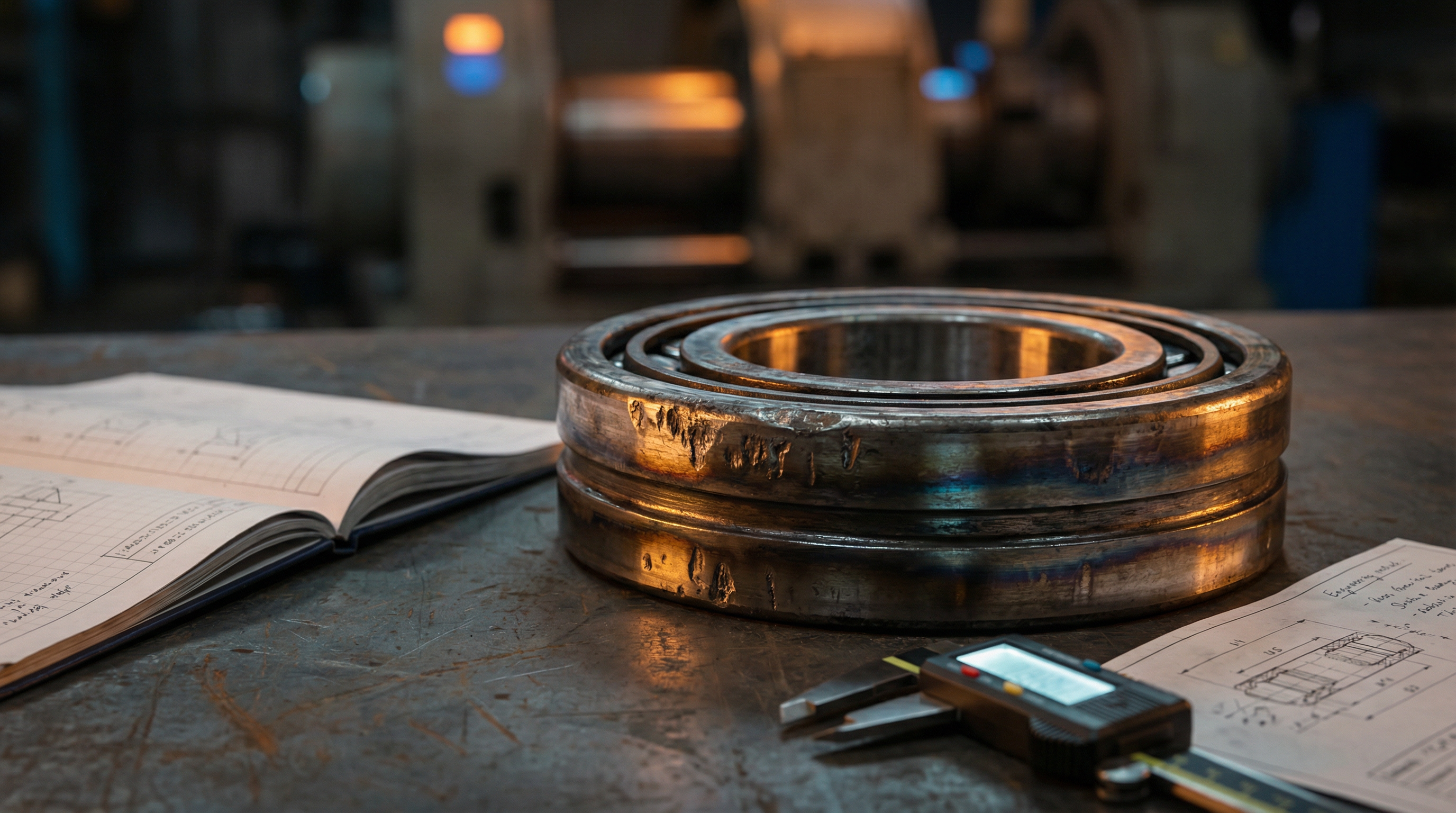
When a critical industrial bearing fails prematurely, the cost of the replacement part is usually negligible compared to the cost of unplanned machine downtime and lost production.
Bearings rarely "just break." They leave behind a trail of physical evidence—a forensic story written in the metal of the raceways and the condition of the grease. By learning how to read this evidence, maintenance engineers can identify the root cause of the failure and implement corrective actions to ensure it never happens again.
In this comprehensive 2026 engineering guide, we will explore the 6 most common bearing failure modes, explain how to distinguish between confusing damage patterns (like spalling vs. brinelling), and provide a practical noise diagnosis guide.
The 6 Common Bearing Failure Modes
According to industry data, less than 10% of bearings reach their calculated fatigue life. The other 90% fail prematurely due to external factors. Here are the six primary culprits:
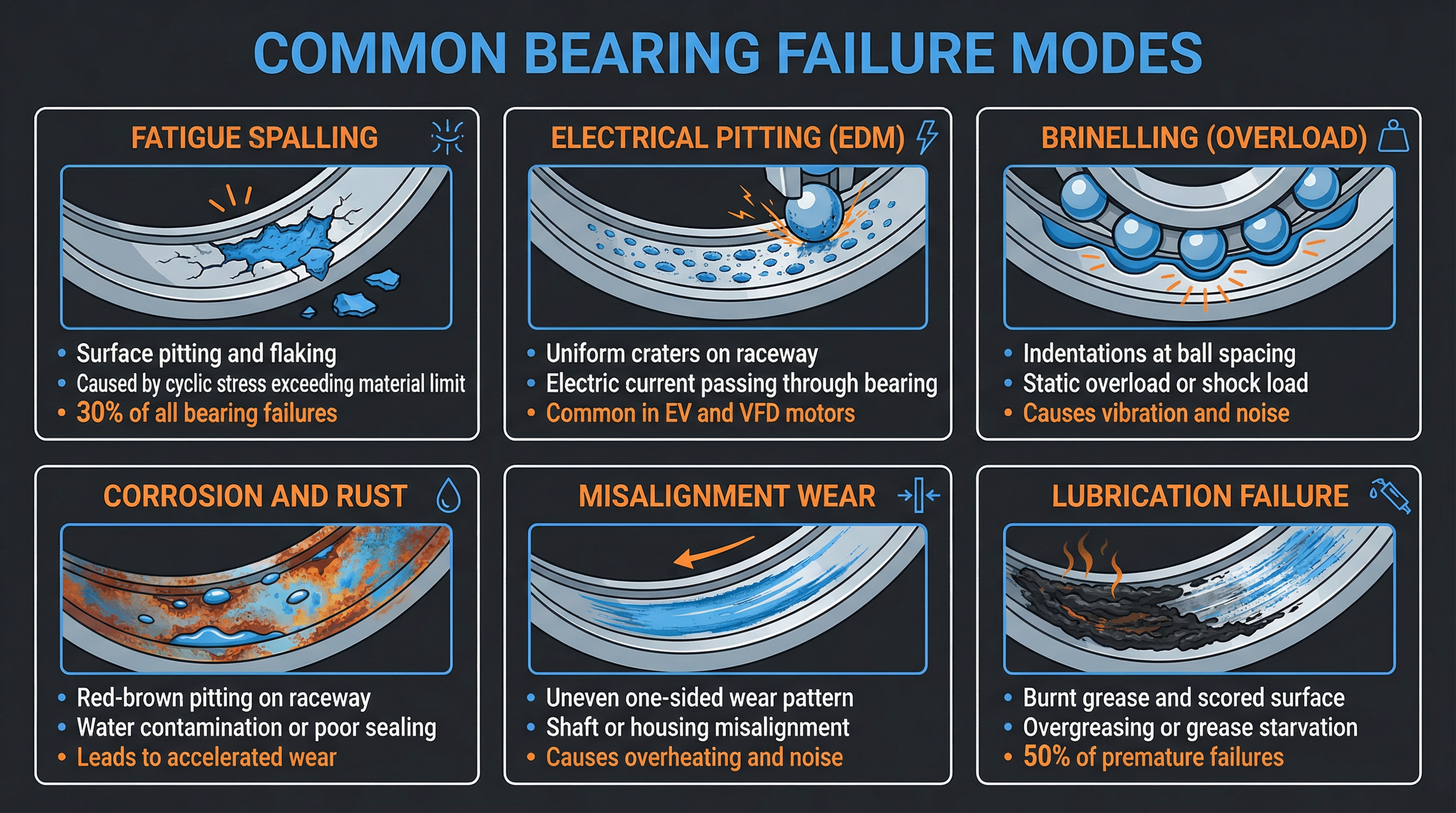
1. Fatigue Spalling (Flaking): This is the natural end-of-life for a bearing, but it can happen prematurely if the bearing is overloaded. It appears as deep, irregular pits where chunks of metal have flaked away from the raceway surface.
2. Electrical Pitting (EDM): Increasingly common in modern Electric Vehicles (EVs) and Variable Frequency Drive (VFD) motors. Stray electrical currents arc across the thin oil film between the balls and the raceway, creating thousands of microscopic, uniform craters. Over time, this creates a "washboard" or "fluting" pattern.
3. Brinelling (Overload): Caused by a massive static overload or a severe shock impact (like hitting the bearing with a hammer during installation). It leaves smooth, evenly spaced indentations on the raceway that perfectly match the spacing of the rolling elements.
4. Corrosion and Rust: Caused by water ingress or acidic environments. It appears as reddish-brown discoloration and pitting. Rust acts as an abrasive, rapidly accelerating wear.
5. Misalignment Wear: If the shaft or housing is not perfectly aligned, the load is forced onto one edge of the raceway. This creates an uneven, heavy wear path on one side of the bearing, leading to rapid overheating.
6. Lubrication Failure: The #1 cause of premature failure (accounting for over 50% of cases). Whether it is overgreasing, grease starvation, or contamination, the result is metal-to-metal contact, severe scoring, and burnt, blackened grease.
Spalling vs. Brinelling: How to Tell Them Apart
These two failure modes are often confused because they both involve damage to the raceway at the ball contact points. However, their root causes are entirely different.
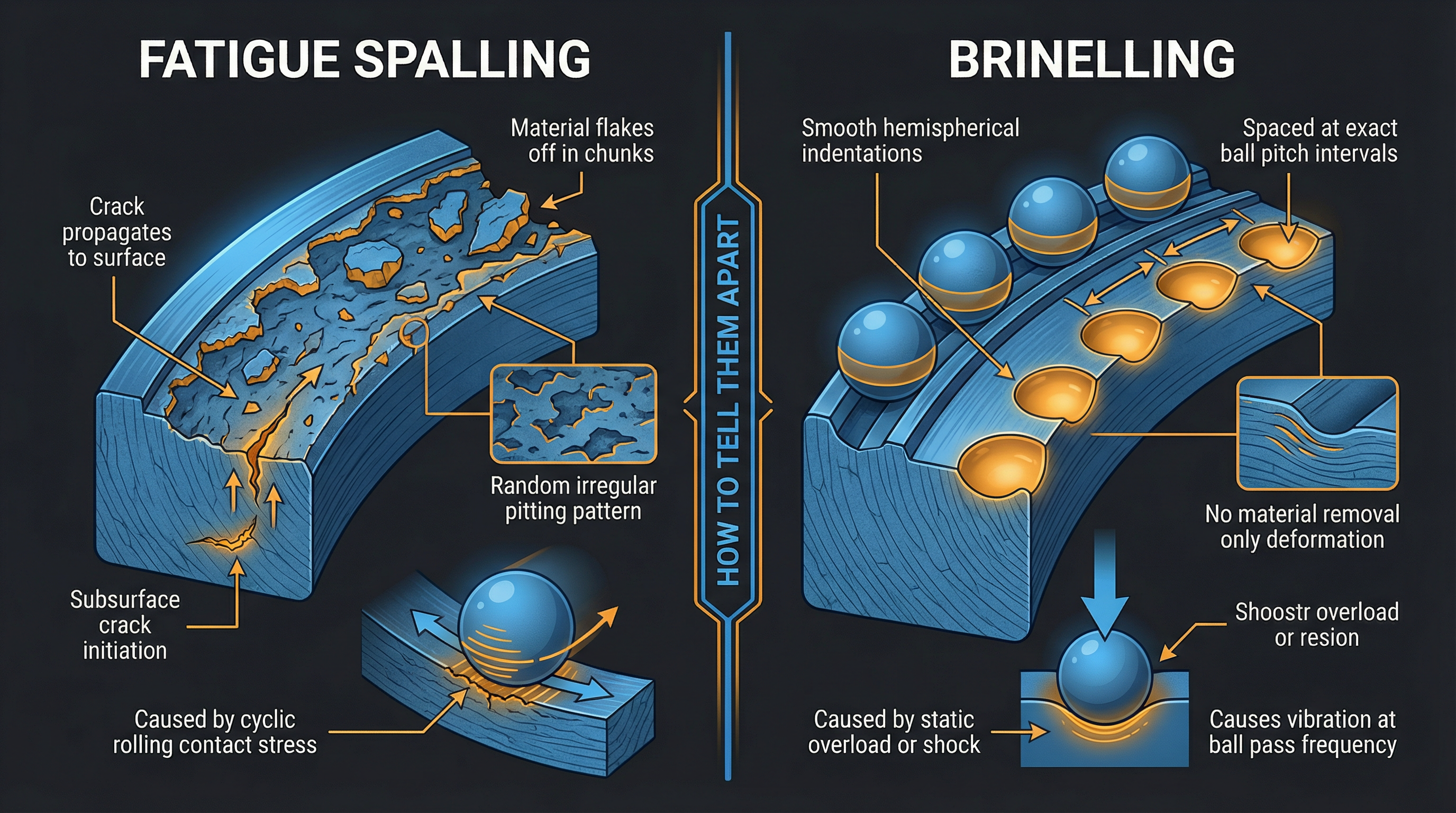
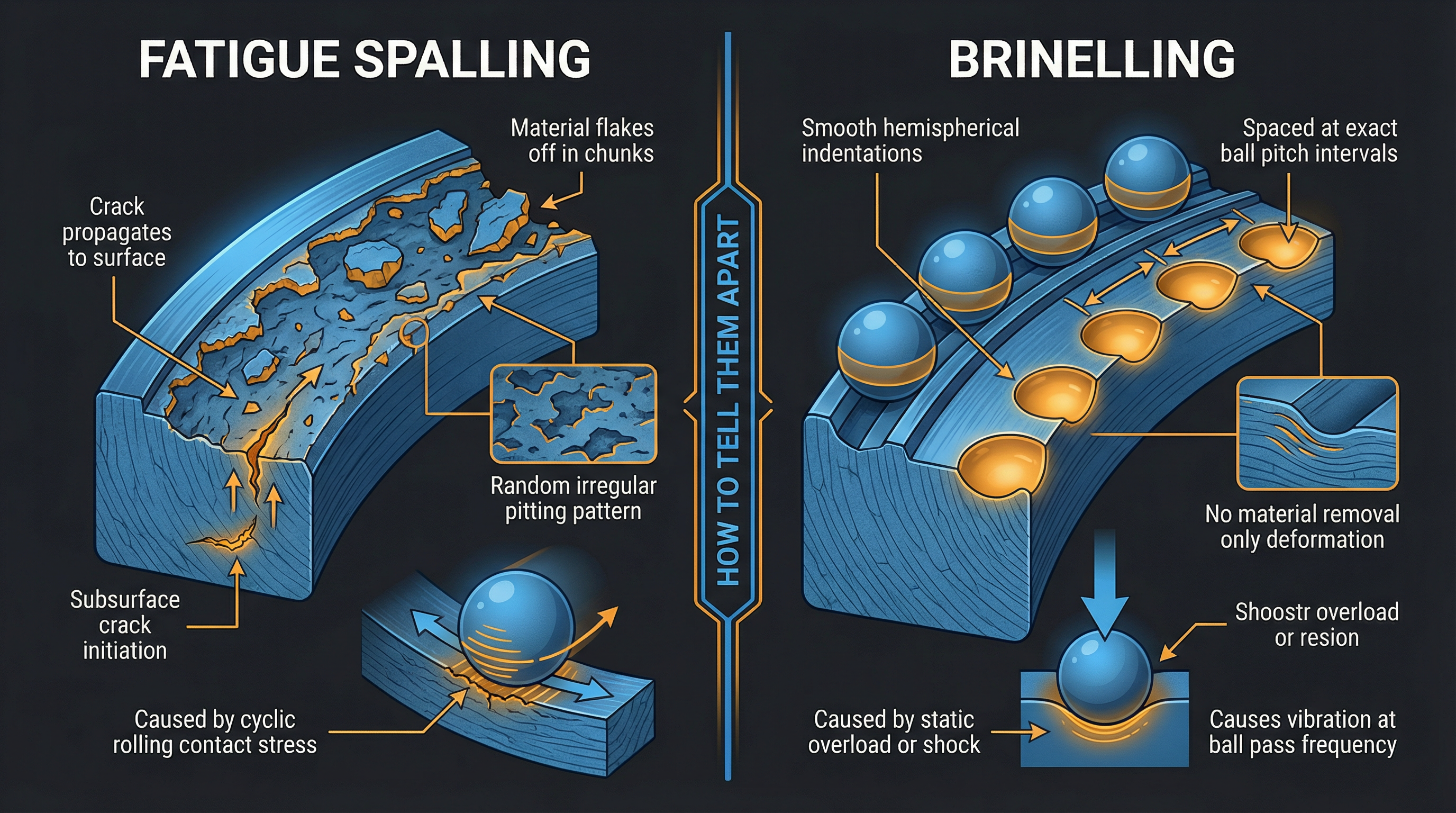
Fatigue Spalling is a subsurface failure. Cyclic rolling stress causes microscopic cracks to form below the surface. Eventually, these cracks propagate to the surface, and a chunk of metal breaks off. The resulting pit is rough, jagged, and irregular. Root Cause: Dynamic overloading or reaching the end of fatigue life.
Brinelling is a surface deformation. The metal is not removed; it is simply pushed inward, like pressing a thumb into clay. The resulting indentations are perfectly smooth, hemispherical, and spaced exactly at the ball pitch intervals. Root Cause: Static shock load (often during improper installation).
Bearing Noise Diagnosis Guide
Before a bearing fails completely, it will usually warn you through changes in its acoustic signature. Listening to your bearings is the first line of defense.
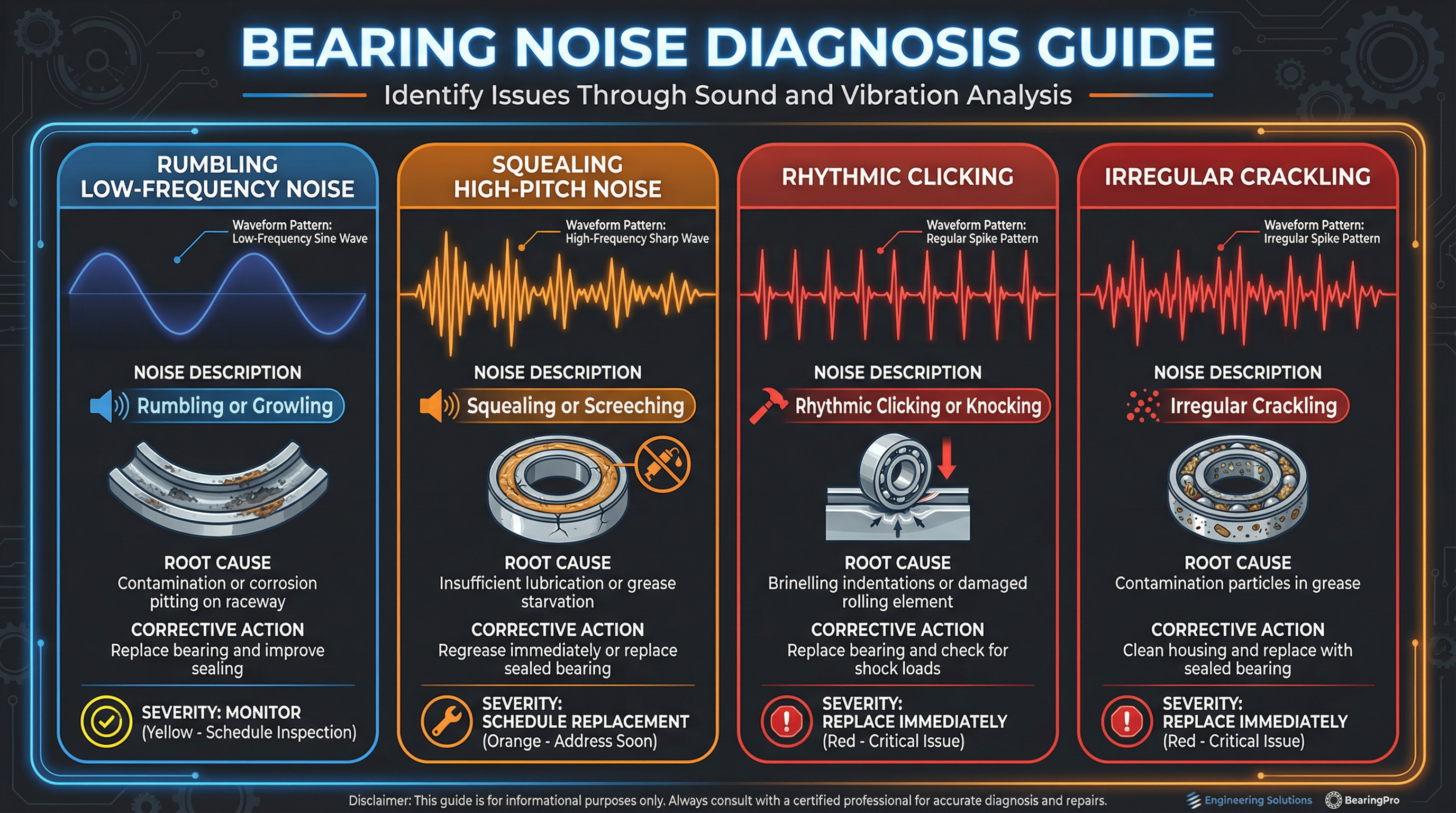
Rumbling or Growling (Low Frequency): Usually indicates severe contamination or advanced corrosion pitting on the raceways. The bearing is rolling over a rough surface. Action: Schedule replacement and improve sealing.
Squealing or Screeching (High Pitch): The classic sound of metal-to-metal sliding friction. This almost always indicates severe lubrication starvation. Action: Regrease immediately. If it is a sealed bearing, replace it.
Rhythmic Clicking or Knocking: Indicates a localized defect, such as a single spalled area on the raceway or a damaged rolling element. The click occurs every time the defect is rolled over. Action: Replace bearing and check for shock loads.
Irregular Crackling: Sounds like crushing dry leaves. This indicates hard particle contamination (dirt, sand, or metal shavings) churning inside the grease. Action: Clean the housing thoroughly and replace the bearing.
Root Cause Diagnosis Flowchart
When you pull a failed bearing from a machine, use this logical flowchart to determine the root cause and implement the correct preventative measure.
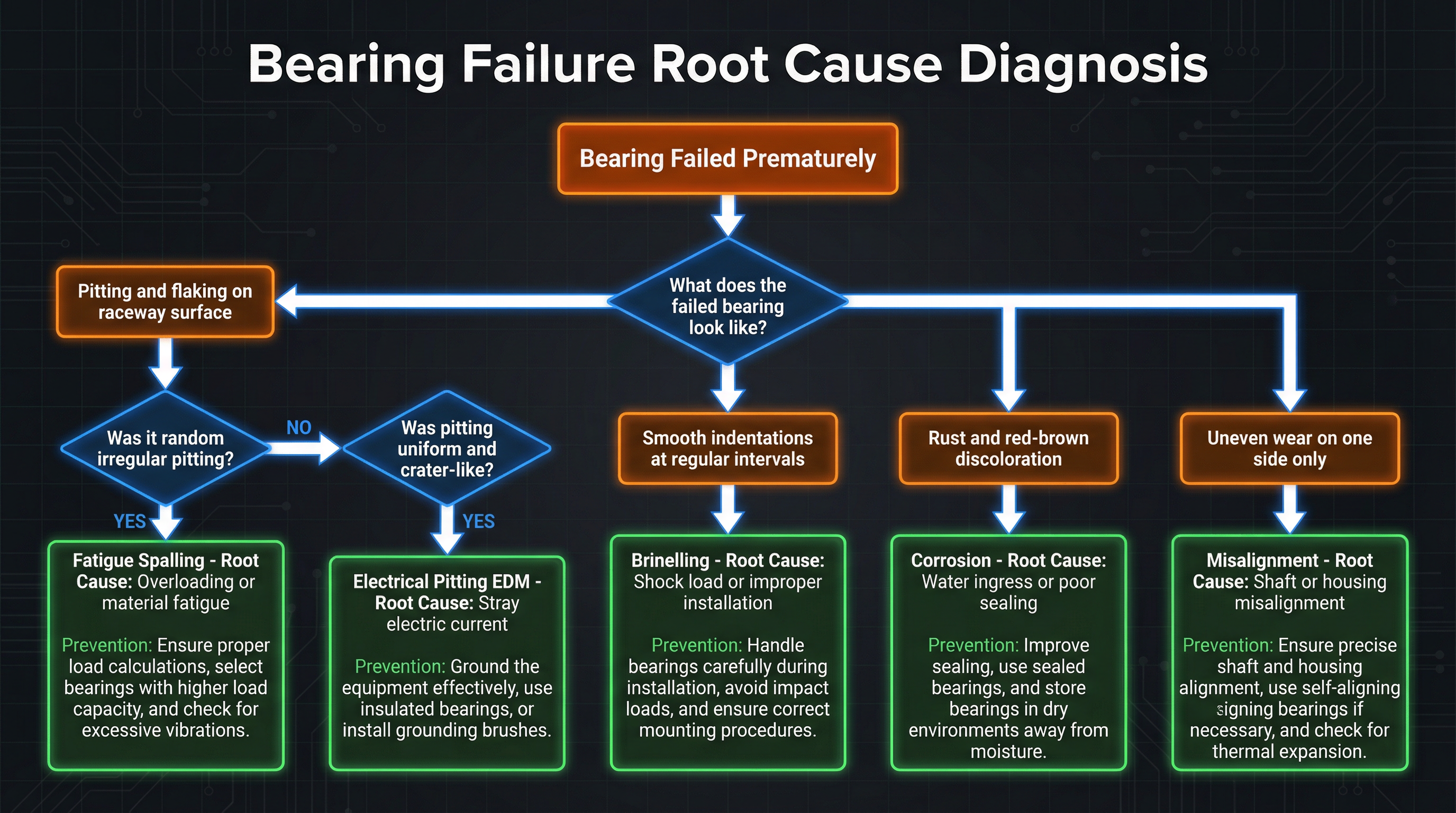
1. Is the raceway pitted and flaking?
Irregular chunks missing? → Fatigue Spalling (Check load calculations).
Uniform, frosted craters? → Electrical Pitting (Install grounding brushes or use ceramic bearings).
2. Are there smooth indentations matching the balls? → Brinelling (Stop using hammers during installation; use proper press fits).
3. Is there red/brown discoloration? → Corrosion (Upgrade to 2RS rubber seals or stainless steel bearings).
4. Is the wear path heavily skewed to one side? → Misalignment (Re-align the shaft/housing using laser alignment tools).
SKDIN: Engineered for Reliability
The best way to handle bearing failure is to prevent it from happening in the first place.
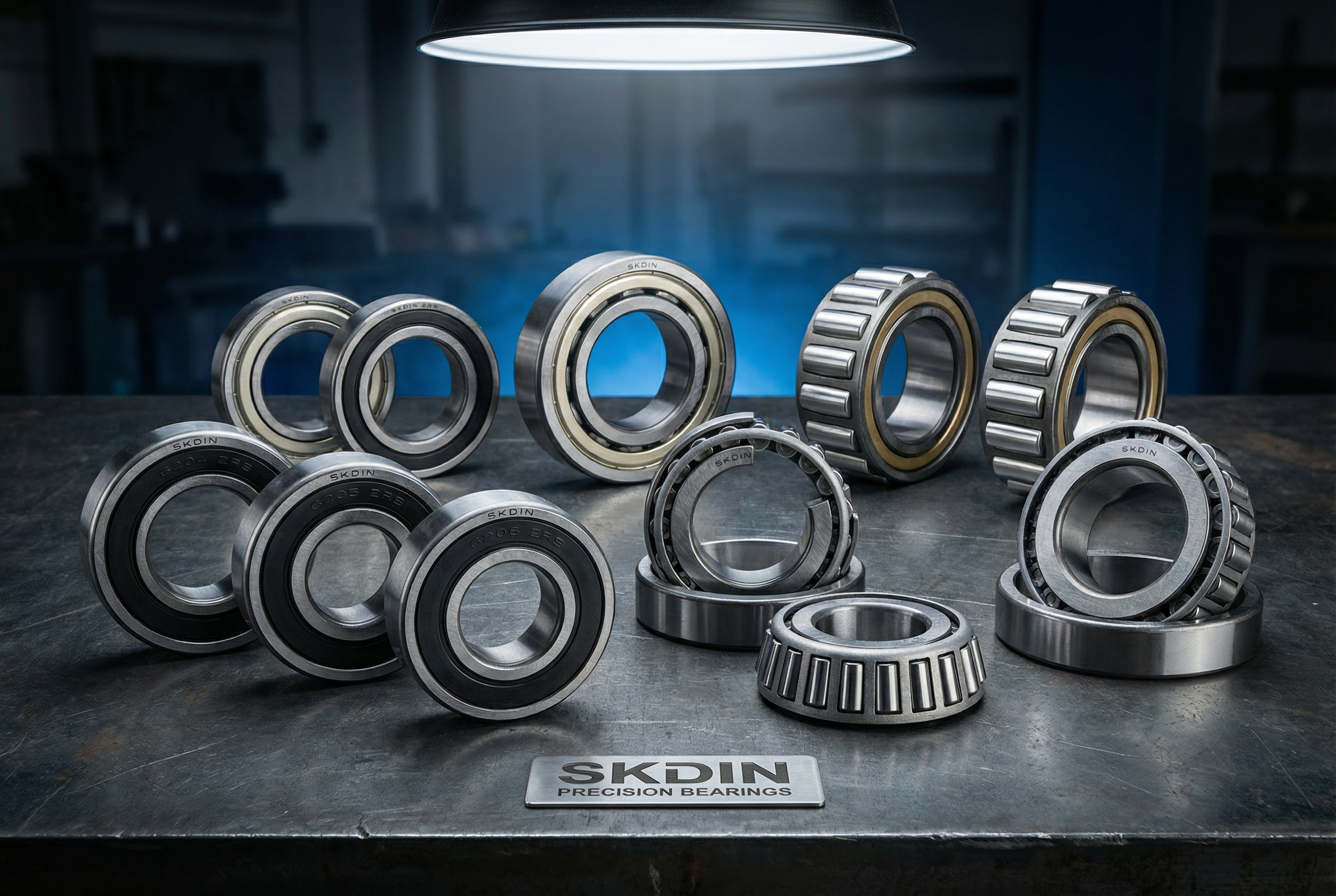
At SKDIN, we manufacture our bearings using ultra-clean, vacuum-degassed steel to maximize fatigue life. Our advanced 2RS sealing technologies keep contamination out and premium grease in, virtually eliminating the most common causes of premature failure.
For extreme environments, we offer specialized solutions including ceramic hybrid bearings to prevent electrical pitting and stainless steel bearings for ultimate corrosion resistance.
Explore the SKDIN Precision Bearing Catalog today, or Contact Our Engineering Team for expert assistance with your failure analysis and bearing selection.