
Bearing Lubrication Guide: Grease vs. Oil, NLGI Grades, and Fill Quantities
 Mia
Mia
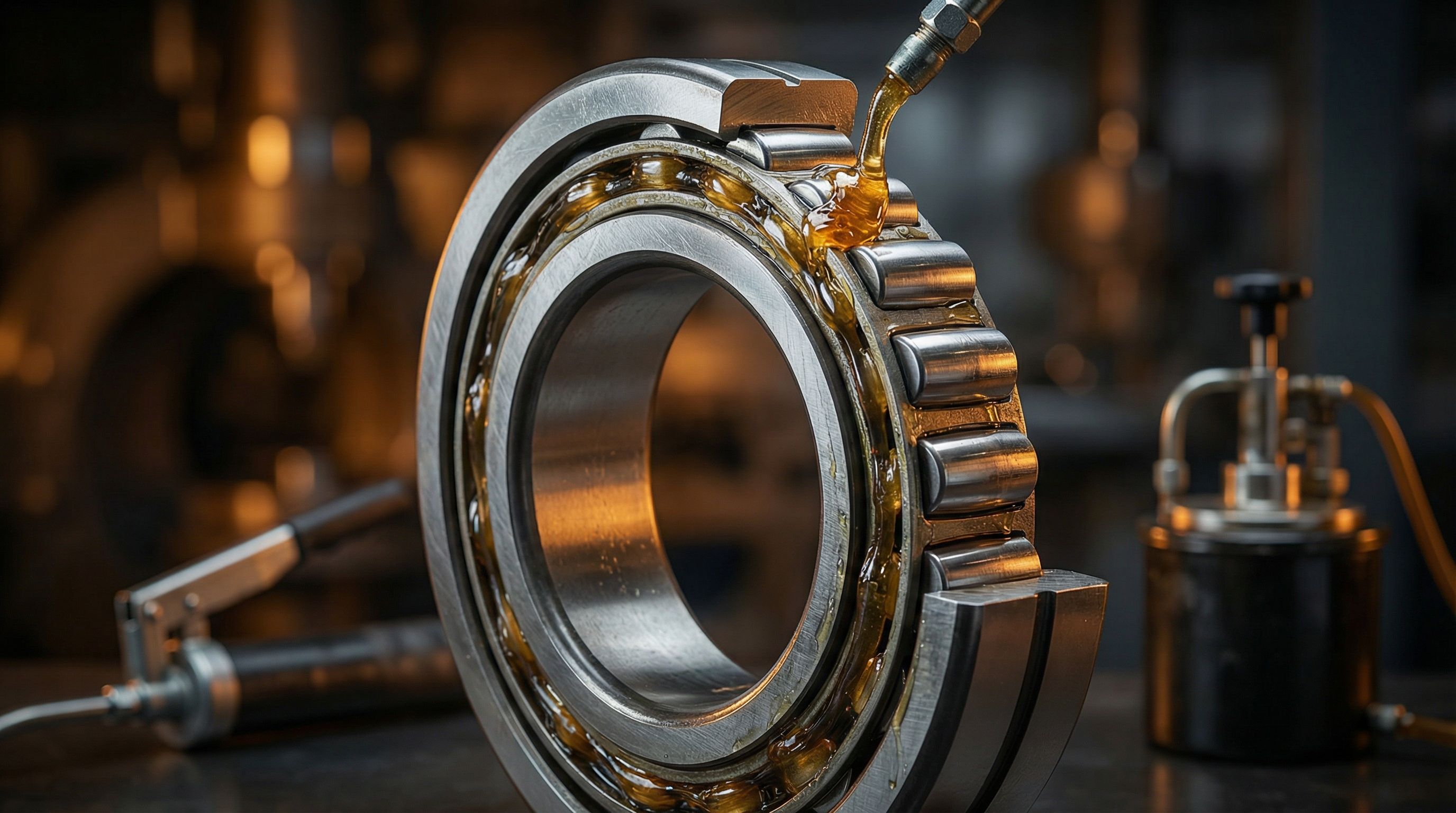
Did you know that over 50% of all premature bearing failures are caused by improper lubrication? Whether it is using the wrong type of grease, applying too much, or allowing contamination to enter the housing, lubrication errors are the silent killers of industrial machinery.
A bearing without proper lubrication is just metal grinding against metal. The lubricant's primary job is to create a microscopic elastohydrodynamic film that separates the rolling elements from the raceways, preventing direct contact, reducing friction, and dissipating heat.
In this comprehensive 2026 engineering guide, we will settle the debate between grease and oil, explain how to decode NLGI grease consistency grades, reveal the exact grease fill quantities you should be using, and show you how to identify common lubrication failures.
The Big Decision: Grease vs. Oil Lubrication
The first step in designing a bearing system is choosing the lubrication medium. While both serve the same fundamental purpose, their applications are vastly different.
Grease Lubrication
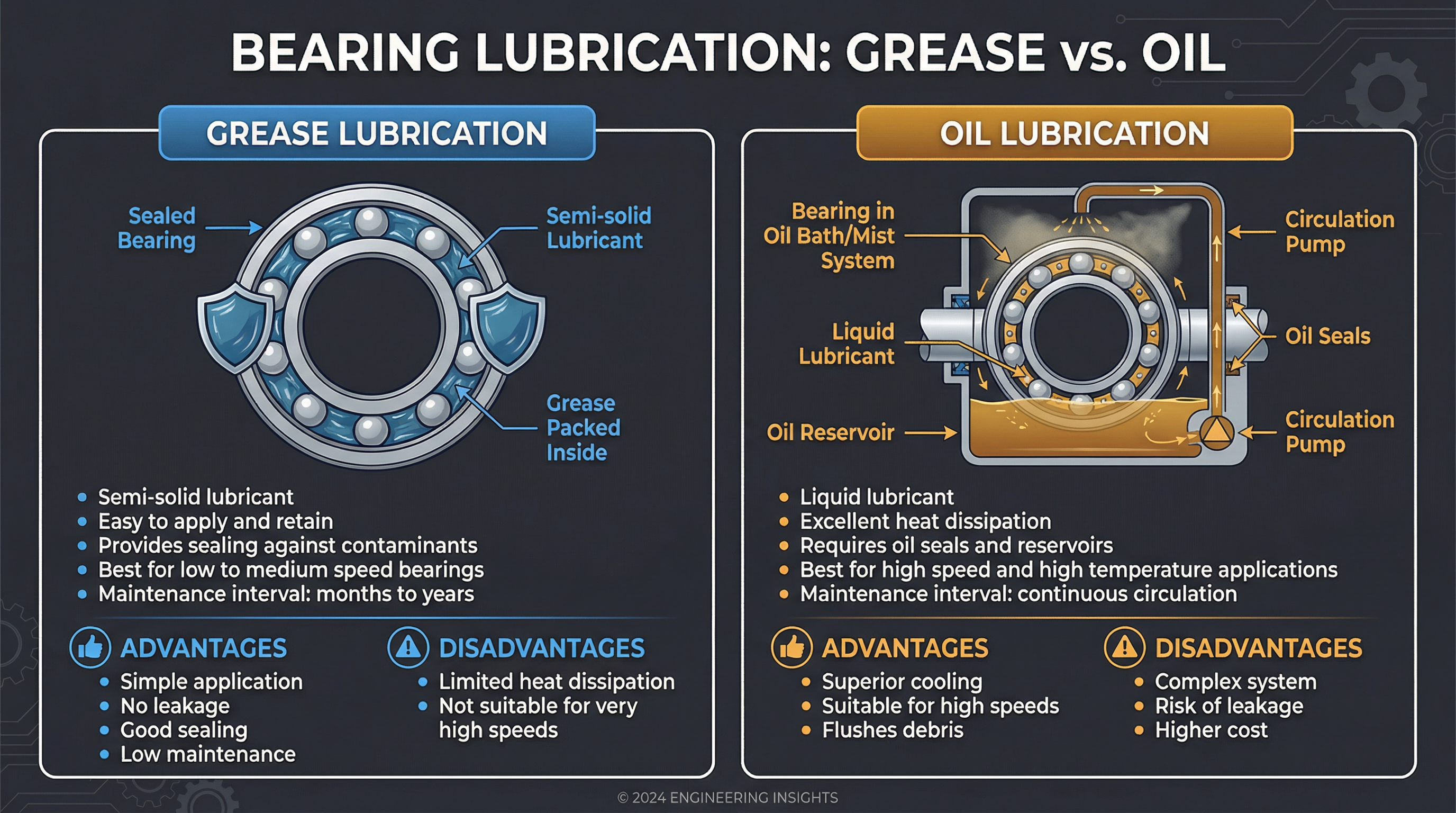
Grease is essentially a base oil suspended in a thickener (like a sponge holding water). It is the most common choice, used in roughly 80% of all rolling bearings.
Advantages: It stays in place, making sealing much easier. It acts as an additional barrier against dust and moisture. It requires less complex housing designs and lower maintenance frequency.
Disadvantages: It cannot dissipate heat effectively. Therefore, it is not suitable for ultra-high-speed applications where heat generation is severe.
Oil Lubrication
Oil is a liquid lubricant used primarily in high-speed, high-temperature, or heavily loaded applications where heat must be actively removed from the bearing.
Advantages: Excellent heat dissipation (especially in circulating oil systems). It flushes away wear debris and contaminants. Suitable for the highest operating speeds.
Disadvantages: Requires complex sealing arrangements to prevent leaks. Requires oil reservoirs, pumps, and filters. Higher initial cost and maintenance complexity.
Understanding NLGI Grease Consistency Grades
If you choose grease, you must select the correct consistency. The National Lubricating Grease Institute (NLGI) classifies grease consistency on a scale from 000 (fluid) to 6 (solid block).
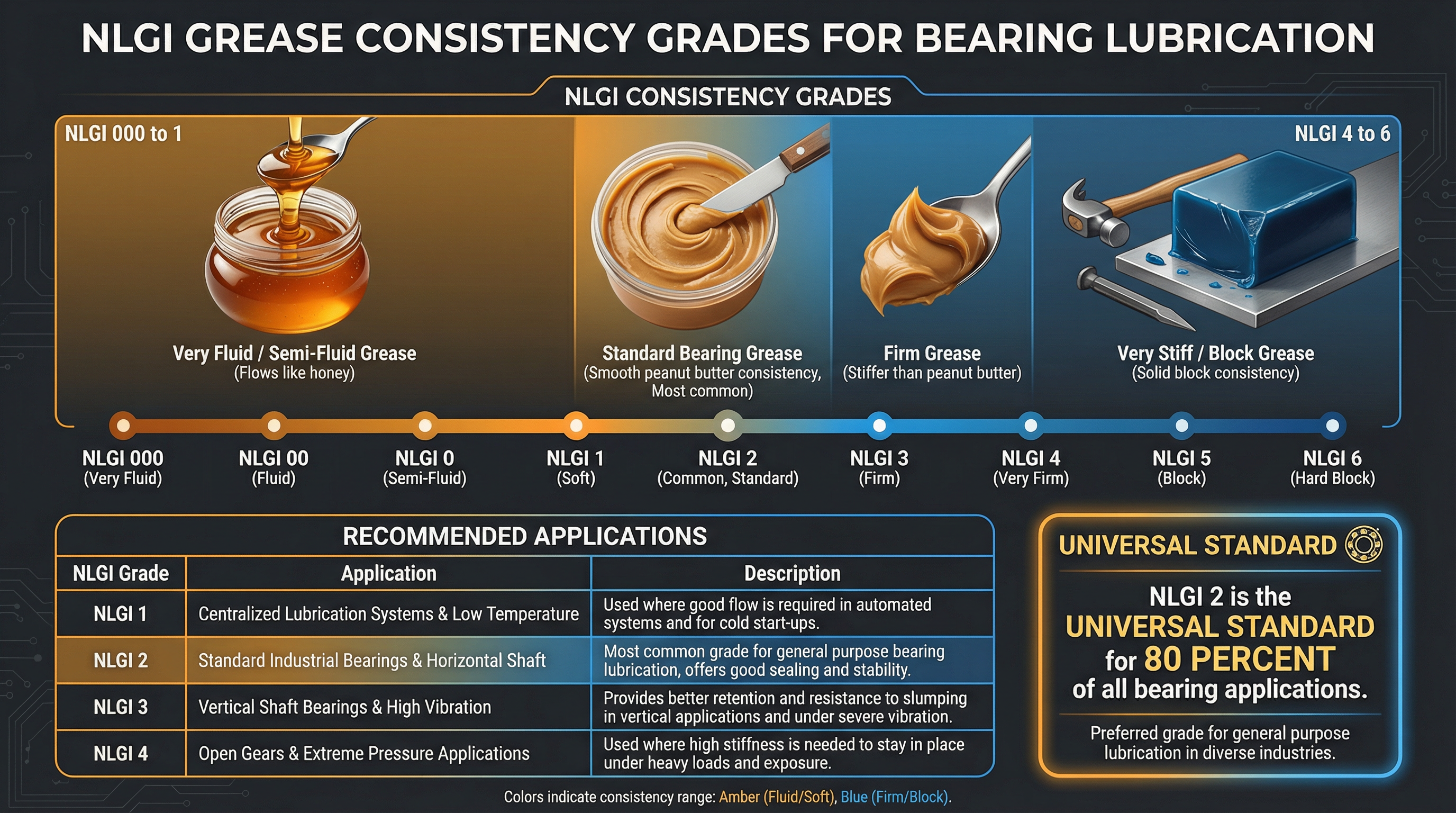
NLGI 000 to 0 (Fluid/Semi-Fluid): Flows like thick honey. Used in centralized automated lubrication systems and enclosed gearboxes where the grease must flow easily.
NLGI 1 (Soft): Used in cold temperature environments where standard grease would become too stiff.
NLGI 2 (Standard): Has the consistency of smooth peanut butter. This is the universal standard for 80% of all general-purpose bearing applications. If a manual doesn't specify a grade, it usually implies NLGI 2.
NLGI 3 (Firm): Stiffer than NLGI 2. Used in vertical shaft applications (to prevent the grease from slumping downward) and in high-vibration environments.
NLGI 4 to 6 (Very Firm to Block): Rarely used in standard rolling bearings. Used in open gears or extreme pressure applications.
The Golden Rule: Correct Grease Fill Quantity
The most common mistake maintenance technicians make is overgreasing. Pumping a bearing housing completely full of grease is a guaranteed way to destroy it.
When a bearing is overfilled, the rolling elements have to constantly plow through the excess grease. This "churning" generates massive amounts of internal friction and heat, rapidly degrading the grease and destroying the bearing seals.
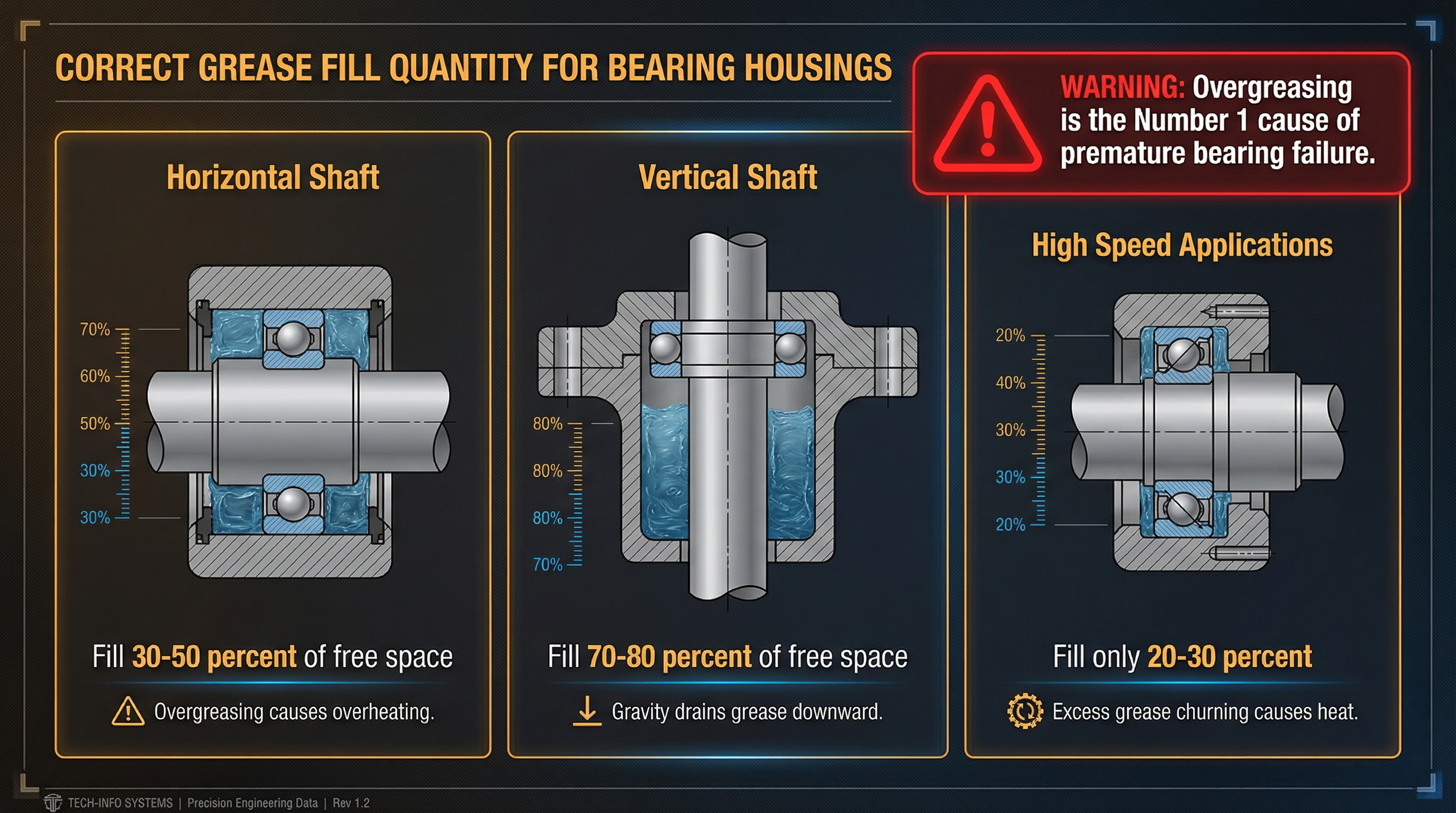
Here are the standard engineering guidelines for grease fill quantities based on the free space inside the bearing housing:
1. Standard Horizontal Shafts: Fill 30% to 50% of the free space. This provides enough lubrication while leaving room for the grease to expand as it warms up.
2. Vertical Shafts: Fill 70% to 80% of the free space. Gravity will naturally pull the grease downward, so a higher initial fill (often with a stiffer NLGI 3 grease) is required to ensure the top bearings remain lubricated.
3. High-Speed Applications: Fill only 20% to 30% of the free space. At high speeds, minimizing churning friction is critical to prevent catastrophic overheating.
Identifying the 4 Common Lubrication Failures
When a bearing fails, the grease inside tells the story.
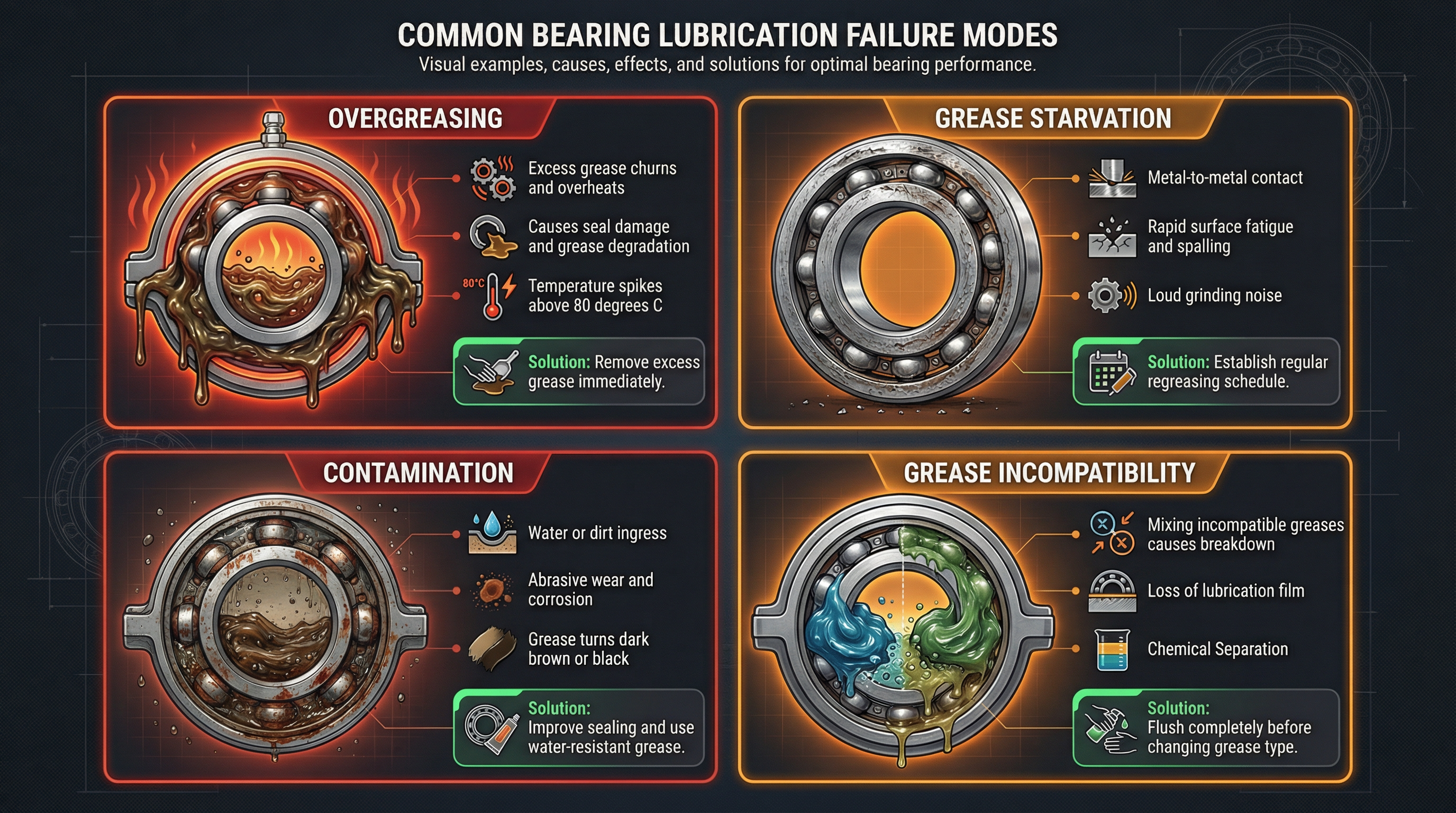
1. Overgreasing: The housing is packed tight, seals are blown out, and the grease is dark and burnt from churning heat (often exceeding 80°C).
2. Grease Starvation: The raceways show severe scoring, bluing from heat, and metal-to-metal wear. The bearing will sound like it is grinding.
3. Contamination: The grease has turned into a dark, abrasive paste. Water ingress will cause the grease to look milky and lead to rapid rust formation on the raceways.
4. Grease Incompatibility: If you mix a lithium-based grease with a polyurea-based grease, the thickeners can react chemically. The mixture will turn into a liquid and run out of the bearing, leaving it completely dry. Always flush old grease before changing types.
SKDIN: Pre-Lubricated for Maximum Reliability
Managing lubrication schedules across a massive industrial plant is a logistical challenge. That is why many engineers are moving toward "sealed-for-life" bearing solutions.
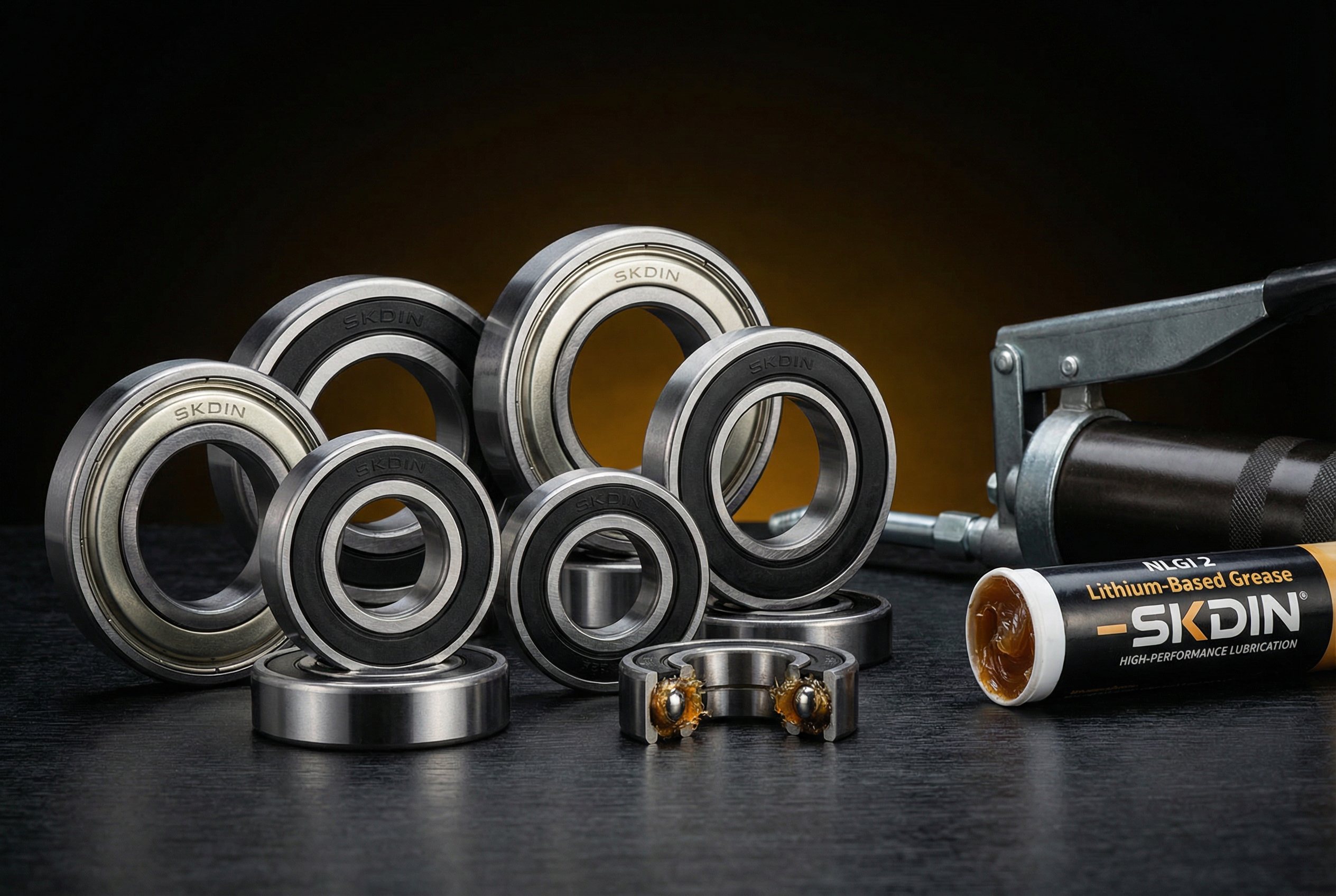
At SKDIN, we offer a comprehensive range of deep groove ball bearings and tapered roller bearings equipped with advanced 2RS rubber seals or ZZ metal shields. These bearings are factory-filled with premium, high-temperature synthetic grease in a cleanroom environment, ensuring the exact 30% fill ratio for optimal performance.
For applications requiring regreasing, our open bearings are designed with optimized internal geometries to facilitate smooth grease flow and distribution.
Stop premature failures before they start. Explore the SKDIN Bearing Catalog today, or Contact Our Engineering Team for expert advice on selecting the perfect lubrication strategy for your machinery.