
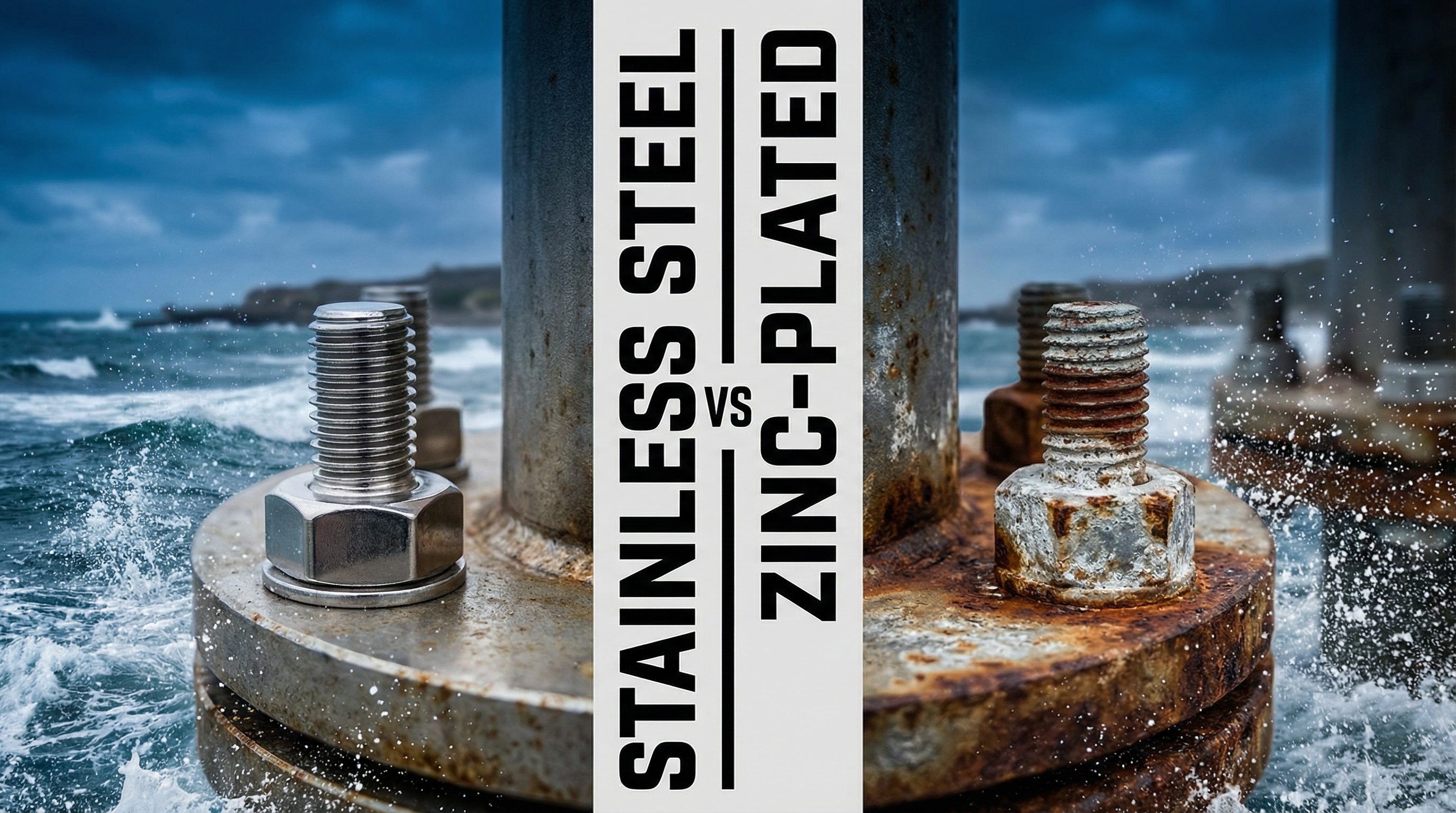
Stainless Steel vs. Zinc-Plated Bolts: The Ultimate 2026 Selection Guide
 Mia
Mia
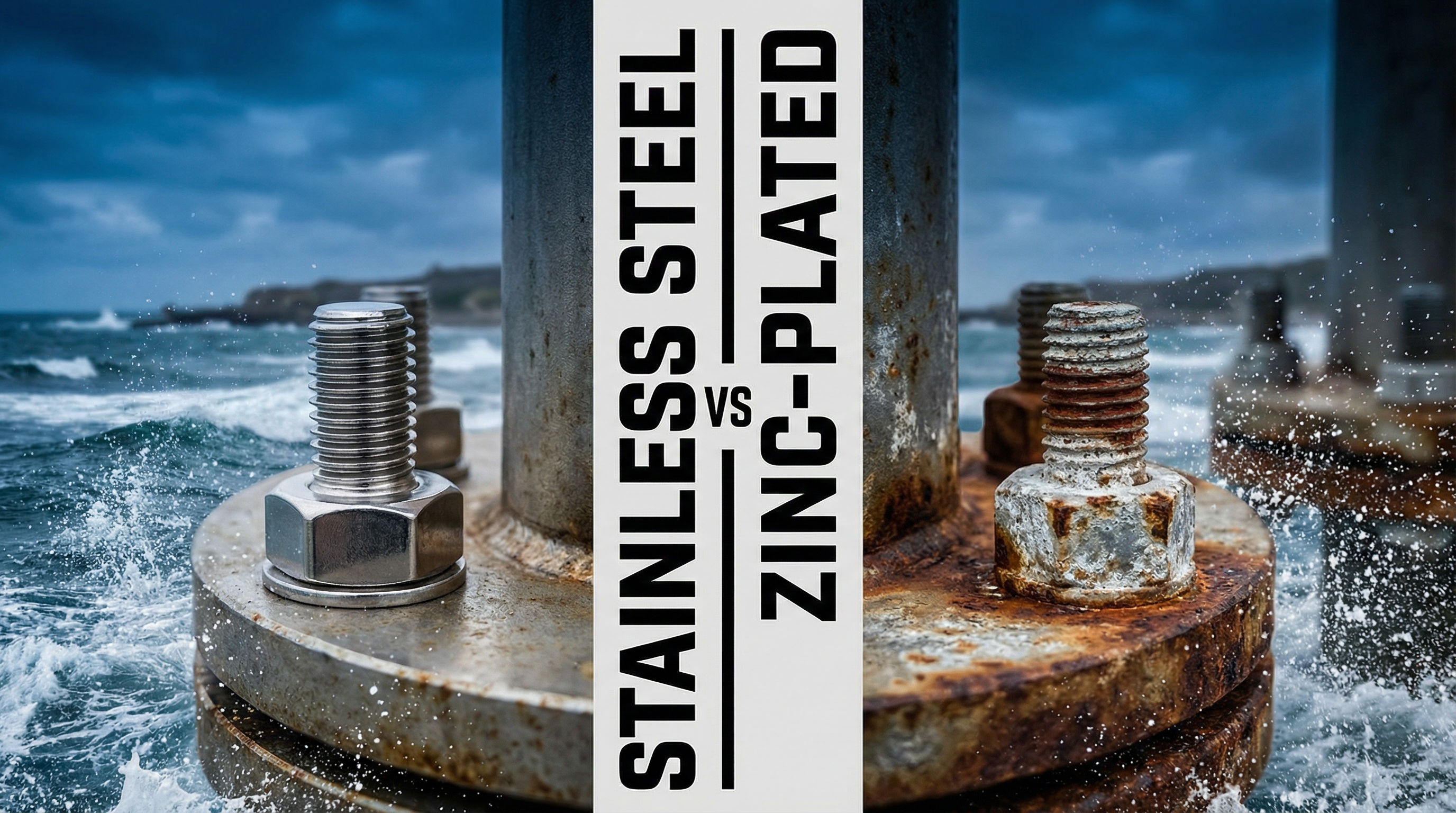
When specifying fasteners for an engineering project, construction build, or manufacturing assembly, one of the most common dilemmas engineers and procurement managers face is choosing the right material finish. The debate almost always comes down to two heavyweights: Stainless Steel and Zinc-Plated Carbon Steel.
Both options offer distinct advantages, but making the wrong choice can lead to premature structural failure, unsightly rust, or unnecessary budget overruns. In 2026, as material costs fluctuate and environmental regulations tighten, making an informed decision is more critical than ever.
In this comprehensive guide, we will break down the fundamental differences between stainless steel and zinc-plated bolts, compare their performance in extreme conditions, and provide a clear framework for selecting the perfect fastener for your specific application.
Understanding the Materials
Before comparing their performance, it is essential to understand what these two types of fasteners are actually made of.
What are Zinc-Plated Bolts?
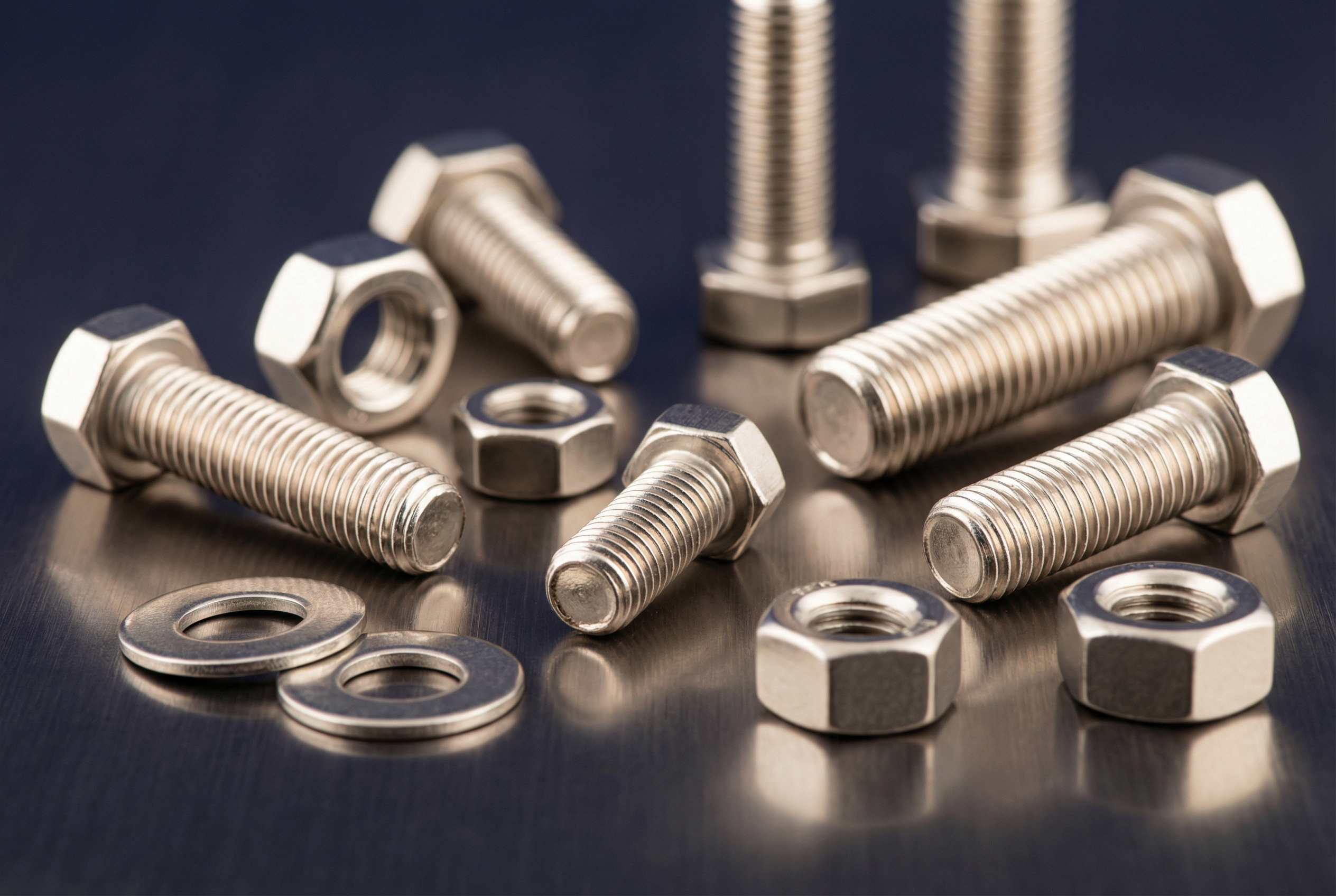
Zinc-plated bolts are typically made from standard carbon steel or alloy steel (such as Grade 8.8 or 10.9). To protect the raw steel from rusting, the bolts undergo an electroplating process where a thin layer of zinc is deposited onto the surface. This zinc layer acts as a "sacrificial anode." When exposed to moisture, the zinc corrodes first, protecting the underlying steel. However, once the thin zinc layer is scratched, worn away, or fully oxidized (forming "white rust"), the steel core will quickly begin to form red rust.
What are Stainless Steel Bolts?
Unlike zinc-plated bolts, which rely on a surface coating, stainless steel bolts are made from a solid steel alloy containing a minimum of 10.5% chromium. This chromium reacts with oxygen in the air to form an invisible, self-healing layer of chromium oxide on the surface. If the bolt is scratched, the oxide layer instantly reforms, preventing rust from penetrating the metal. The most common grades are 304 (A2) for general use and 316 (A4), which contains molybdenum for superior resistance to chlorides (salt).
Head-to-Head Performance Comparison
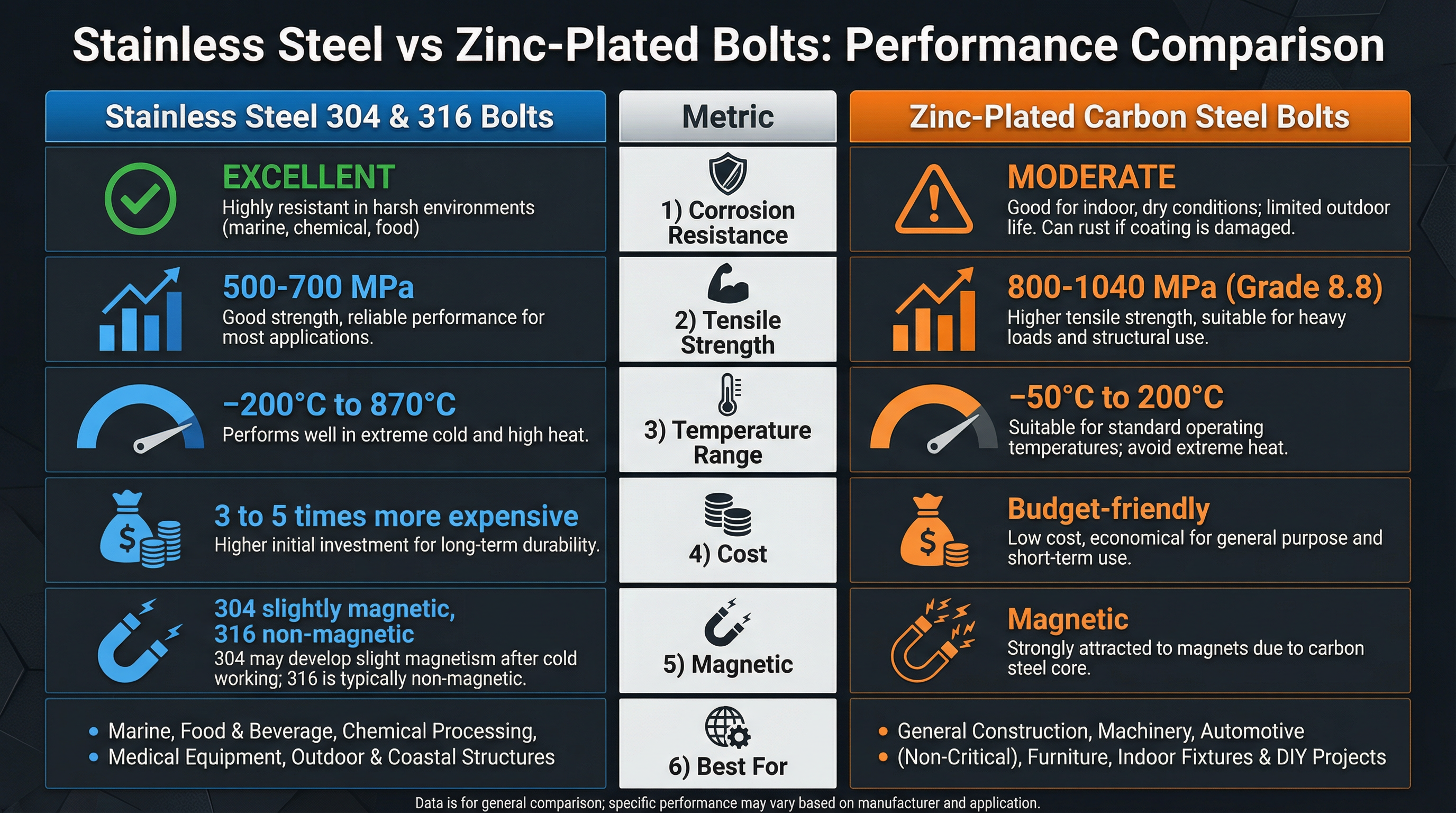
To determine which fastener is right for your project, we must evaluate them across three critical metrics: Corrosion Resistance, Tensile Strength, and Cost.
1. Corrosion Resistance: The Salt Spray Test
This is where the two materials diverge most significantly.
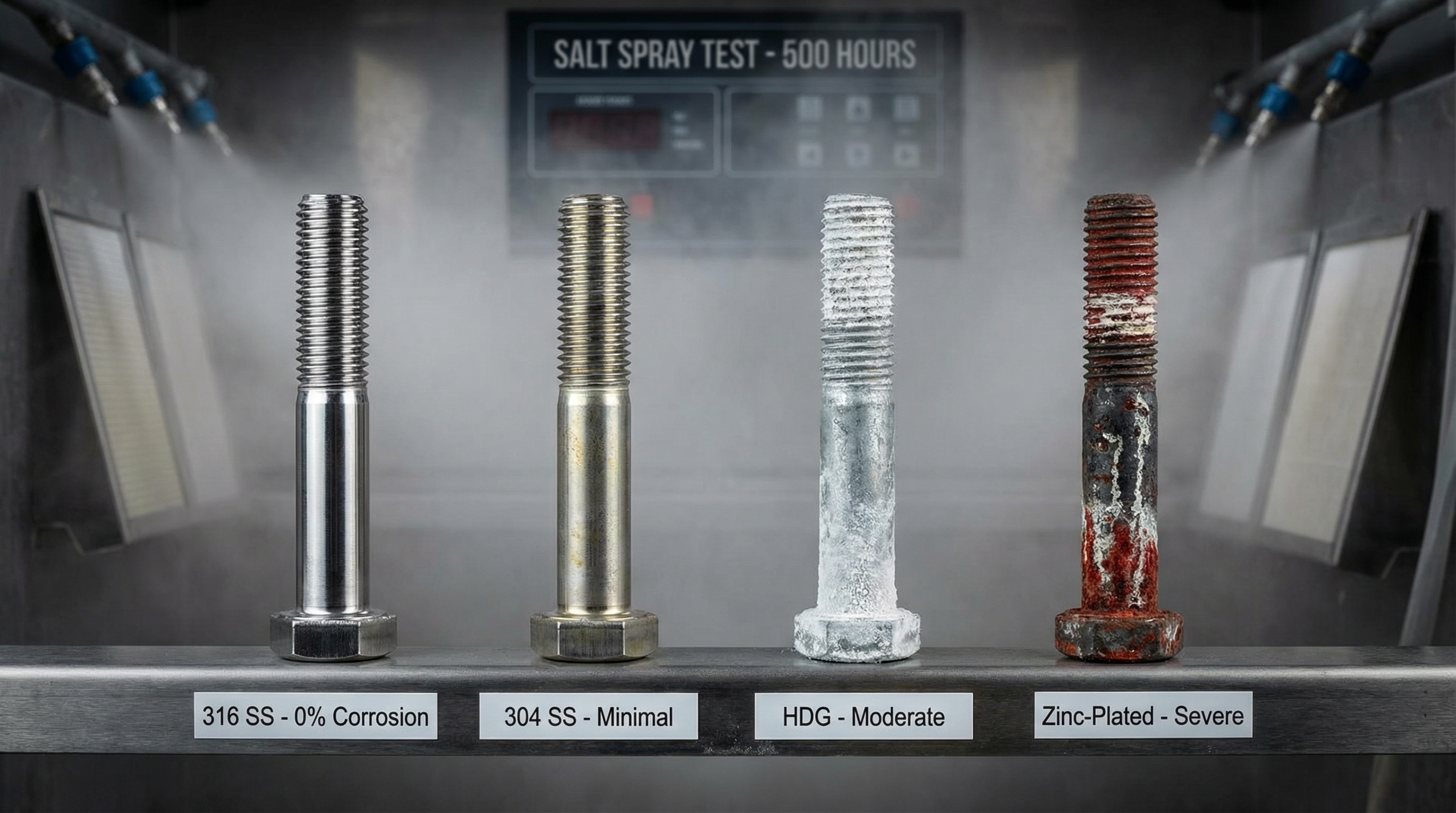
In a standard 500-hour salt spray test (simulating harsh coastal environments), the difference is stark. Zinc-plated bolts will typically show significant white rust within 48-72 hours, and red rust (complete coating failure) well before the 500-hour mark.
Conversely, a high-quality 316 stainless steel bolt will emerge from the 500-hour test looking virtually identical to when it went in, with zero red rust. If your application involves constant exposure to water, salt, or harsh chemicals, stainless steel is the undisputed winner.
2. Tensile Strength and Yield
A common misconception is that stainless steel is stronger than regular steel because it is more expensive and resists rust. This is false.
Standard commercial stainless steel bolts (like 304 and 316) generally have a lower tensile strength and yield strength compared to high-grade zinc-plated carbon steel bolts. For example, a standard zinc-plated Grade 8.8 metric bolt has a minimum tensile strength of 800 MPa. A standard Class 70 stainless steel bolt typically maxes out around 700 MPa.
Furthermore, stainless steel is prone to galling (cold welding) if the threads are not properly lubricated during installation, whereas zinc plating provides a degree of natural lubricity. If your primary concern is sheer clamping force and load-bearing capacity in a dry environment, high-grade zinc-plated steel is often the better structural choice.
3. Cost and Budget Considerations
Zinc-plated bolts are significantly cheaper to manufacture. The raw materials (carbon steel and zinc) are abundant, and the electroplating process is highly efficient.
Stainless steel bolts, due to the high cost of chromium, nickel, and molybdenum, can be 3 to 5 times more expensive than their zinc-plated counterparts. However, this initial cost must be weighed against the total lifecycle cost. If a cheap zinc bolt rusts and causes a machine to fail, the cost of downtime and replacement will far exceed the initial investment in stainless steel.
Application Selection Guide
Still unsure which to choose? Use this quick reference guide based on common industry applications:
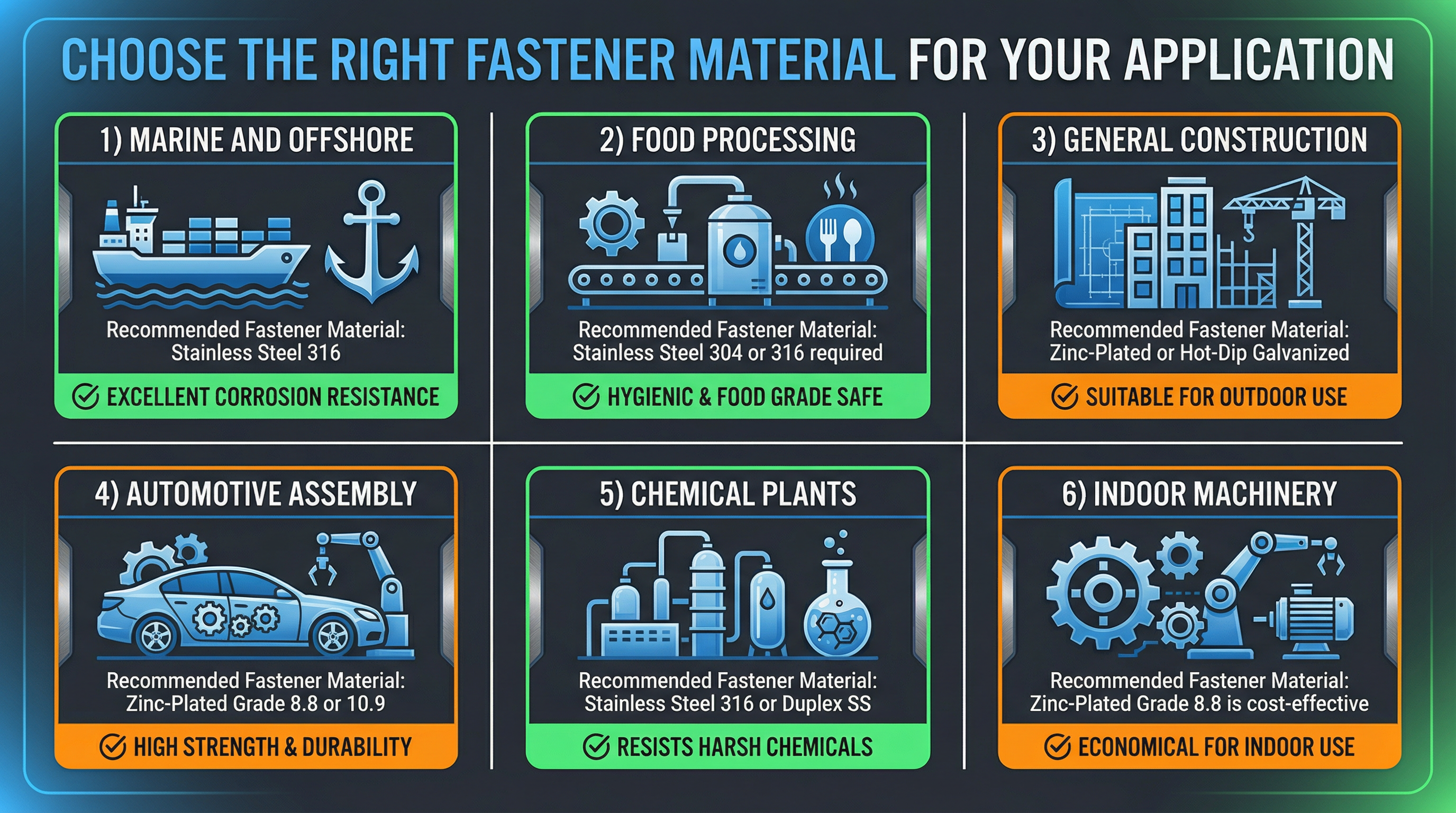
Marine and Coastal Structures: Always use 316 Stainless Steel. The salt air will destroy zinc plating in months.
Food and Beverage Processing: Stainless Steel (304 or 316). Required for hygiene, easy cleaning, and resistance to harsh sanitizing chemicals.
Indoor Machinery and Automotive: Zinc-Plated Steel. Provides excellent strength and adequate corrosion protection for dry, oily, or enclosed environments at a fraction of the cost.
General Outdoor Construction: Hot-Dip Galvanized (HDG) or Zinc-Plated. HDG offers a much thicker zinc coating than standard electroplating, making it suitable for outdoor structural use where stainless is too expensive.
Source Premium Fasteners from SKDIN
Whether your project demands the extreme corrosion resistance of marine-grade stainless steel or the high tensile strength of Grade 10.9 zinc-plated carbon steel, SKDIN has the inventory and expertise to supply exactly what you need.
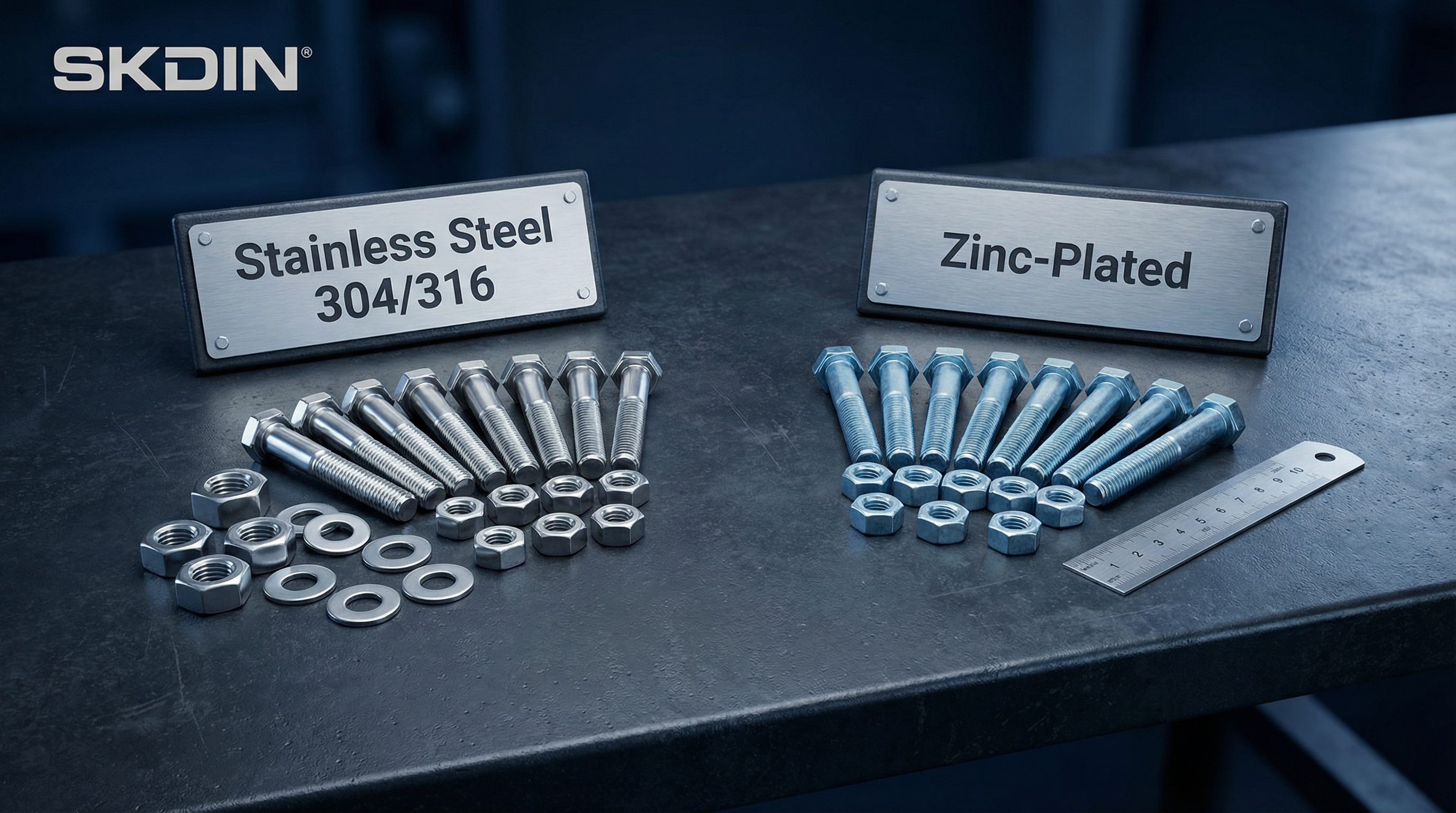
We manufacture and stock a comprehensive range of premium industrial fasteners. Our stainless steel products are rigorously tested to ensure exact alloy composition, while our zinc-plated bolts guarantee consistent coating thickness and superior thread tolerance.
Don't compromise on your connections. Browse the SKDIN Fastener Catalog today to find the perfect bolts for your next project, or Contact Our Engineering Team for personalized material selection advice.