
High-Strength Bolts in Heavy Industry: Grade 10.9 & 12.9 Application Guide
 Mia
Mia
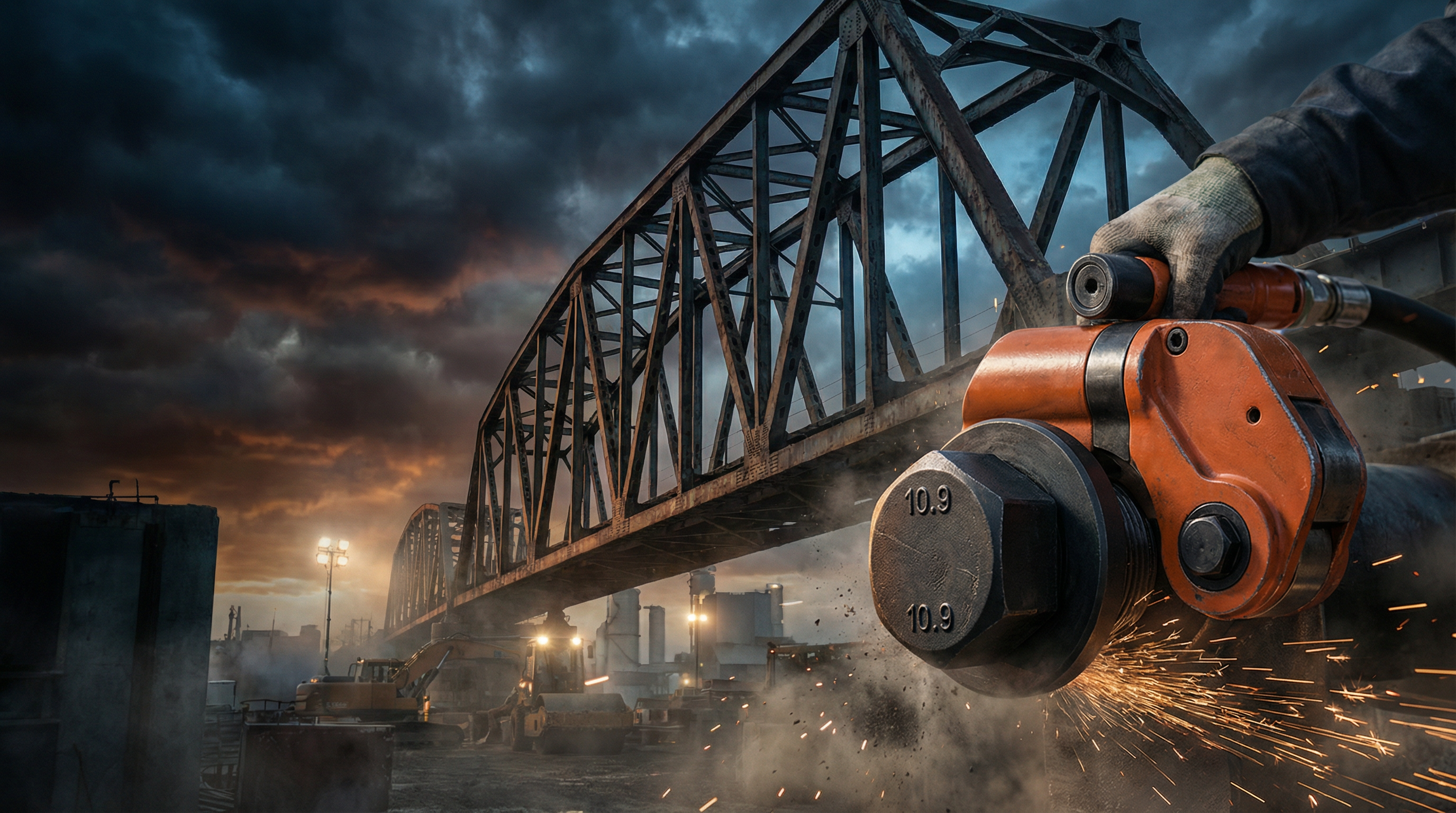
In the realm of heavy industry, the forces at play are staggering. Whether it is a suspension bridge enduring hurricane-force winds, a mining excavator tearing through solid rock, or a wind turbine tower resisting massive dynamic loads, the structural integrity of these engineering marvels relies entirely on the fasteners holding them together.
Standard commercial bolts simply cannot survive in these environments. This is the domain of High-Strength Bolts—specifically Metric Grades 10.9 and 12.9, and their imperial equivalents like ASTM A325 and A490.
In this 2026 engineering guide, we will explore the science behind high-strength fastening, explain how to identify bolt grades, provide a critical torque specification chart, and highlight the key heavy industry applications where these fasteners are non-negotiable.
The Science of High-Strength Fastening: Preload is Everything
A common misconception is that a bolt acts like a simple pin, resisting shear forces (forces trying to slice the bolt in half) directly with its shank. While bolts can handle shear, high-strength structural joints are actually designed to work entirely differently. They rely on friction.
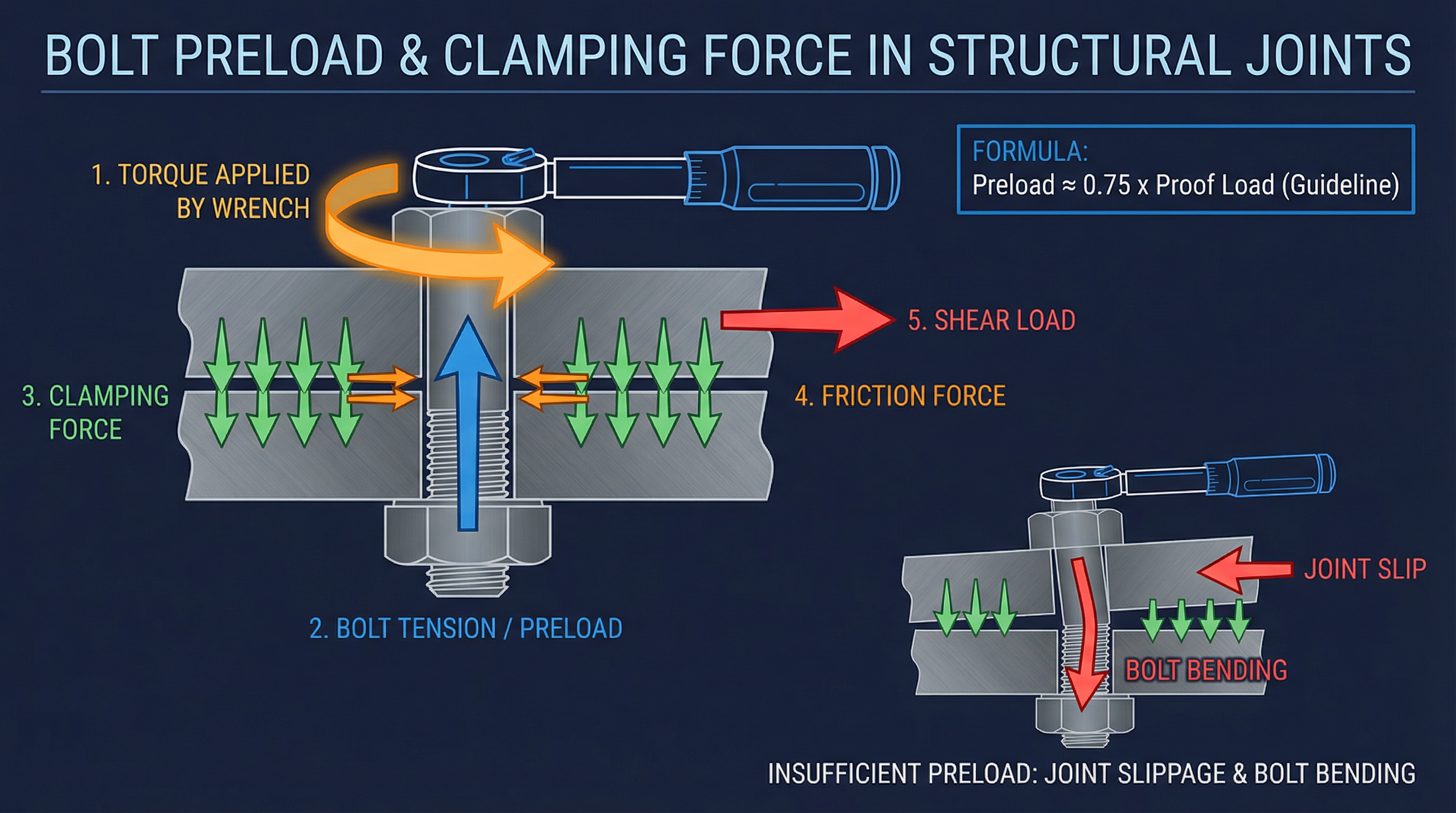
When a high-strength bolt is tightened with a torque wrench, it stretches elastically, much like a very stiff spring. This stretching creates an immense internal tension known as preload. This preload translates directly into clamping force, which squeezes the two steel plates together with incredible pressure.
Because the plates are squeezed together so tightly, the friction between their surfaces becomes massive. When an external load (shear load) is applied to the joint, it is this friction between the plates that resists the movement, not the bolt itself. The bolt's primary job is simply to maintain that clamping force. If the bolt is not tightened enough (insufficient preload), the joint will slip, the bolt will be subjected to bending and shear forces it wasn't designed for, and catastrophic failure will soon follow.
Identifying Bolt Strength: Reading the Head Markings
To ensure the correct bolt is used in a critical application, international standards require high-strength bolts to be clearly marked on their heads.
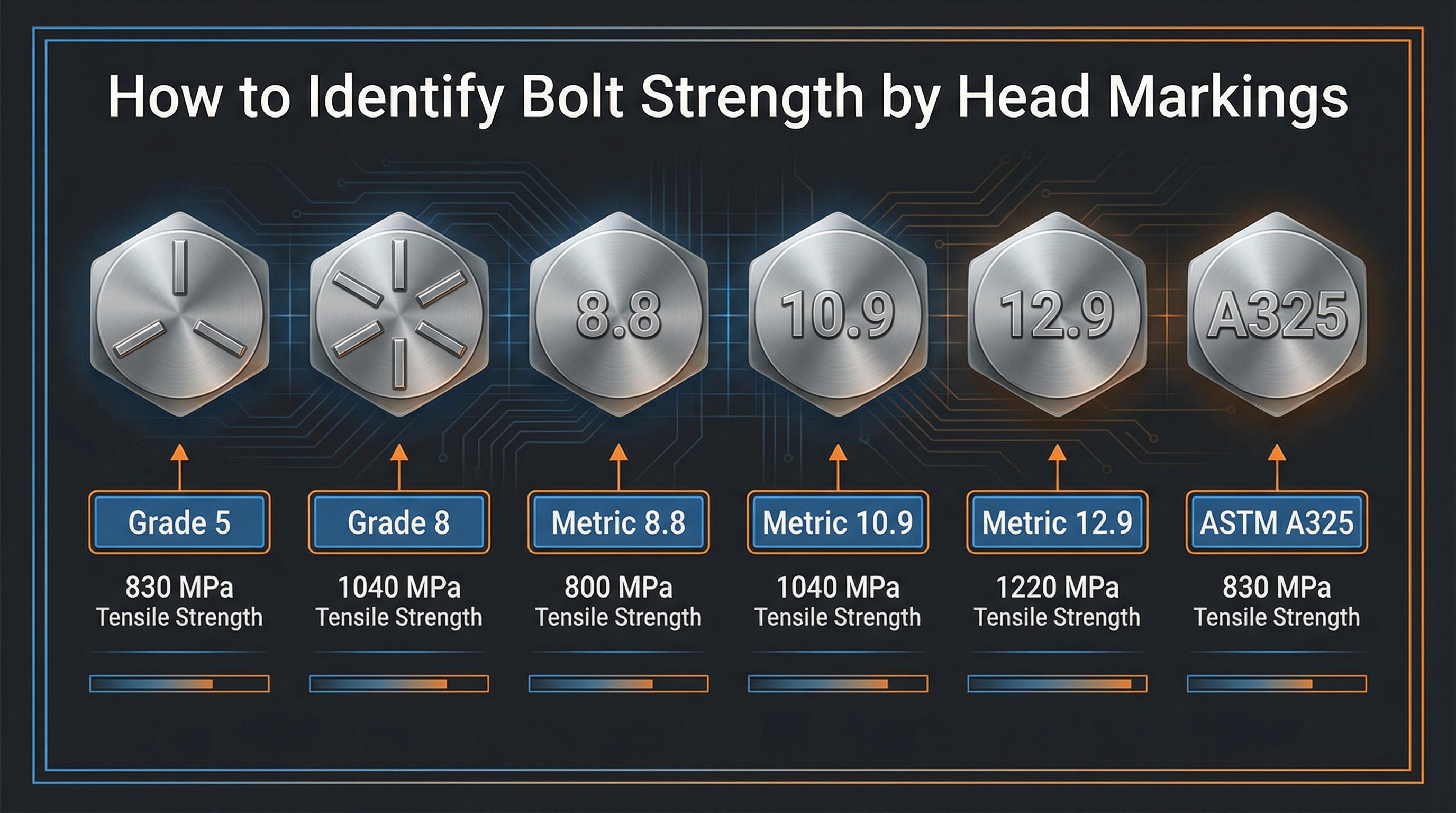
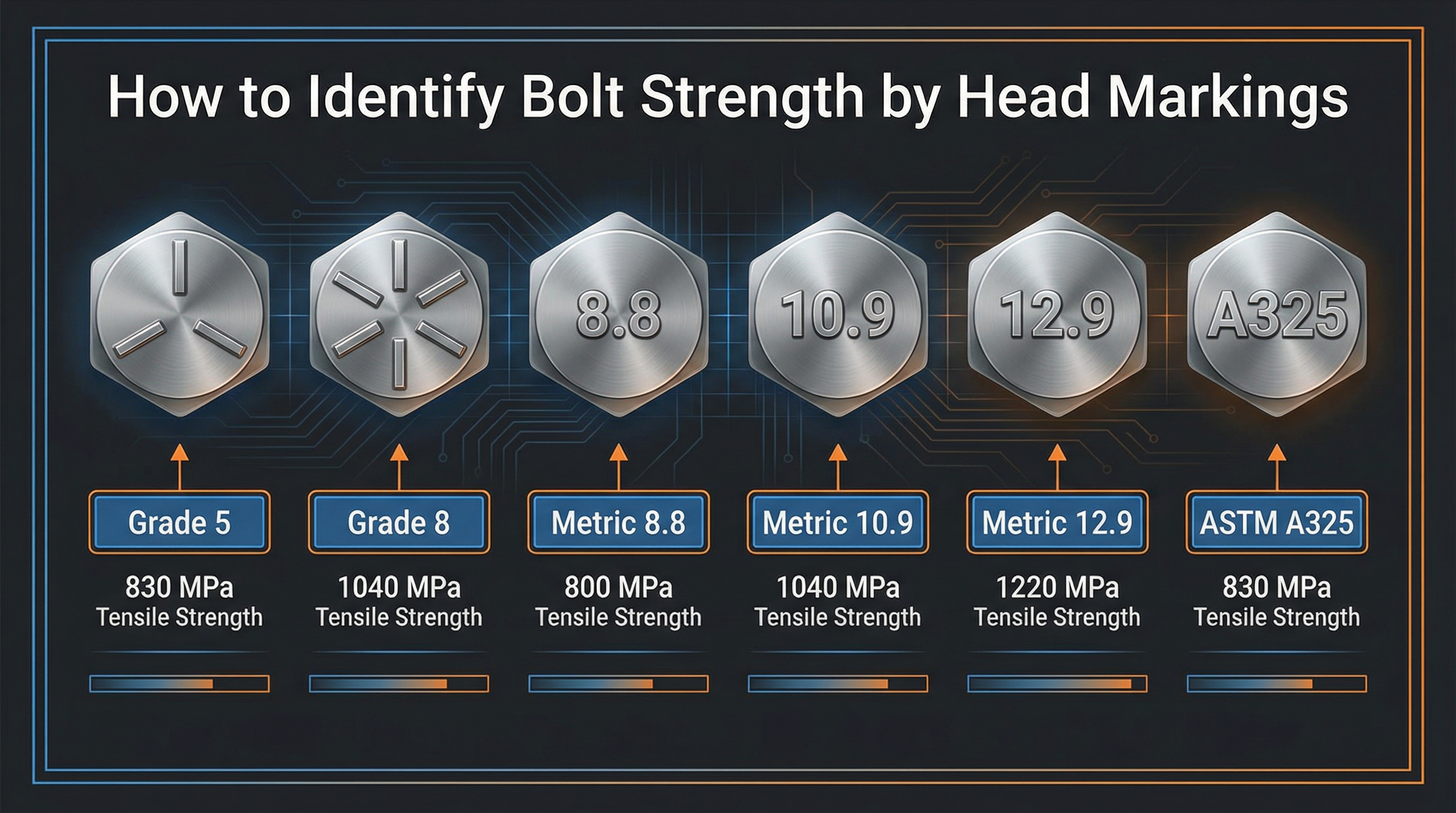
Metric System (ISO 898-1)
Metric bolts use a two-number system separated by a decimal point (e.g., 8.8, 10.9, 12.9).
The First Number: Represents the ultimate tensile strength in hundreds of MPa. (e.g., "10" means 1000 MPa nominal tensile strength).
The Second Number: Represents the ratio of yield strength to tensile strength. (e.g., ".9" means the yield strength is 90% of the tensile strength).
Grade 10.9: High-strength alloy steel, quenched and tempered. The standard for heavy machinery and automotive suspensions.
Grade 12.9: The highest standard metric grade. Ultra-high-strength alloy steel. Used in extreme applications like engine internals and heavy mining equipment.
Imperial System (SAE & ASTM)
Imperial bolts use radial lines or specific letter/number codes.
Grade 5: Marked with 3 radial lines. Medium strength (equivalent to Metric 8.8).
Grade 8: Marked with 6 radial lines. High strength alloy steel (equivalent to Metric 10.9).
ASTM A325 / A490: Heavy hex structural bolts used specifically in steel building and bridge construction.
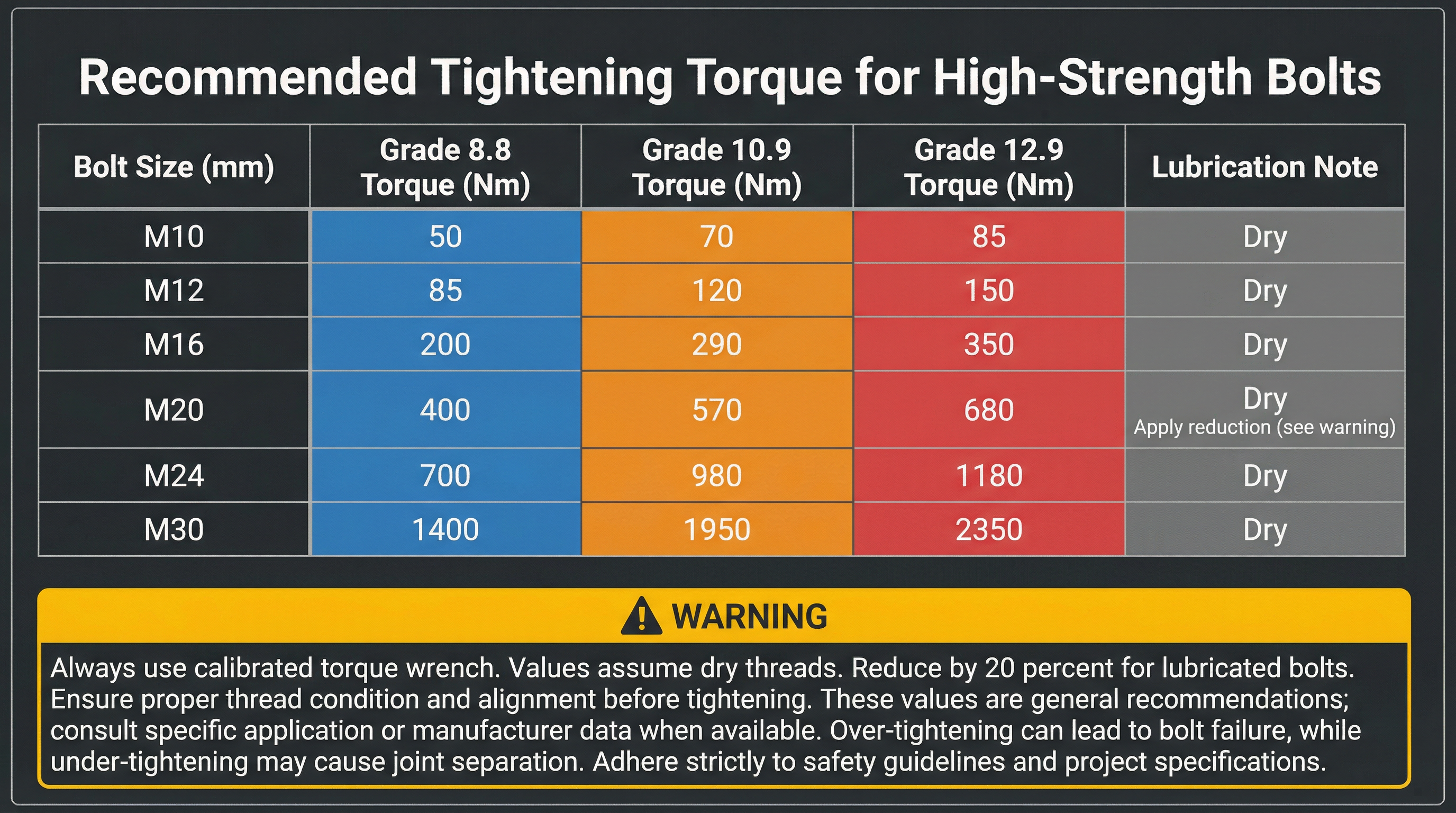
Recommended Tightening Torque for High-Strength Bolts
Achieving the correct preload requires applying the precise amount of torque. Over-tightening will stretch the bolt past its yield point (permanently deforming it), while under-tightening will lead to joint slip and vibration loosening.
Disclaimer: The following table provides general guidelines for dry, unlubricated zinc-plated or black oxide bolts. Always consult your specific engineering drawings, as lubrication (like oil or anti-seize) drastically reduces the required torque.
6 Critical Heavy Industry Applications
High-strength bolts are deployed wherever failure is not an option and loads are extreme.
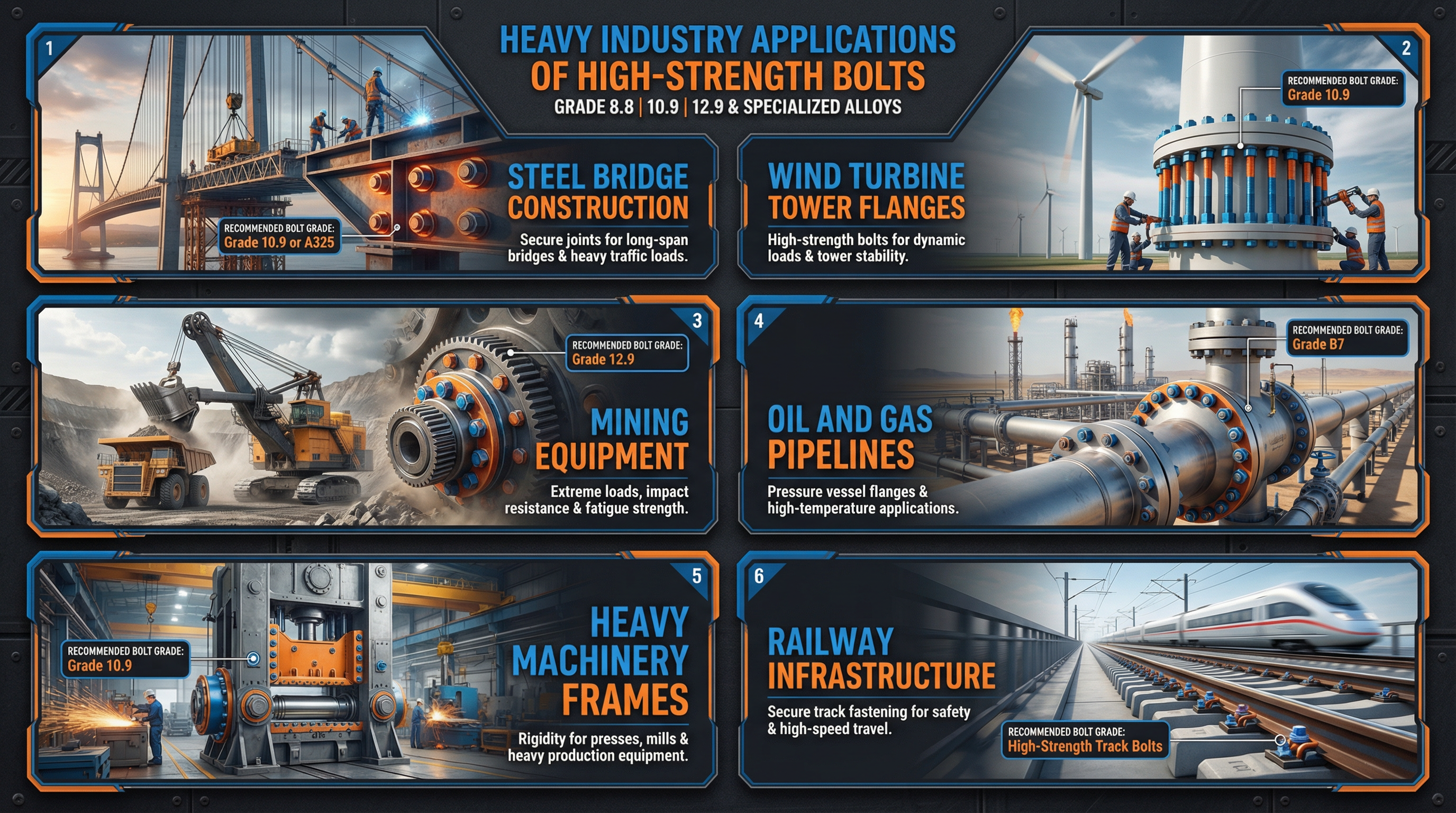
1. Steel Bridge Construction: Long-span bridges endure constant dynamic loading from traffic and wind. ASTM A325 and A490 heavy hex bolts are used to create slip-critical friction joints in the main steel girders.
2. Wind Turbine Tower Flanges: The massive tubular sections of a wind turbine tower are bolted together using hundreds of large-diameter Grade 10.9 bolts. These bolts must withstand the immense bending moments generated by the rotor high above.
3. Mining and Earthmoving Equipment: The drivetrains, bucket teeth, and track systems of massive excavators rely on Grade 12.9 bolts to survive extreme impact loads and abrasive conditions.
4. Oil and Gas Pipelines: High-pressure flanged connections in refineries and pipelines utilize specialized high-strength stud bolts (like ASTM A193 Grade B7) to maintain a perfect seal under extreme pressure and temperature.
5. Heavy Machinery Frames: Industrial stamping presses and steel rolling mills generate thousands of tons of force. Grade 10.9 bolts ensure the massive cast iron frames remain perfectly rigid.
6. Railway Infrastructure: High-speed rail networks require specialized high-strength track bolts to secure the rails to the sleepers, ensuring safety and stability at speeds exceeding 300 km/h.
SKDIN: Your Source for Certified High-Strength Fasteners
In heavy industry, the cost of a fastener failure is measured in millions of dollars and potential loss of life. You need a fastener supplier you can trust implicitly.
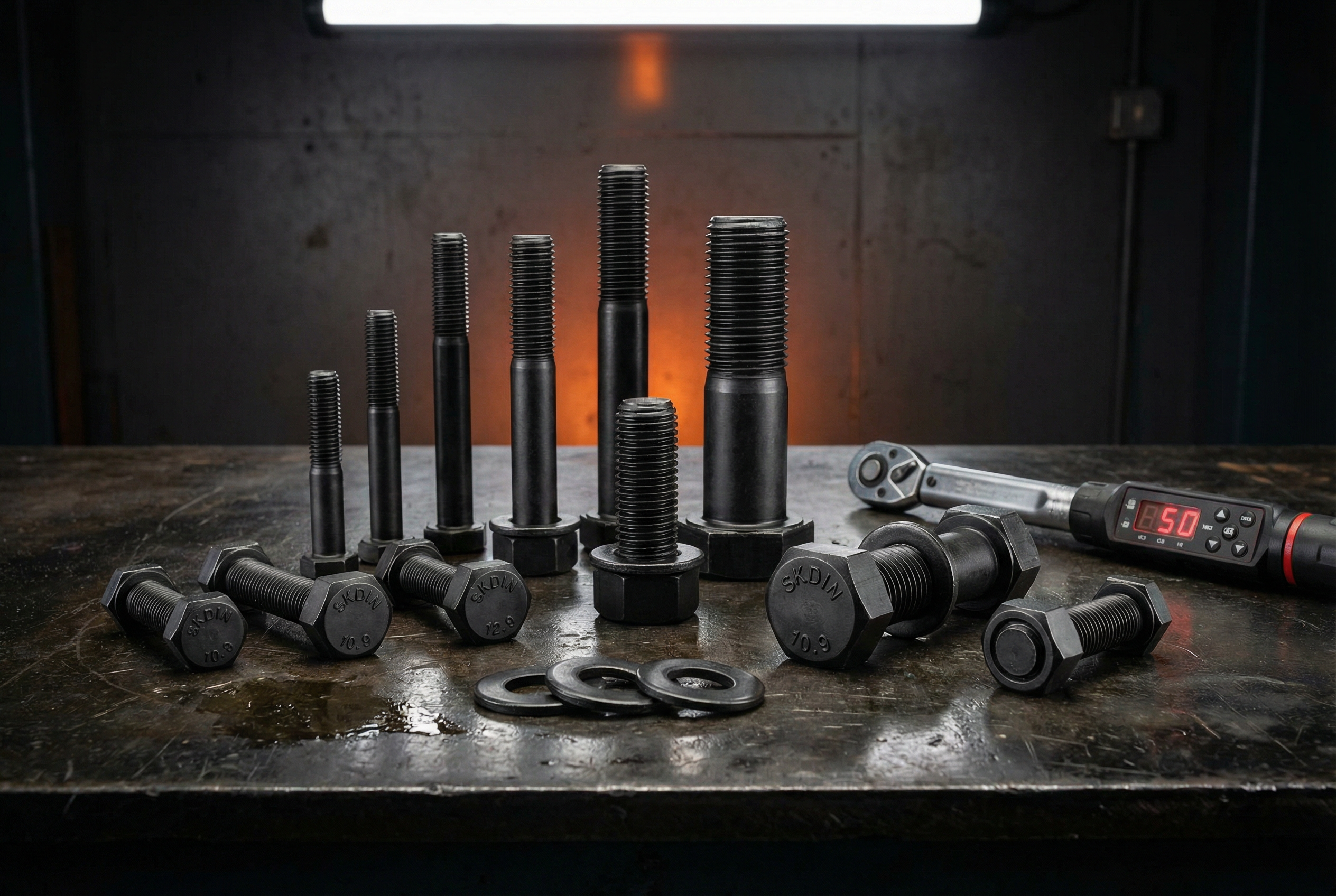
At SKDIN, we manufacture premium high-strength structural bolts, heavy hex nuts, and hardened washers designed specifically for the world's most demanding applications. Our Grade 10.9 and 12.9 fasteners undergo rigorous metallurgical testing, precise heat treatment, and strict dimensional inspections to guarantee they meet or exceed ISO and ASTM standards.
Whether you are erecting a skyscraper, assembling a wind farm, or maintaining heavy mining equipment, SKDIN provides the uncompromising holding power your project demands.
Secure your heavy infrastructure with confidence. Explore the SKDIN High-Strength Fastener Catalog today, or Contact Our Engineering Team for technical support and bulk procurement inquiries.