
The Complete Guide to Anchor Bolts: Types, Materials, and Installation
 Mia
Mia
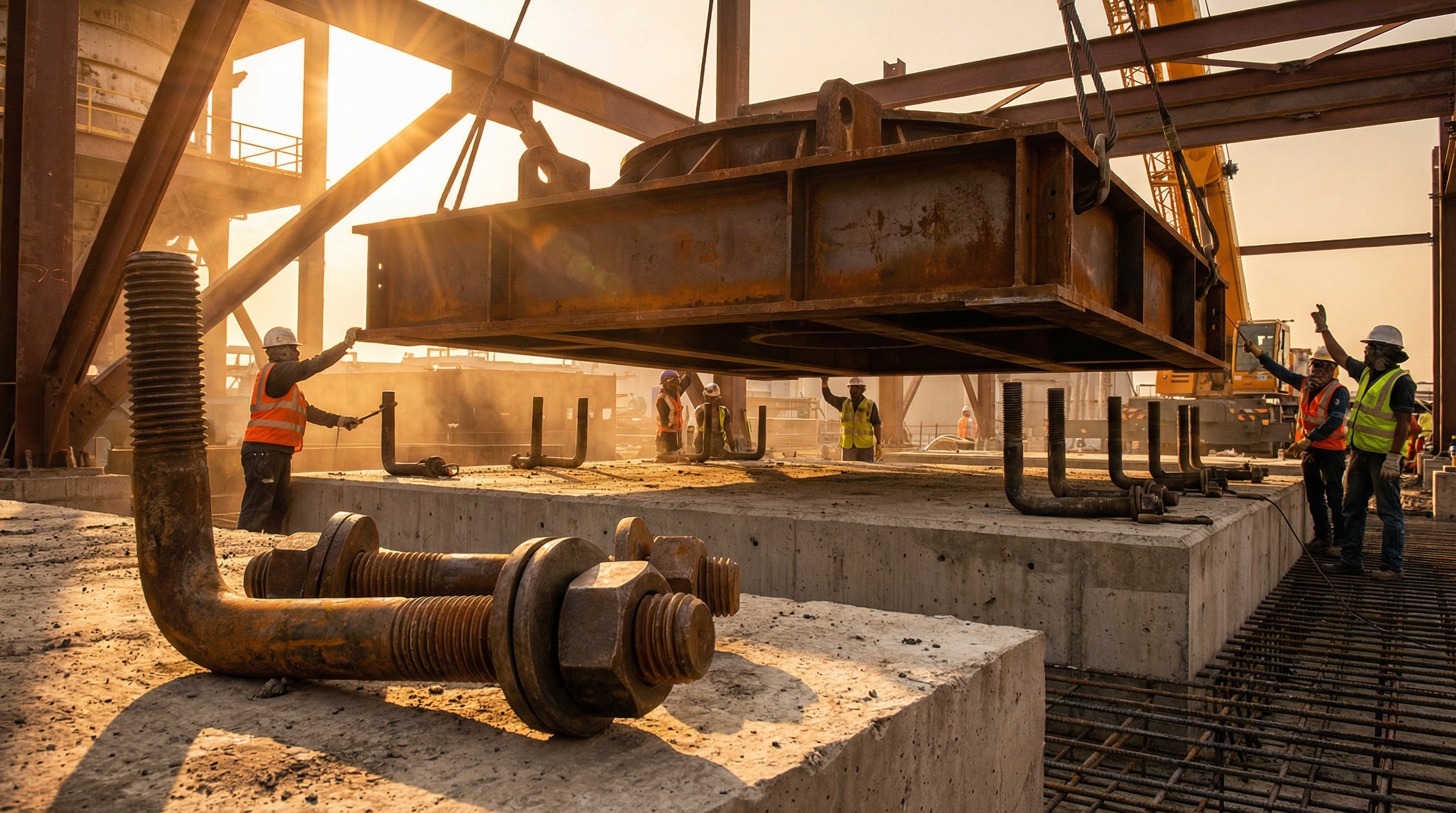
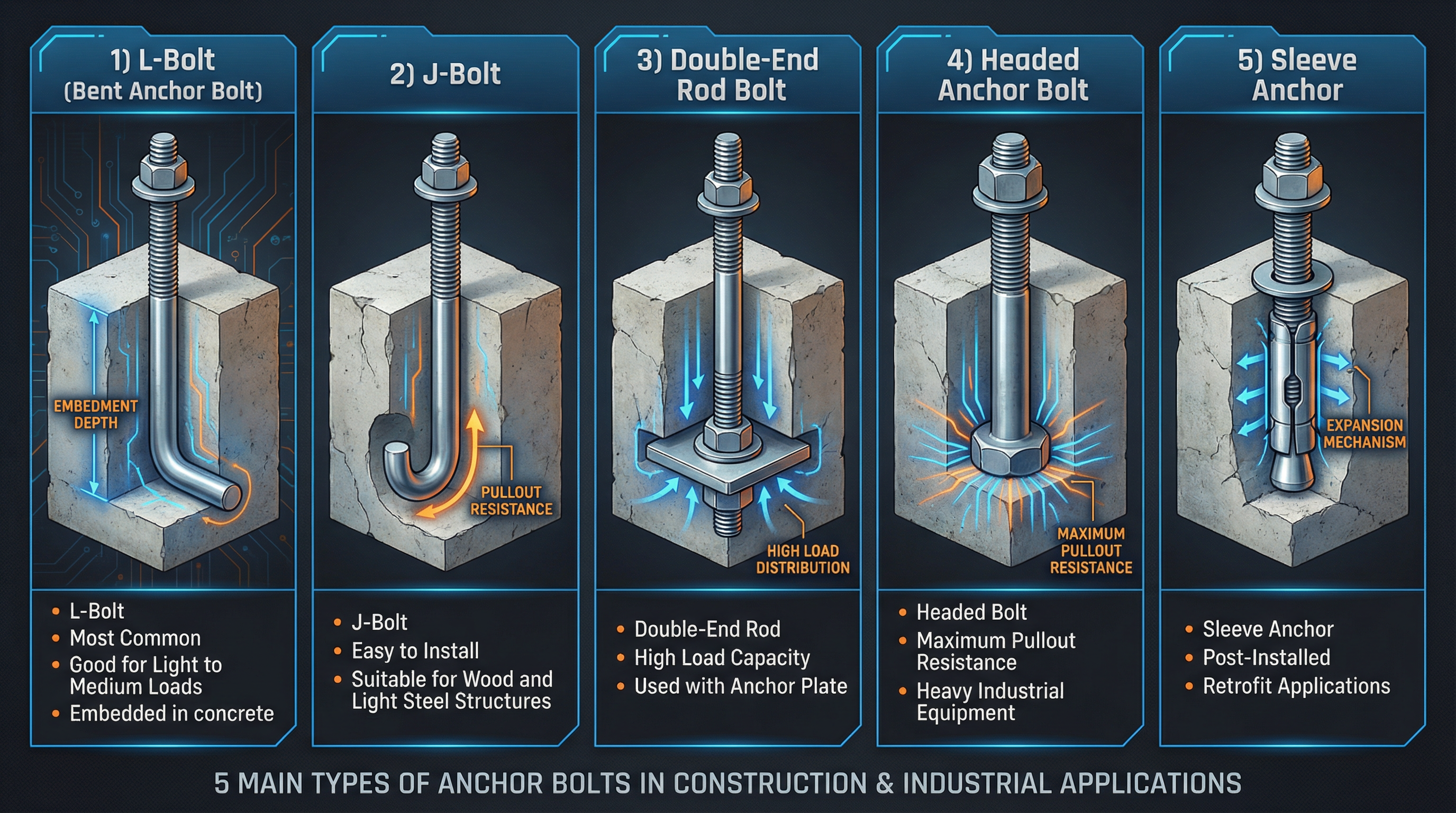
In the world of construction and heavy industry, the connection between a steel structure and its concrete foundation is arguably the most critical joint in the entire system. Whether it is a towering skyscraper, a massive wind turbine, or a heavy-duty industrial pump, the integrity of the installation relies entirely on Anchor Bolts (also known as foundation bolts).
These specialized fasteners are designed to transfer tension, shear, and moment forces from the structure directly into the concrete foundation. A failure at this connection point is catastrophic.
In this comprehensive 2026 engineering guide, we will explore the different types of anchor bolts, compare material grades for various environments, detail the correct installation process, and highlight key industrial applications.
5 Main Types of Anchor Bolts
Anchor bolts are generally categorized into two main groups: Cast-in-Place (installed before the concrete is poured) and Post-Installed (installed into existing concrete).
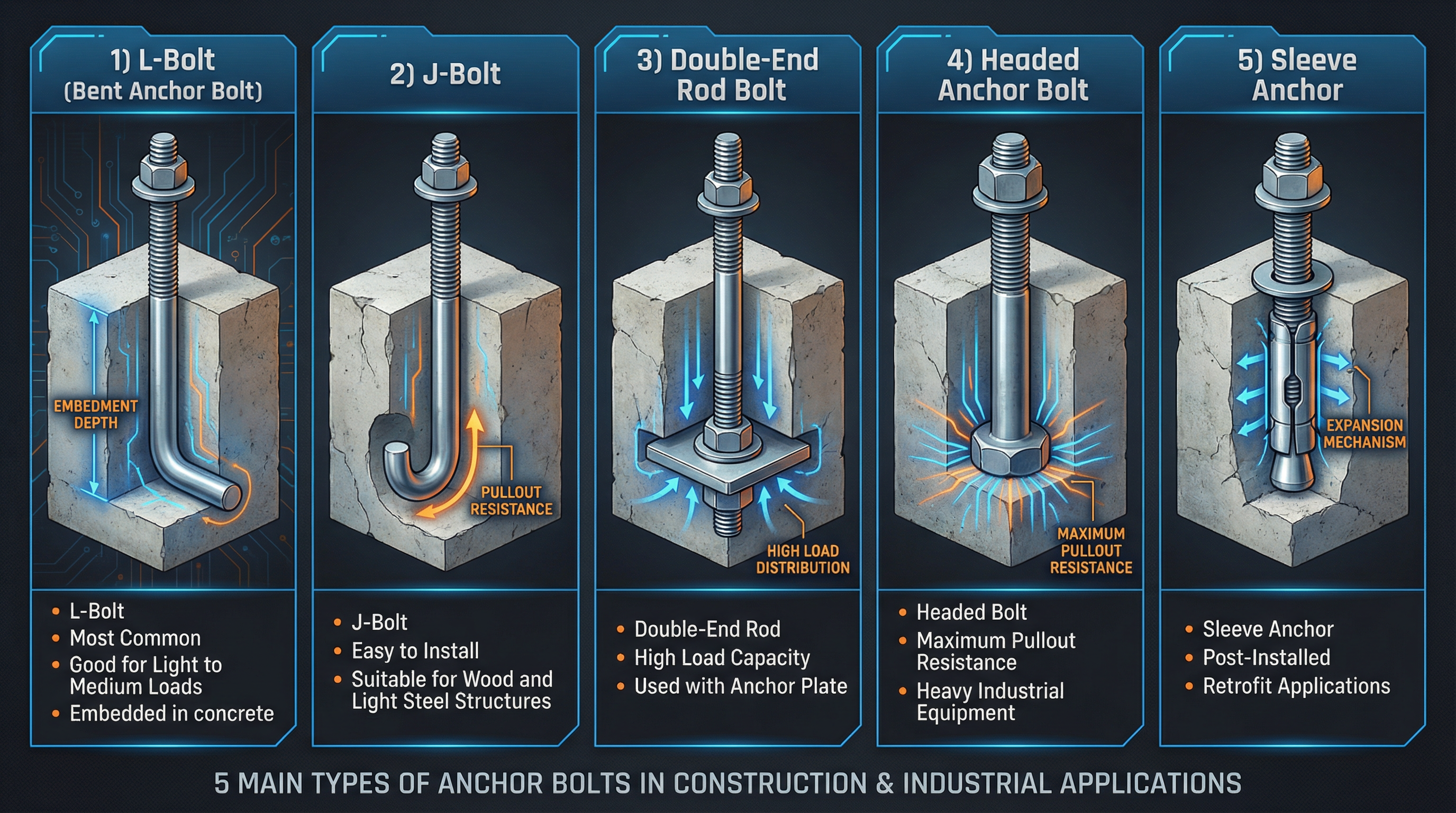
1. L-Bolts (Bent Anchor Bolts)
Design: A straight threaded rod with a 90-degree bend at the bottom, forming an "L" shape.
Function: The bent portion provides pullout resistance by hooking into the concrete.
Application: The most common cast-in-place anchor. Used for light to medium structural loads, such as securing sill plates to foundations or light pole bases.
2. J-Bolts
Design: Similar to the L-bolt, but with a curved "J" shape at the bottom.
Function: The hook design offers slightly different stress distribution in the concrete compared to an L-bolt.
Application: Often used in residential construction, wood framing, and light steel structures.
3. Double-End Rod Bolts (with Anchor Plate)
Design: A straight rod threaded at both ends. The bottom end is fitted with a heavy hex nut and a large square or round steel plate (anchor plate).
Function: The anchor plate provides massive surface area, distributing the pullout force over a large volume of concrete.
Application: High-load structural applications, such as heavy building columns and large industrial equipment bases.
4. Headed Anchor Bolts
Design: A straight bolt with a forged hex or square head at the bottom (embedded) end.
Function: The forged head provides maximum pullout resistance, often exceeding the tensile strength of the steel rod itself.
Application: Heavy industrial machinery, bridge supports, and critical structural connections requiring maximum security.
5. Sleeve Anchors (Post-Installed)
Design: A bolt surrounded by an expandable metal sleeve.
Function: Inserted into a pre-drilled hole in cured concrete. As the nut is tightened, the sleeve expands, wedging tightly against the concrete walls.
Application: Retrofit projects, securing equipment to existing floors, and applications where cast-in-place bolts were missed or misaligned.
Material and Grade Selection: Fighting Corrosion and Stress
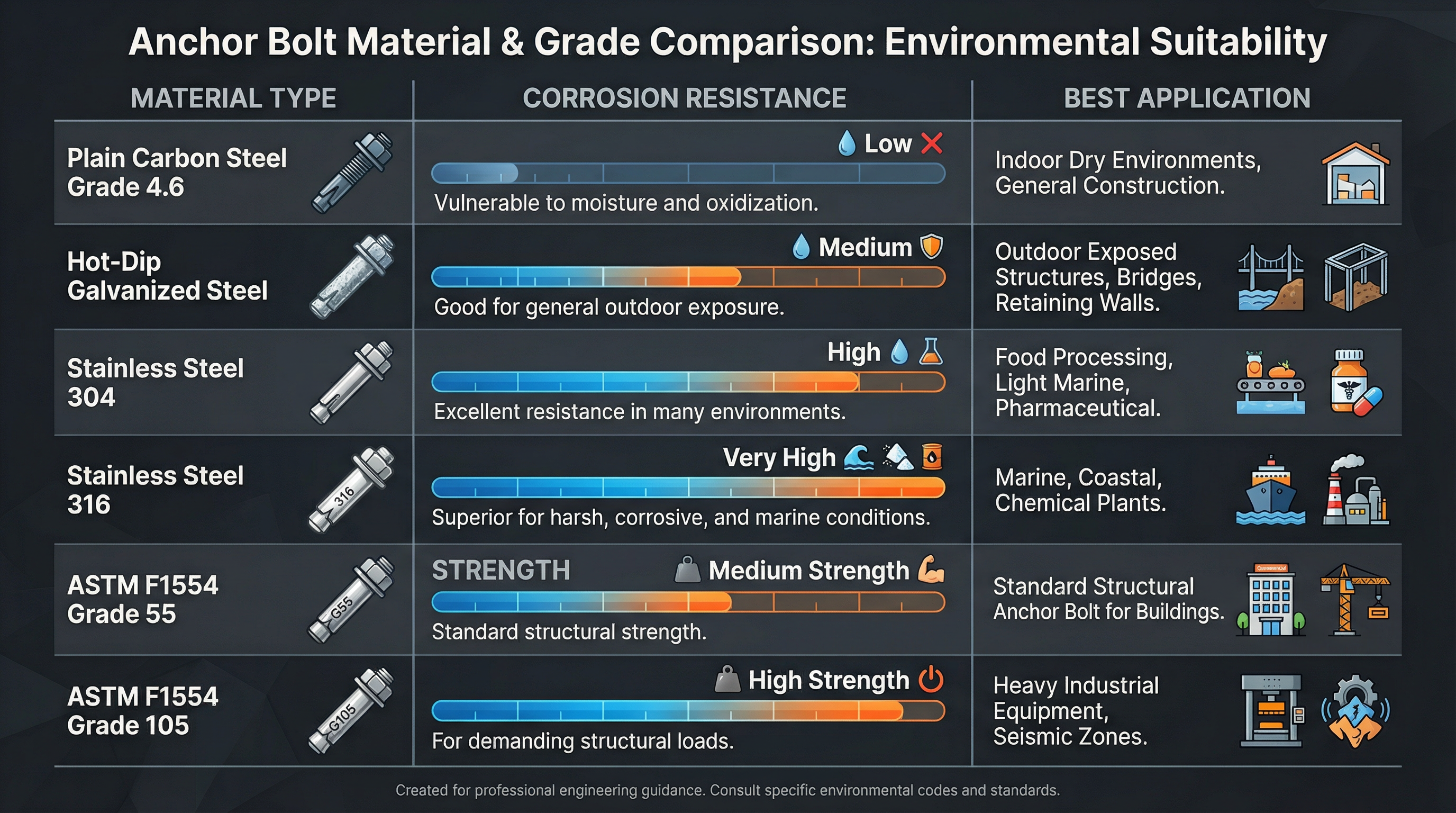
Choosing the right material for your anchor bolts is just as important as choosing the right type. The environment dictates the corrosion resistance required, while the structural load dictates the strength grade.
Standard Structural Grades (ASTM F1554)
In North America, the standard specification for anchor bolts is ASTM F1554. It comes in three yield strength grades:
Grade 36: Low carbon steel. Used for general applications.
Grade 55: Medium strength low alloy steel. The most common specification for commercial building columns.
Grade 105: High strength alloy steel, quenched and tempered. Used for heavy industrial equipment and structures in high seismic zones.
Corrosion Resistant Materials
Hot-Dip Galvanized (HDG): Carbon steel coated in a thick layer of zinc. Excellent for general outdoor exposure and standard infrastructure projects.
Stainless Steel 304: High corrosion resistance. Ideal for food processing plants, water treatment facilities, and light marine environments.
Stainless Steel 316: Superior corrosion resistance due to the addition of molybdenum. Mandatory for harsh marine environments, coastal structures, and chemical processing plants.
The 5-Step Cast-in-Place Installation Process
Proper installation of cast-in-place anchor bolts requires precision. A bolt that is misaligned by even a few millimeters can cause massive delays during steel erection.
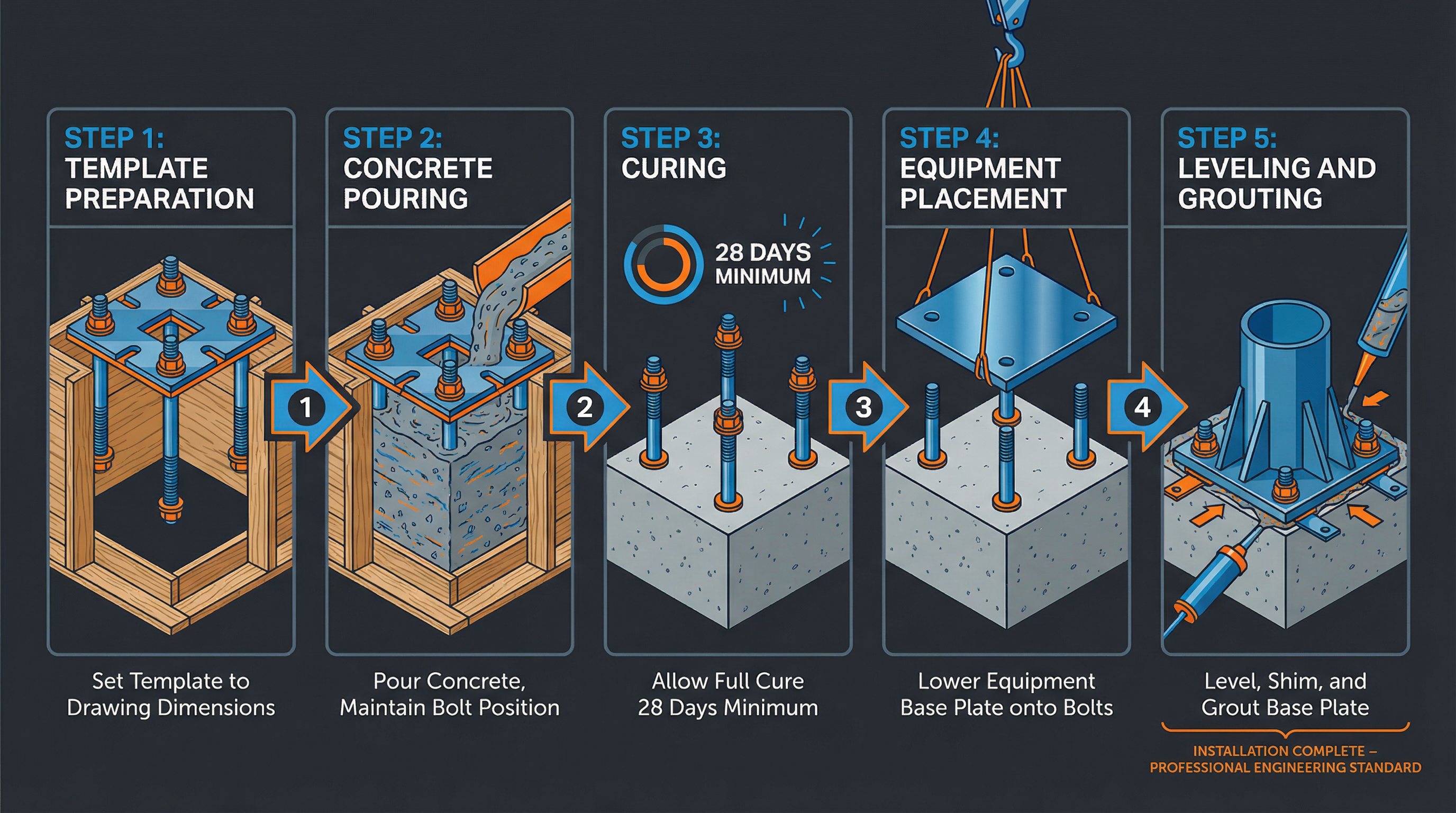
1. Template Preparation: Anchor bolts must be rigidly secured to a wooden or steel template before pouring. The template ensures the bolts match the exact hole pattern of the equipment base plate.
2. Concrete Pouring: Concrete is poured carefully around the bolts. Workers must ensure the concrete is properly vibrated to eliminate air pockets around the embedded portion of the bolt.
3. Curing: The concrete must be allowed to cure fully (typically 28 days for maximum strength) before any significant load is applied to the bolts.
4. Equipment Placement: The heavy machinery or steel column is carefully lowered by crane, guiding the base plate holes over the protruding anchor bolts.
5. Leveling and Grouting: Steel shims are placed under the base plate to perfectly level the equipment. Once level, the nuts are tightened to the specified torque, and high-strength non-shrink grout is pumped under the base plate to provide solid, uniform support.
Major Industrial Applications
Anchor bolts are the literal foundation of heavy industry.
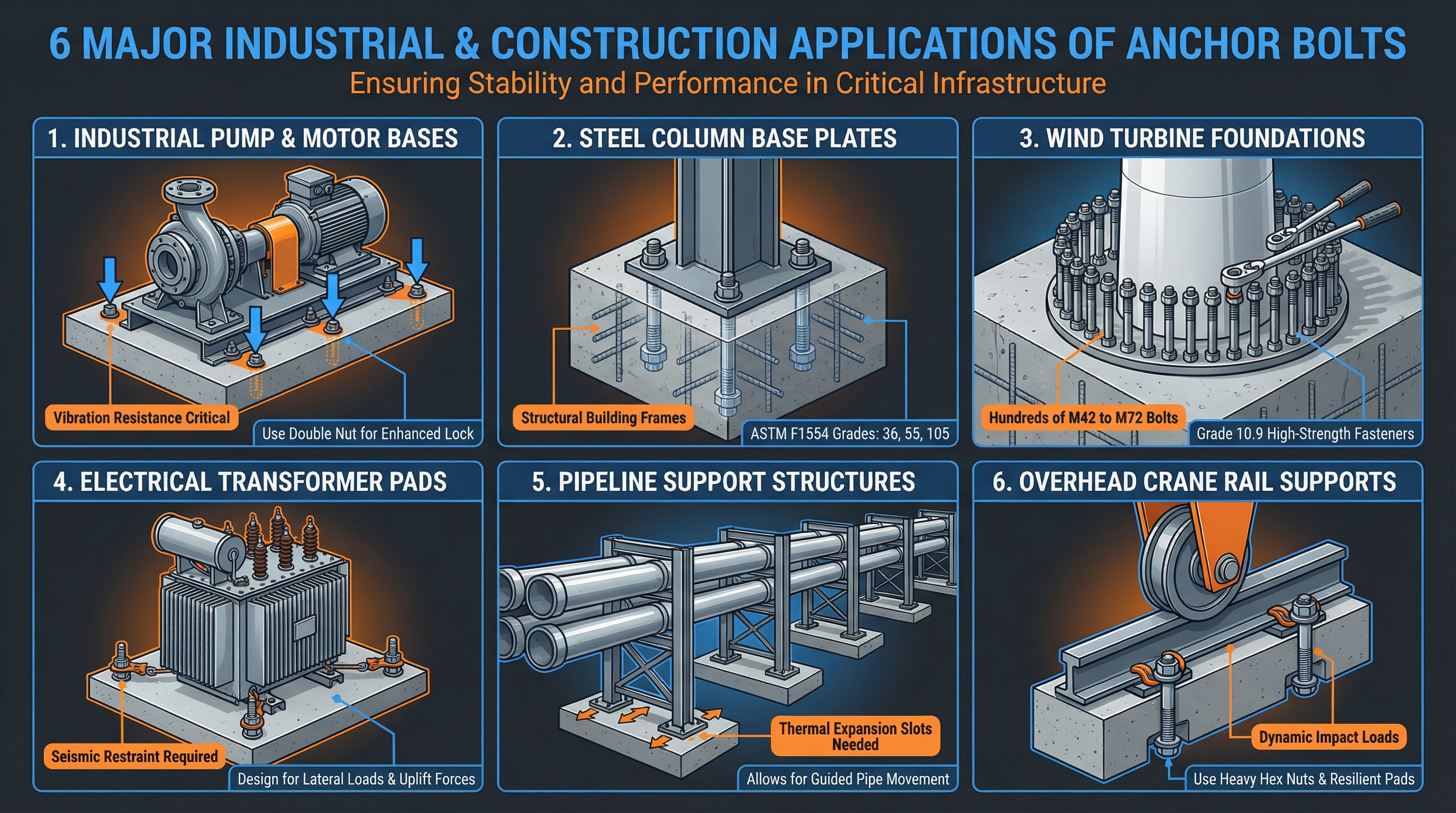
Industrial Pump and Motor Bases: Pumps generate significant vibration. Double-nutting anchor bolts ensures the equipment remains locked down despite constant dynamic forces.
Steel Column Base Plates: The skeleton of every modern steel building is anchored to its concrete foundation using heavy-duty F1554 anchor bolts.
Wind Turbine Foundations: The massive overturning moments generated by wind turbines require hundreds of ultra-high-strength (Grade 10.9 equivalent) anchor bolts embedded deep into a massive concrete base.
Overhead Crane Rail Supports: Crane rails endure extreme dynamic impact loads as heavy loads are moved. Specialized anchor bolts with resilient pads are used to absorb these shocks.
SKDIN: Your Trusted Foundation Fastener Partner
When you are pouring thousands of yards of concrete, you only get one chance to get the anchor bolts right.
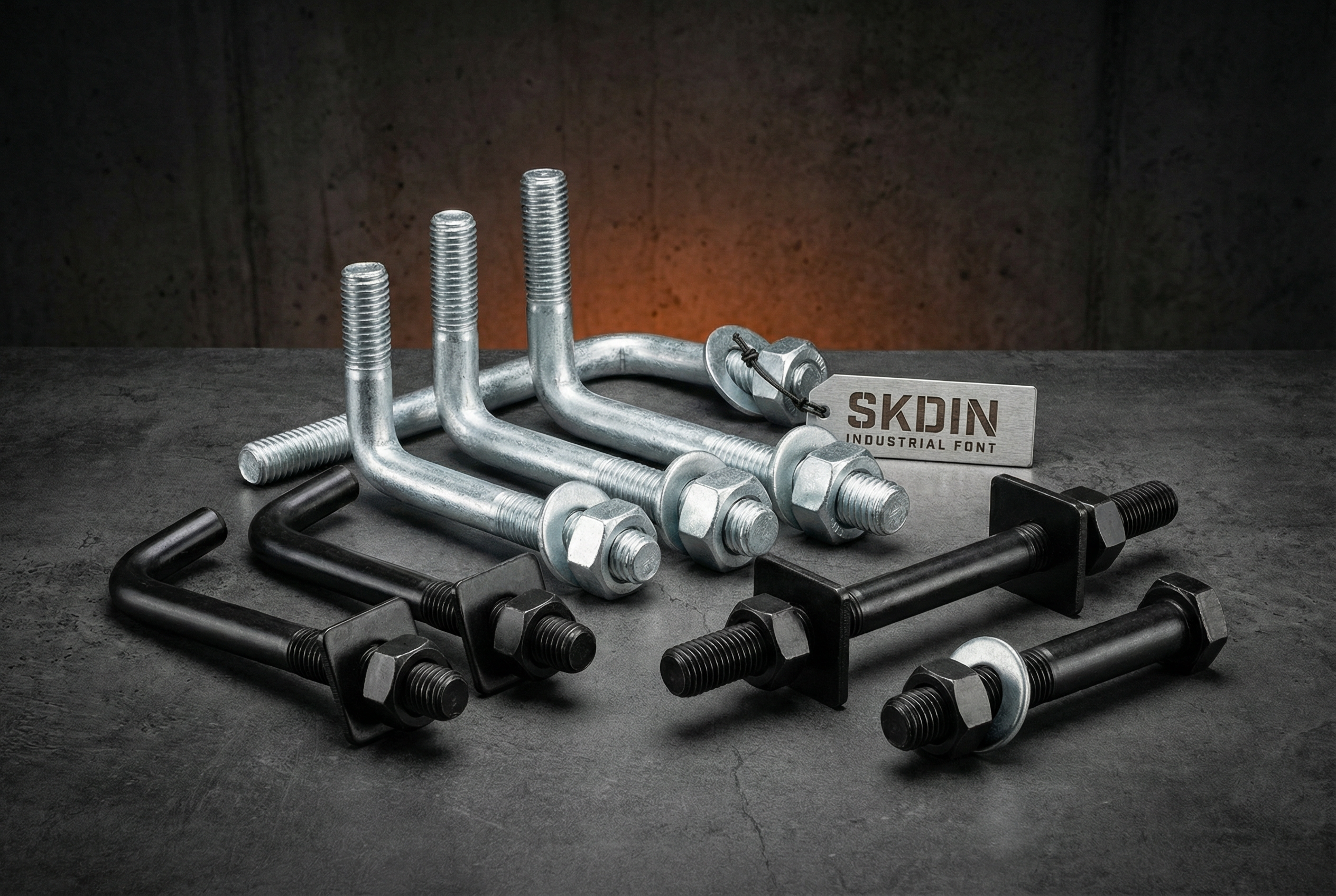
At SKDIN, we manufacture a comprehensive range of foundation fasteners, including L-bolts, J-bolts, double-end rods, and headed anchor bolts. We supply standard carbon steel, hot-dip galvanized, and premium 316 stainless steel options to suit any environmental requirement.
All SKDIN anchor bolts are manufactured to strict international standards (including ASTM F1554 and ISO equivalents), ensuring precise thread tolerances and guaranteed metallurgical properties. We also offer custom bending, threading, and plate welding services for specialized infrastructure projects.
Build your foundation on absolute certainty. Explore the SKDIN Anchor Bolt Catalog today, or Contact Our Engineering Team for custom fabrication quotes and technical support.