
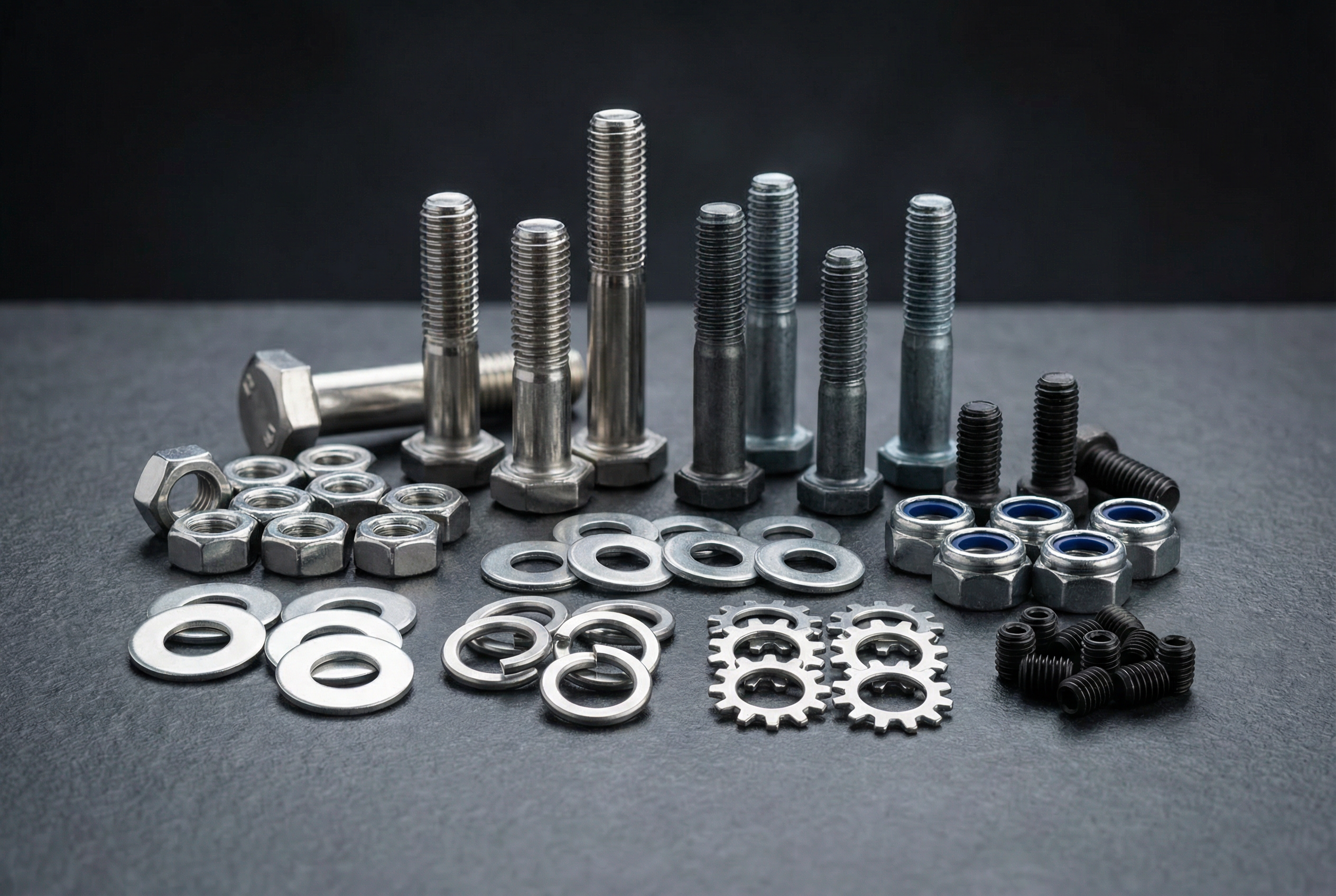
How to Prevent Bolt Loosening in High-Vibration Environments: A 2026 Engineering Guid
 Mia
Mia
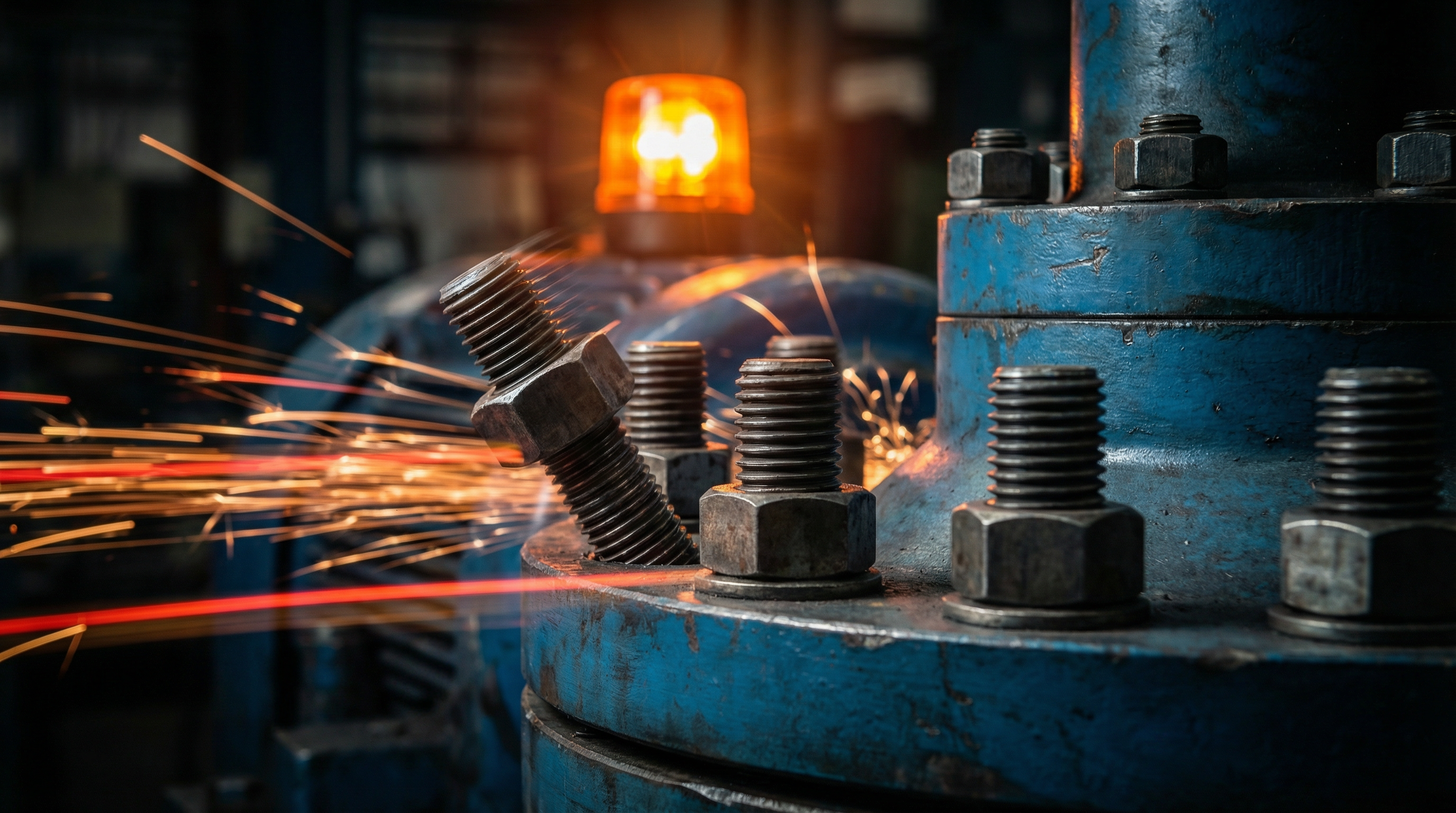
In the world of industrial engineering, fasteners are often the smallest components in a massive assembly, yet they carry the heaviest responsibility. A single loose bolt on a wind turbine, an aerospace engine, or heavy manufacturing equipment can lead to catastrophic failure, costly downtime, and severe safety hazards.
As industrial machinery in 2026 pushes the boundaries of speed, load capacity, and operational intensity, the challenge of vibration-induced bolt loosening has never been more critical. Engineers are constantly seeking reliable, long-lasting solutions to keep bolted joints secure under extreme dynamic loads.
In this comprehensive guide, we will explore the science behind why bolts loosen, evaluate the four most effective anti-loosening technologies, and provide a practical framework for selecting the right fasteners for your high-vibration applications.
The Science Behind Bolt Self-Loosening
To prevent a problem, we must first understand its root cause. When a bolt is properly tightened, it acts like a stiff spring. The tightening process stretches the bolt, creating a clamping force (preload) that holds the joint together. This clamping force generates static friction between the threads of the bolt and nut, as well as under the bolt head. As long as this static friction remains intact, the bolt stays tight.
However, when a bolted joint is subjected to transverse vibration (side-to-side movement perpendicular to the bolt axis), the dynamics change drastically.
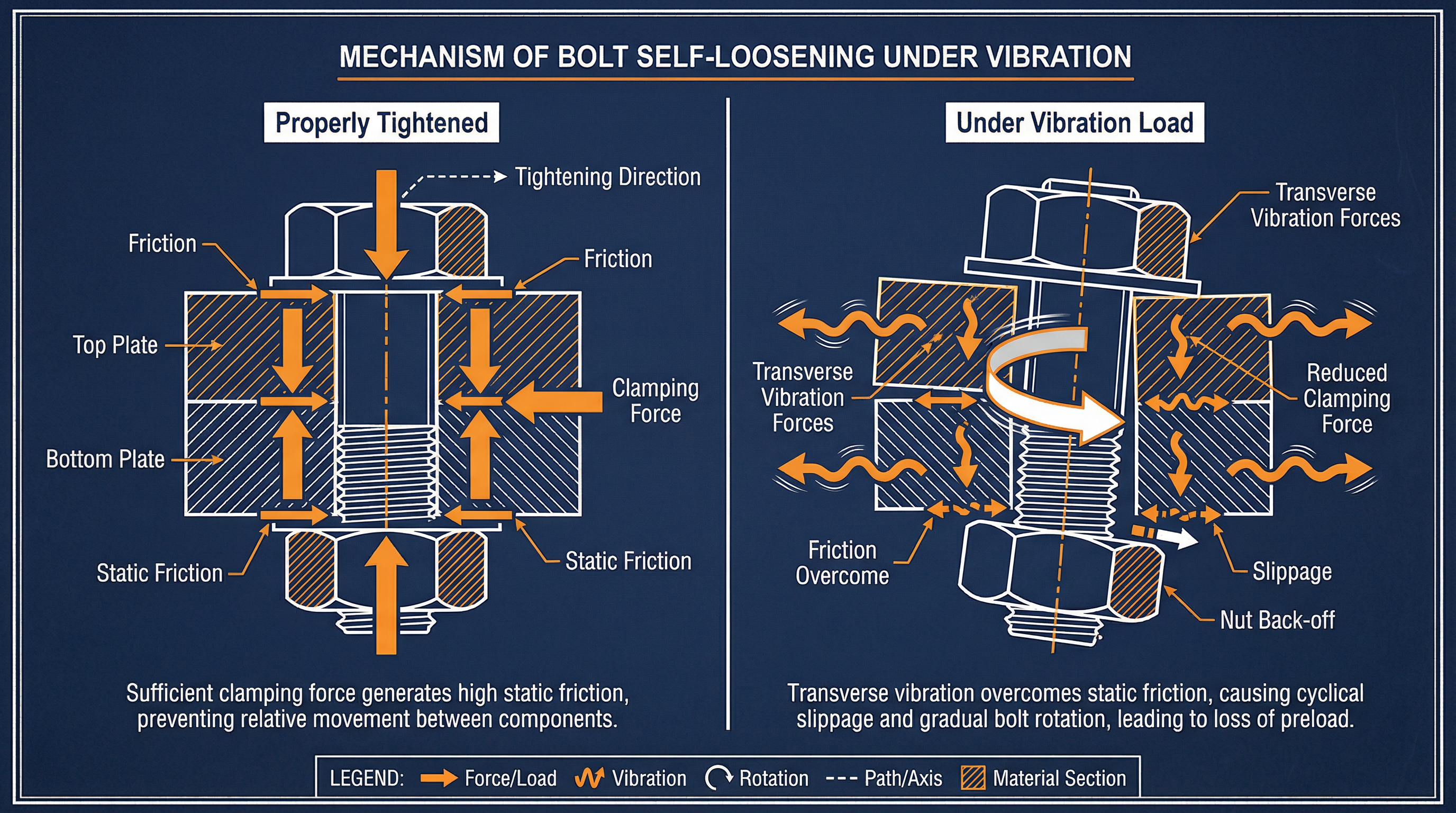
If the transverse vibration forces are strong enough to overcome the static friction holding the joint together, microscopic slipping occurs between the threads. Once the friction is momentarily broken, the internal tension of the stretched bolt causes it to naturally want to return to its original, unstretched state. This results in the nut gradually rotating counterclockwise. This phenomenon is known as rotational self-loosening. Over repeated cycles of vibration, the bolt completely loses its preload, leading to joint failure.
4 Proven Anti-Loosening Solutions
Fortunately, modern fastener engineering offers several highly effective methods to combat vibration and prevent self-loosening. These solutions generally fall into four main categories.
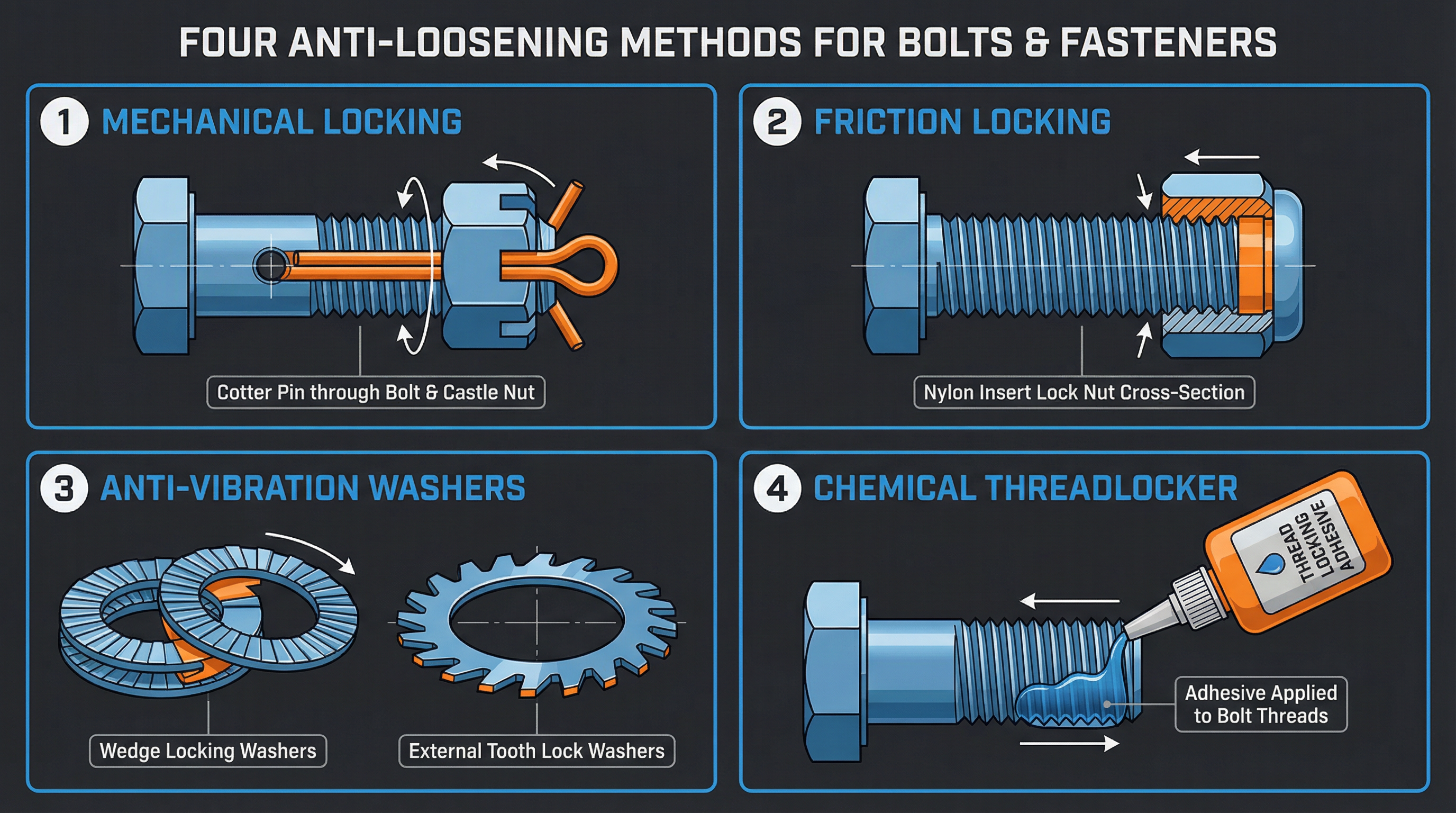
1. Mechanical Locking
Mechanical locking involves using a physical barrier to prevent the nut from turning relative to the bolt.
Examples: Cotter pins used with castle nuts, safety wire, and tab washers.
Pros: Highly reliable; provides visual confirmation that the joint is locked.
Cons: Labor-intensive to install and remove; not suitable for automated assembly lines.
2. Friction Locking (Prevailing Torque Nuts)
These nuts are designed to increase the friction between the mating threads, making it much harder for the nut to back off, even if the clamping force is lost.
Examples: Nylon insert lock nuts (Nyloc nuts) and all-metal prevailing torque nuts (which have slightly deformed threads).
Pros: Reusable (to a certain extent), easy to install, and highly effective against moderate vibration.
Cons: Nylon inserts can degrade at high temperatures; all-metal versions can cause thread galling if not properly lubricated.
3. Anti-Vibration Washers
Specialized washers can be used to maintain tension or physically lock the bolt head/nut to the mating surface.
Examples: Wedge-locking washers (which use tension instead of friction to secure the joint), spring washers, and external-tooth lock washers.
Pros: Wedge-locking washers are exceptionally effective in extreme vibration environments.
Cons: Can be more expensive than standard washers; require specific installation orientations.
4. Chemical Threadlockers
Chemical threadlockers are anaerobic adhesives applied to the bolt threads before assembly. They cure in the absence of air and the presence of active metal, forming a tough plastic that locks the threads together.
Examples: Liquid threadlocking compounds (available in low, medium, and high strength).
Pros: Fills microscopic gaps between threads, preventing corrosion and providing excellent vibration resistance.
Cons: Requires clean, oil-free threads for proper curing; high-strength versions may require heat for disassembly.
Choosing the Right Fastener Grade
Preventing loosening isn't just about locking mechanisms; it's also about ensuring the bolt itself is strong enough to handle the operational stresses without stretching beyond its yield point. Selecting the correct bolt grade is paramount.
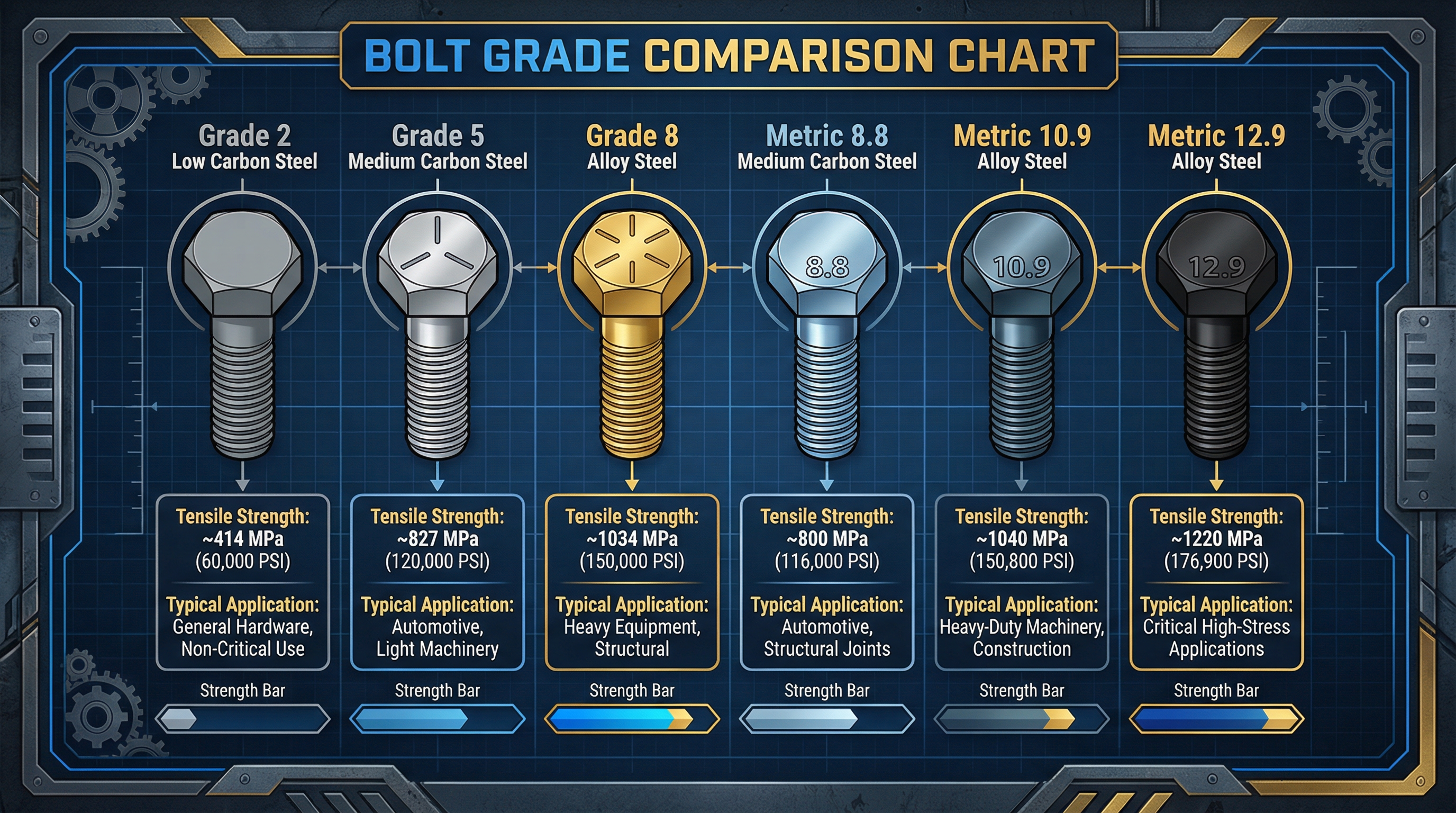
Grade 2 / Metric 4.8: Low carbon steel. Suitable for non-critical applications with minimal stress.
Grade 5 / Metric 8.8: Medium carbon steel, quenched and tempered. The standard for automotive and general machinery.
Grade 8 / Metric 10.9 & 12.9: Alloy steel, quenched and tempered. Essential for heavy equipment, structural joints, and high-vibration environments where maximum tensile strength is required.
Fastener Selection Guide for Vibration Environments
When designing a joint for a high-vibration environment, use this simple decision matrix to guide your selection:
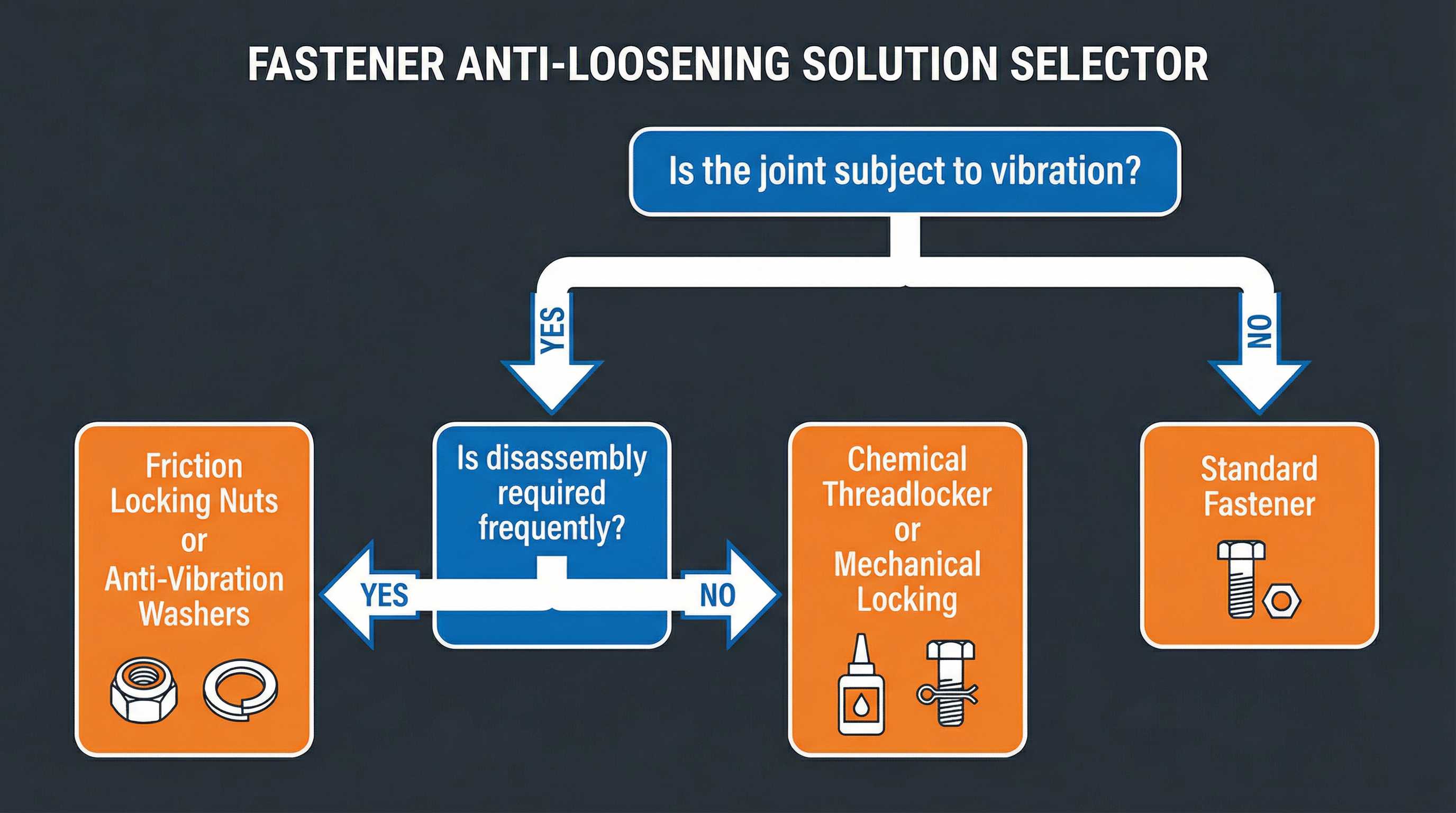
1. Is the joint subject to severe transverse vibration? If yes, standard nuts and washers will likely fail.
2. Does the joint require frequent disassembly for maintenance?
If YES: Opt for friction locking nuts (like nylon inserts) or high-quality wedge-locking washers.
If NO (Permanent or semi-permanent joint): Chemical threadlockers or mechanical locking (safety wire) are excellent choices.
Secure Your Operations with SKDIN Fasteners
At SKDIN, we know that the integrity of your machinery relies on the quality of our components. We are a professional manufacturer of premium industrial fasteners, specializing in high-strength bolts, precision nuts, and advanced anti-vibration solutions.
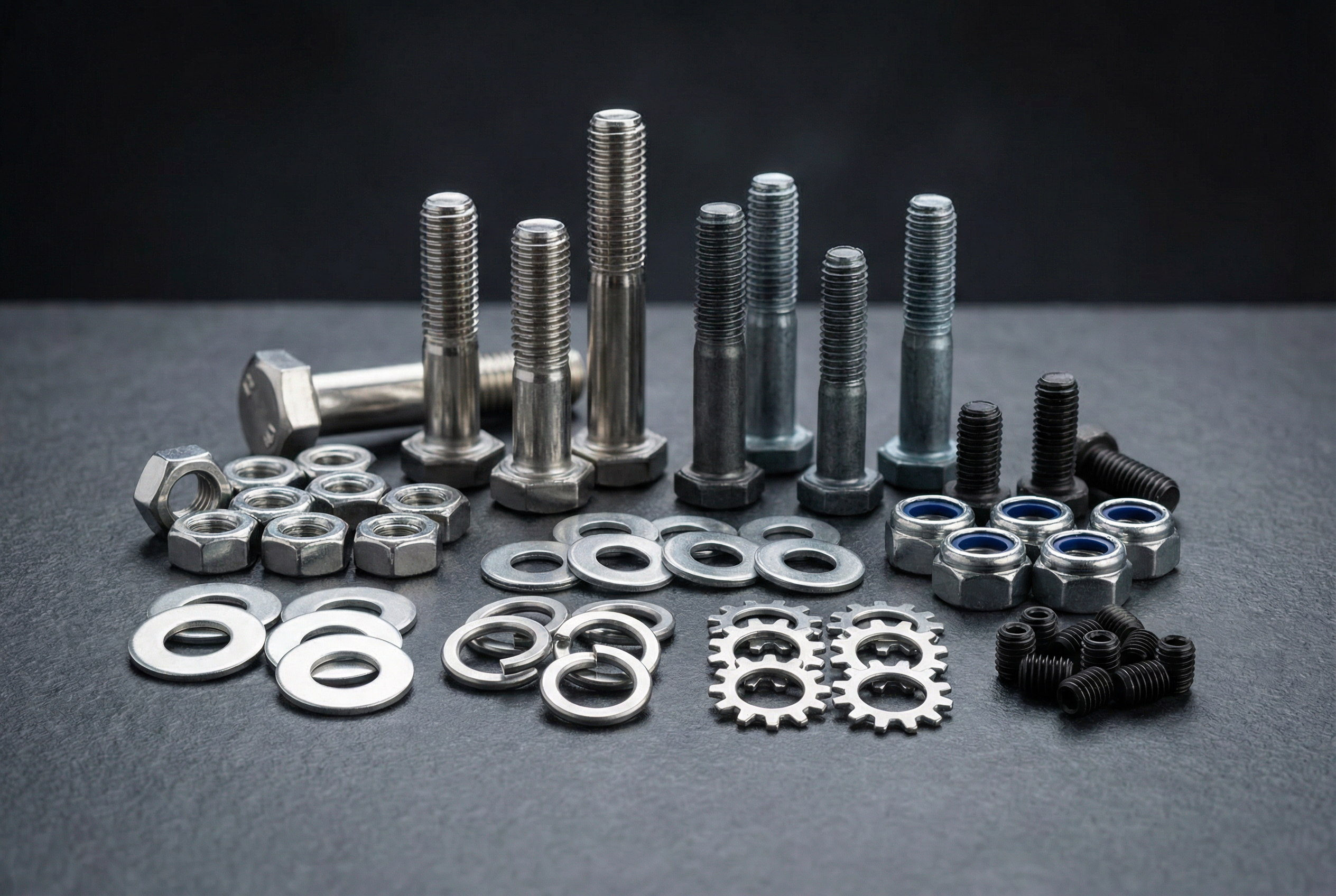
Our products are manufactured under strict quality control standards, ensuring precise dimensional accuracy and consistent Rockwell hardness. Whether you need Grade 8 hex bolts for heavy construction or specialized external-tooth lock washers for vibrating motor mounts, SKDIN provides the reliability you need to keep your operations running safely and efficiently.
Don't let vibration compromise your equipment. Browse SKDIN's Complete Fastener Catalog today, or Contact Our Technical Team for expert advice on selecting the perfect anti-loosening solution for your specific engineering challenge.