
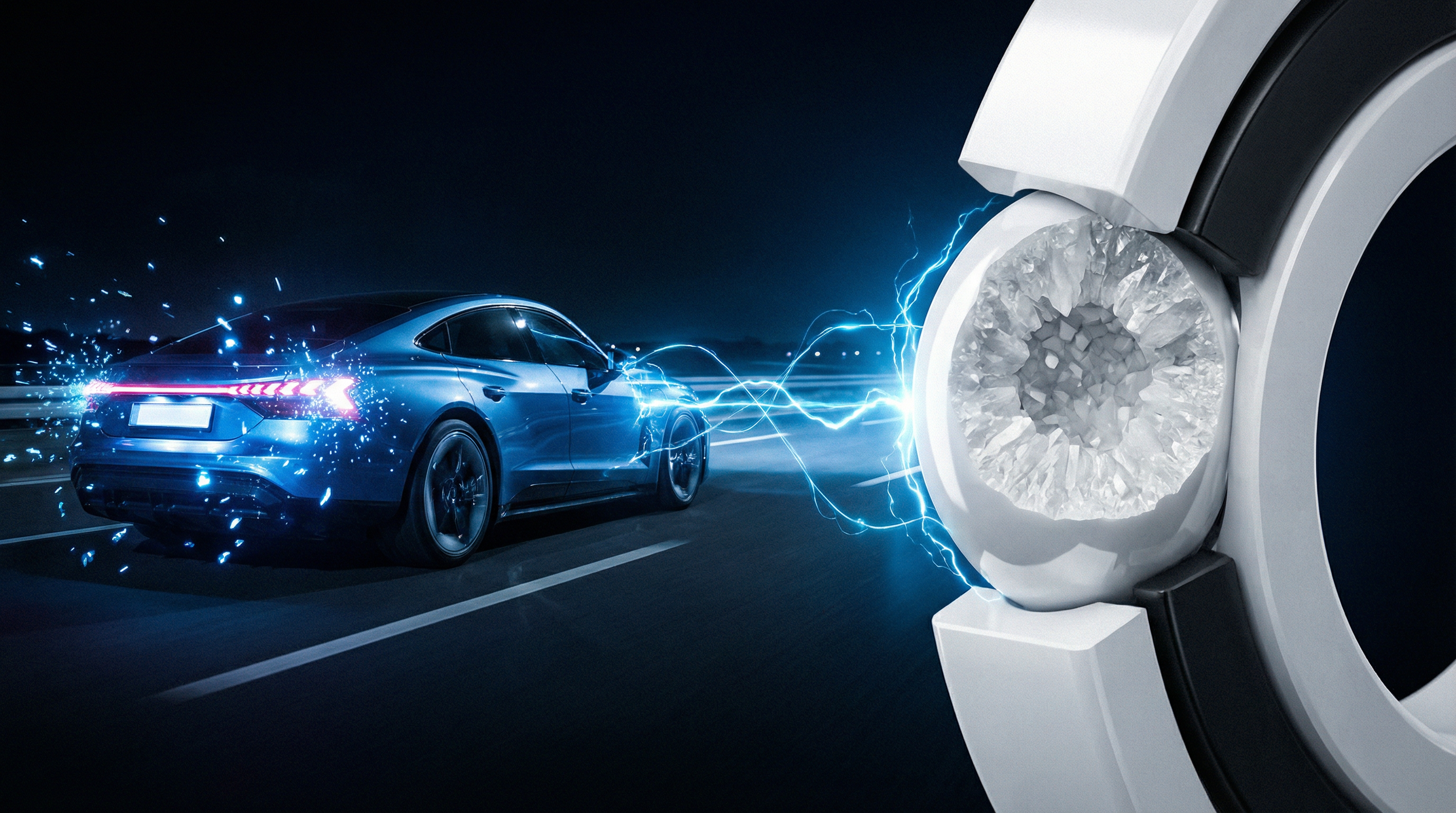
Why Electric Vehicles Are Driving Massive Demand for Ceramic Bearings in 2026
 Mia
Mia
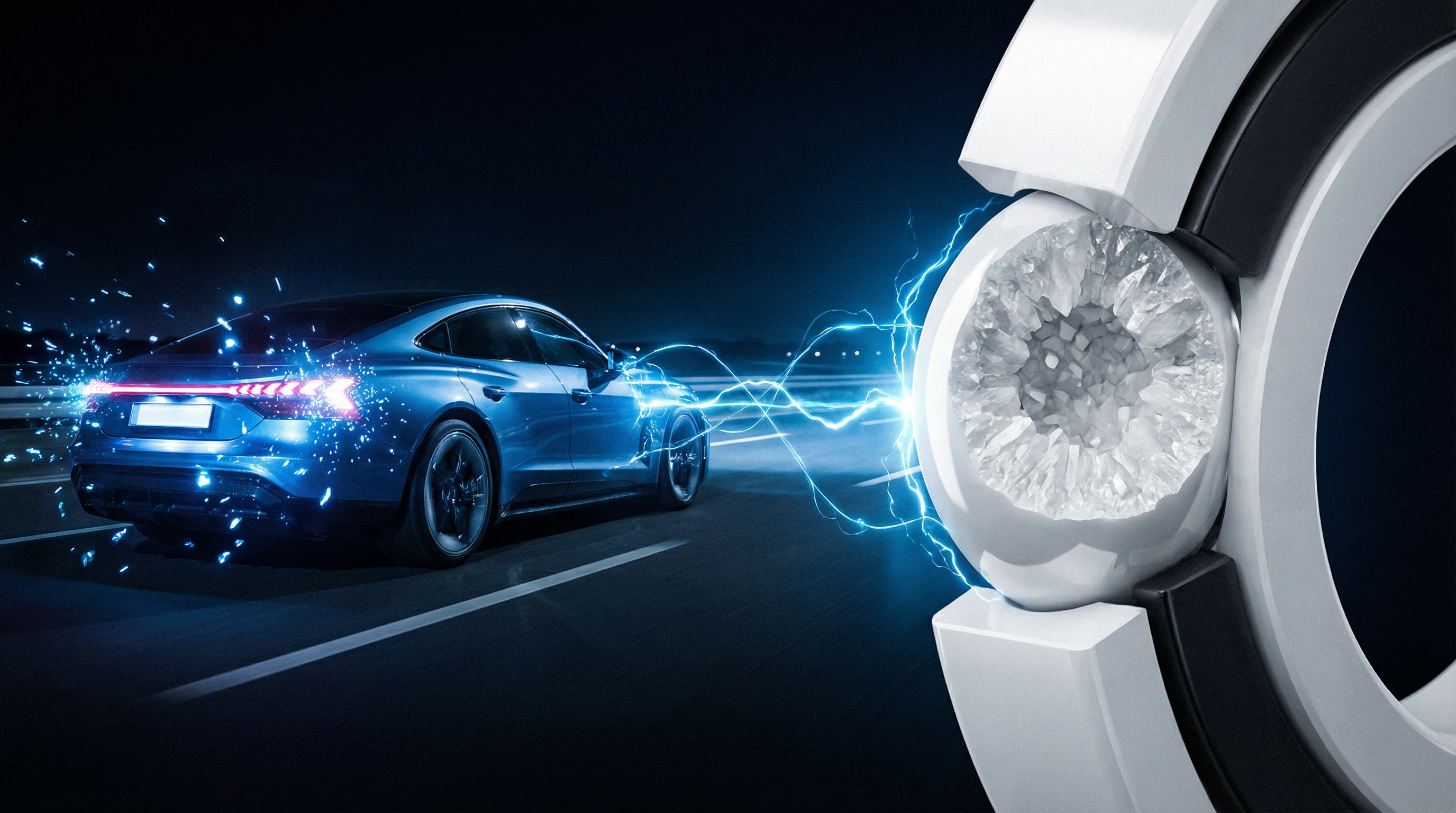
The electric vehicle (EV) revolution is not just about battery chemistry and software algorithms. Beneath the sleek exteriors and quiet cabins lies a profound engineering transformation happening at the micro-level—specifically, inside the bearings that spin millions of times a day in every EV on the road.
As we move deeper into 2026, the automotive industry has reached a critical inflection point. Traditional steel bearings, which have reliably served internal combustion engines for over a century, are increasingly struggling to meet the extreme demands of modern electric drivetrains. In their place, Silicon Nitride (Si₃N₄) ceramic bearings have transitioned from a niche aerospace component to an absolute necessity for high-performance electric vehicles.
But what exactly is driving this massive shift? Why are automotive engineers abandoning steel for ceramics? The answer lies in the unique physics of electric motors and the relentless pursuit of efficiency.
Why Steel Bearings Fall Short in Modern EVs
Internal combustion engines and electric motors are fundamentally different machines, and these differences place radically different stresses on drivetrain components. For traditional steel bearings, modern EV architectures present two major, often fatal, challenges.
The High-Speed Challenge
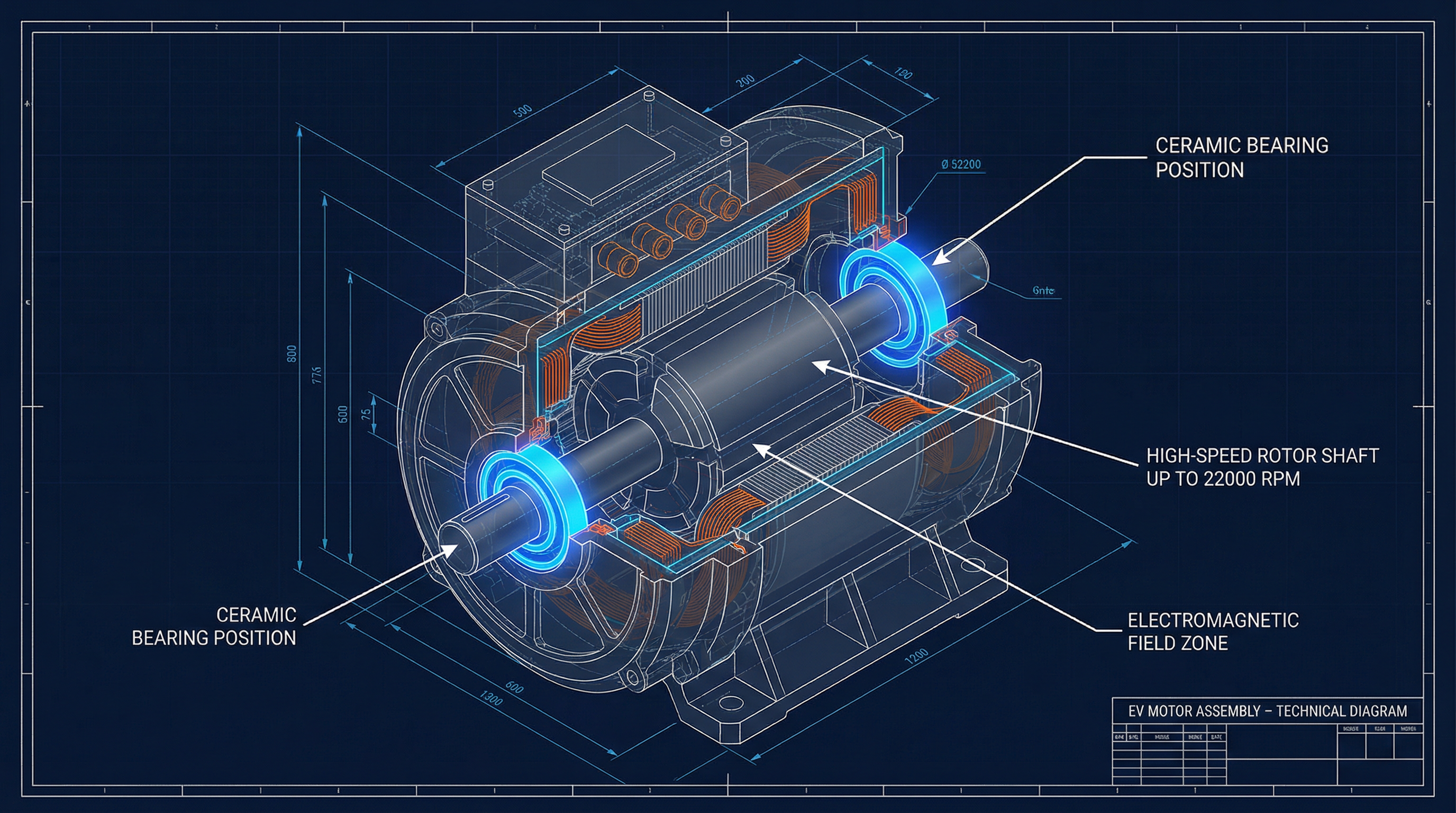
Traditional combustion engines typically operate within a comfortable range of 1,500 to 6,000 RPM. Electric motors, however, are a completely different beast. To maximize power density and efficiency, modern EV traction motors routinely spin between 10,000 and 22,000 RPM.
At these extreme velocities, conventional steel bearings suffer from rapid thermal degradation and centrifugal stress. The friction generated by steel balls rolling against steel raceways at 20,000 RPM creates immense heat, which can quickly break down standard lubricants and lead to catastrophic mechanical failure.
The Silent Killer: Electrical Pitting
While high speeds are a mechanical hurdle, the most insidious threat to EV bearings is electrical. High-voltage EV traction motors and fast-switching inverters generate strong electromagnetic fields and parasitic stray currents. In a system utilizing standard steel bearings, these stray electrical currents find the path of least resistance to the ground—which happens to be straight through the bearing itself.
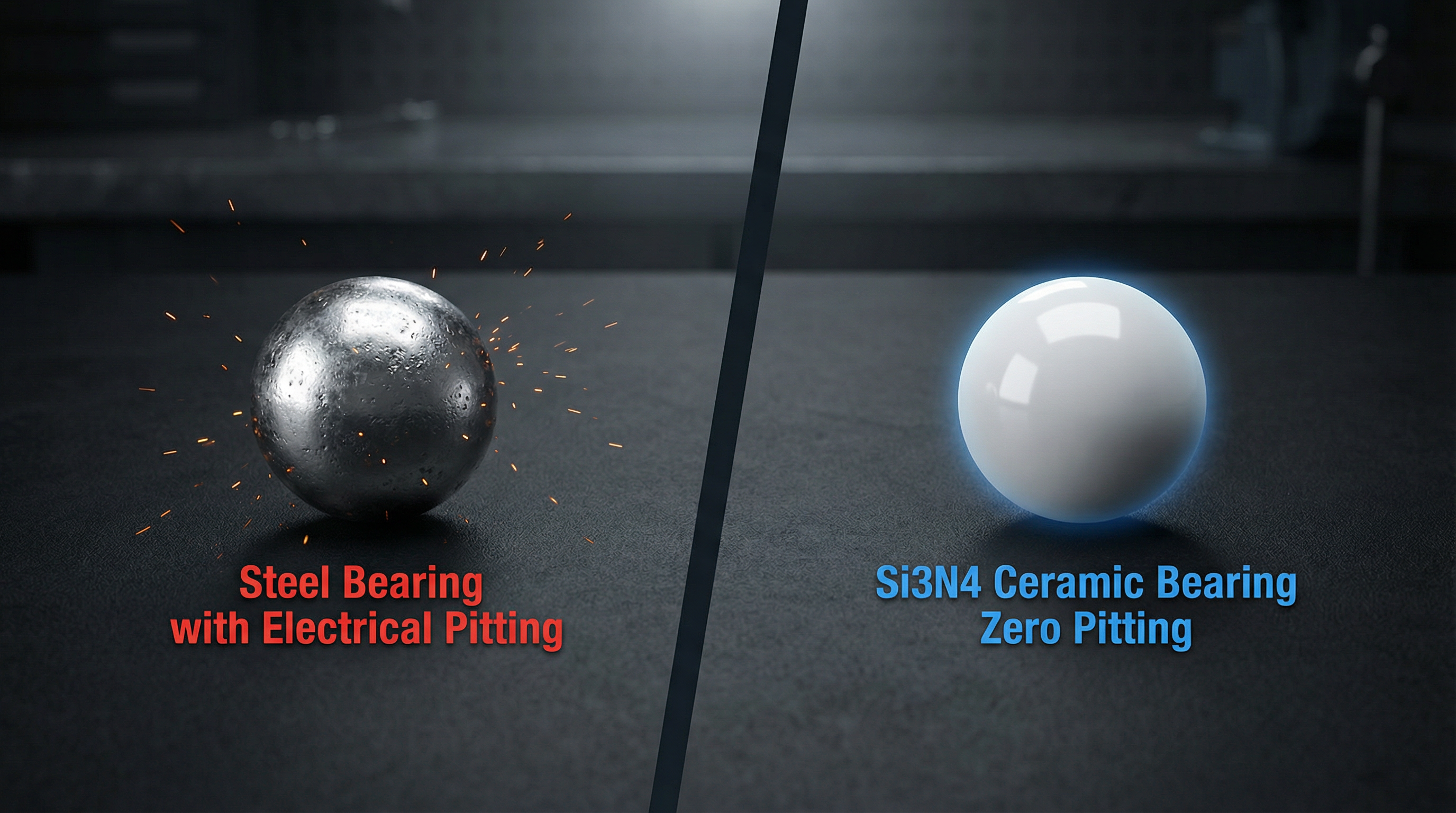
When the electrical current arcs across the microscopic gap between the steel rolling elements and the raceway, it acts like a miniature welding torch. This phenomenon, known as electrical pitting or electro-corrosion, literally melts and vaporizes microscopic craters into the bearing surface. Over time, this causes a severe "fluting" pattern on the raceway, resulting in excessive noise, intense vibration, and ultimately, premature bearing failure.
The Ceramic Advantage: Why Si₃N₄ is the Gold Standard
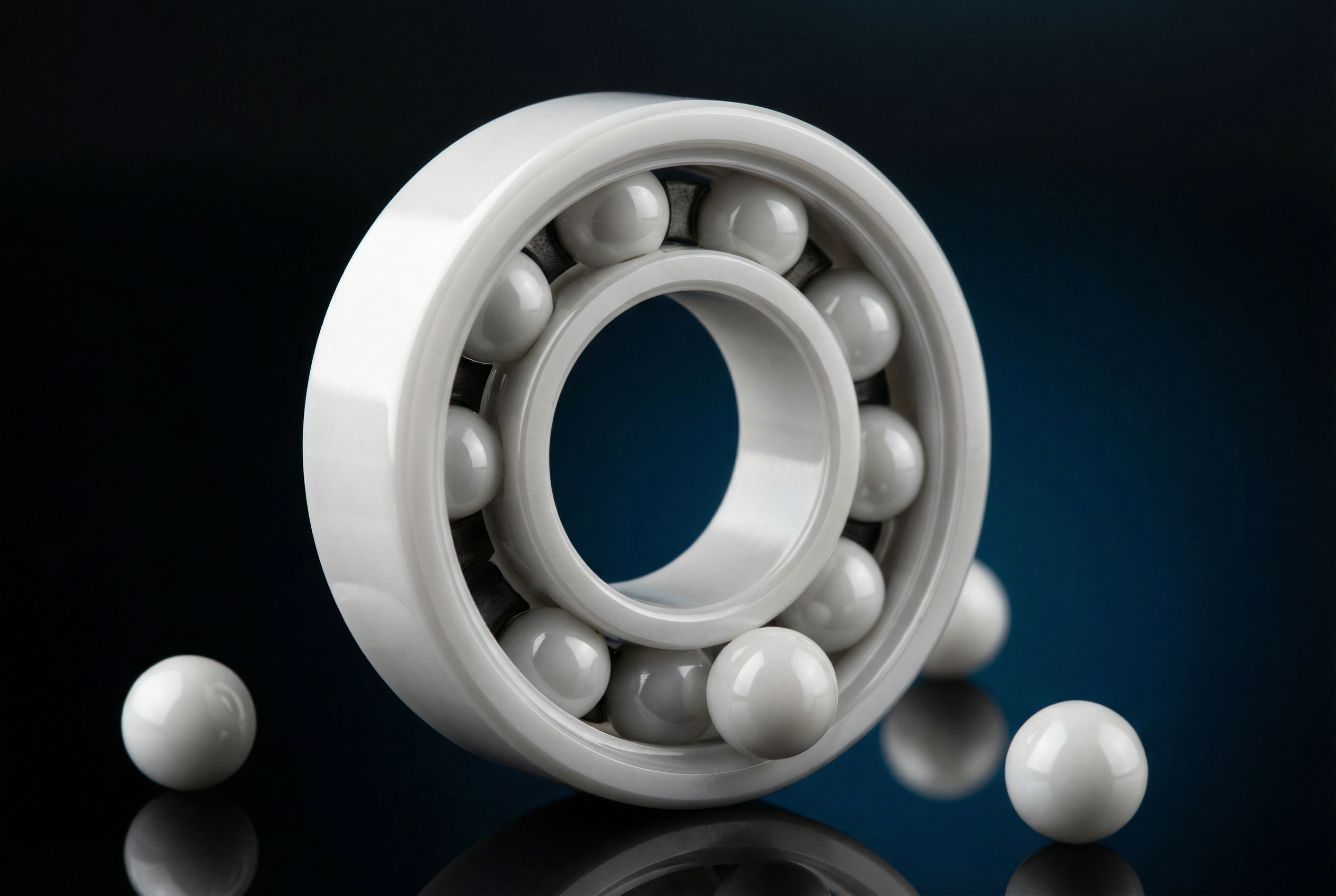
To combat the dual threats of extreme RPMs and electrical pitting, automotive engineers have turned to hybrid ceramic bearings—specifically those utilizing Silicon Nitride (Si₃N₄) rolling elements. These advanced components offer a combination of physical properties that steel simply cannot match.
1. Natural Electrical Insulation
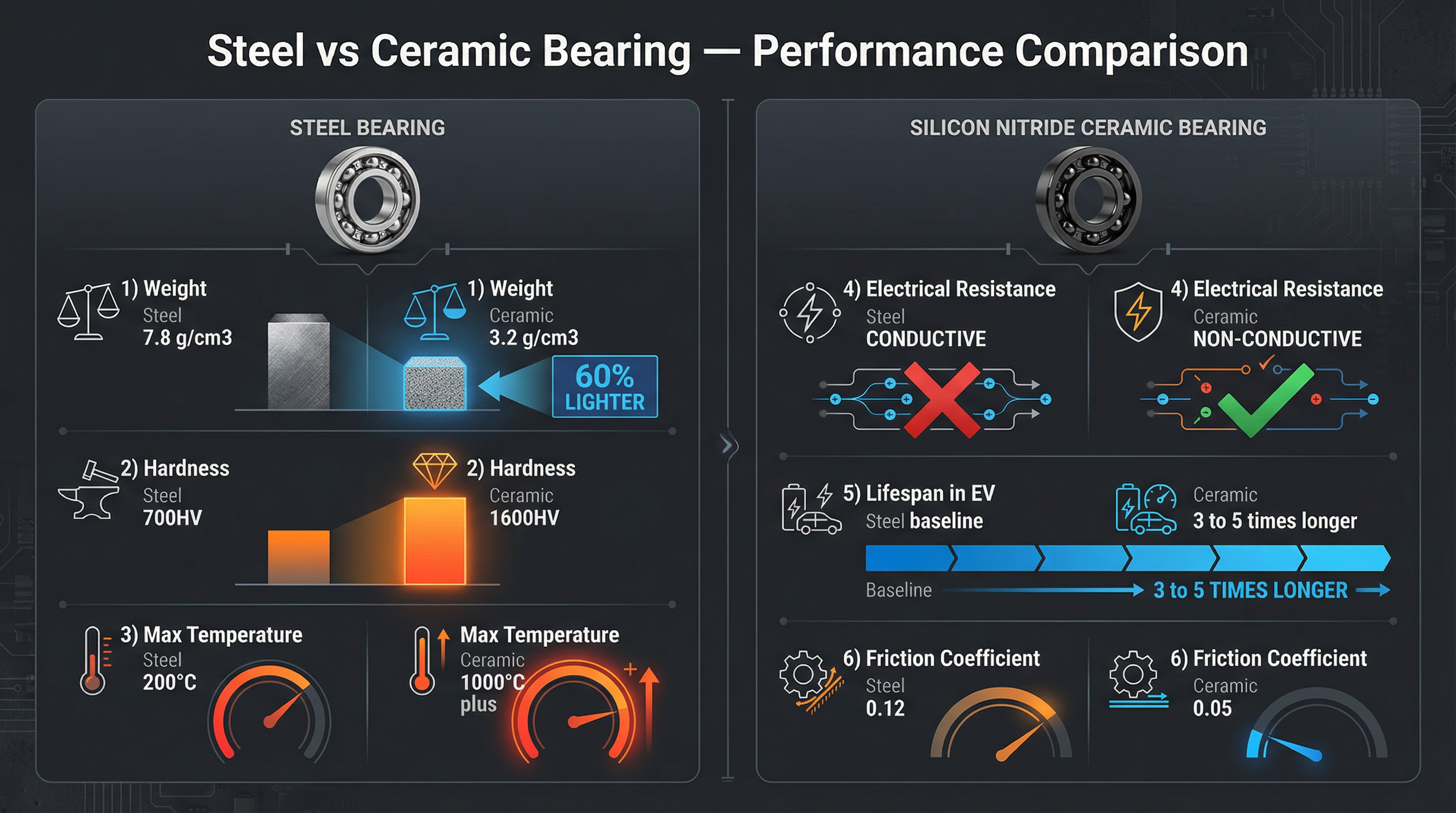
The most critical advantage of Silicon Nitride in an EV application is its inherent electrical resistance. Unlike steel, Si₃N₄ is a non-conductive material. When ceramic balls are used in a bearing, they effectively break the electrical circuit between the rotor and the motor housing. Current simply cannot pass through them. This completely eliminates the risk of electrical pitting, ensuring the bearing remains smooth and quiet throughout the vehicle's lifespan without the need for complex grounding rings or fragile insulating coatings.
2. Extreme Lightweight and Low Friction
Silicon Nitride is approximately 60% lighter than standard bearing steel. In a motor spinning at 20,000 RPM, this massive reduction in mass significantly lowers the centrifugal force exerted by the balls on the outer raceway. Furthermore, ceramic balls possess a much smoother surface finish and a lower coefficient of friction than steel. This translates to less heat generation, reduced energy loss, and ultimately, a measurable improvement in the electric vehicle's driving range.
3. Superior Hardness and Longevity
Ceramic bearings are exceptionally hard—roughly twice as hard as high-carbon bearing steel. This incredible hardness makes them highly resistant to wear and surface degradation. Even in the harsh, high-temperature environment of an EV drivetrain, hybrid ceramic bearings consistently demonstrate a lifespan that is 3 to 5 times longer than their all-steel counterparts.
Where Are Ceramic Bearings Used in EVs?
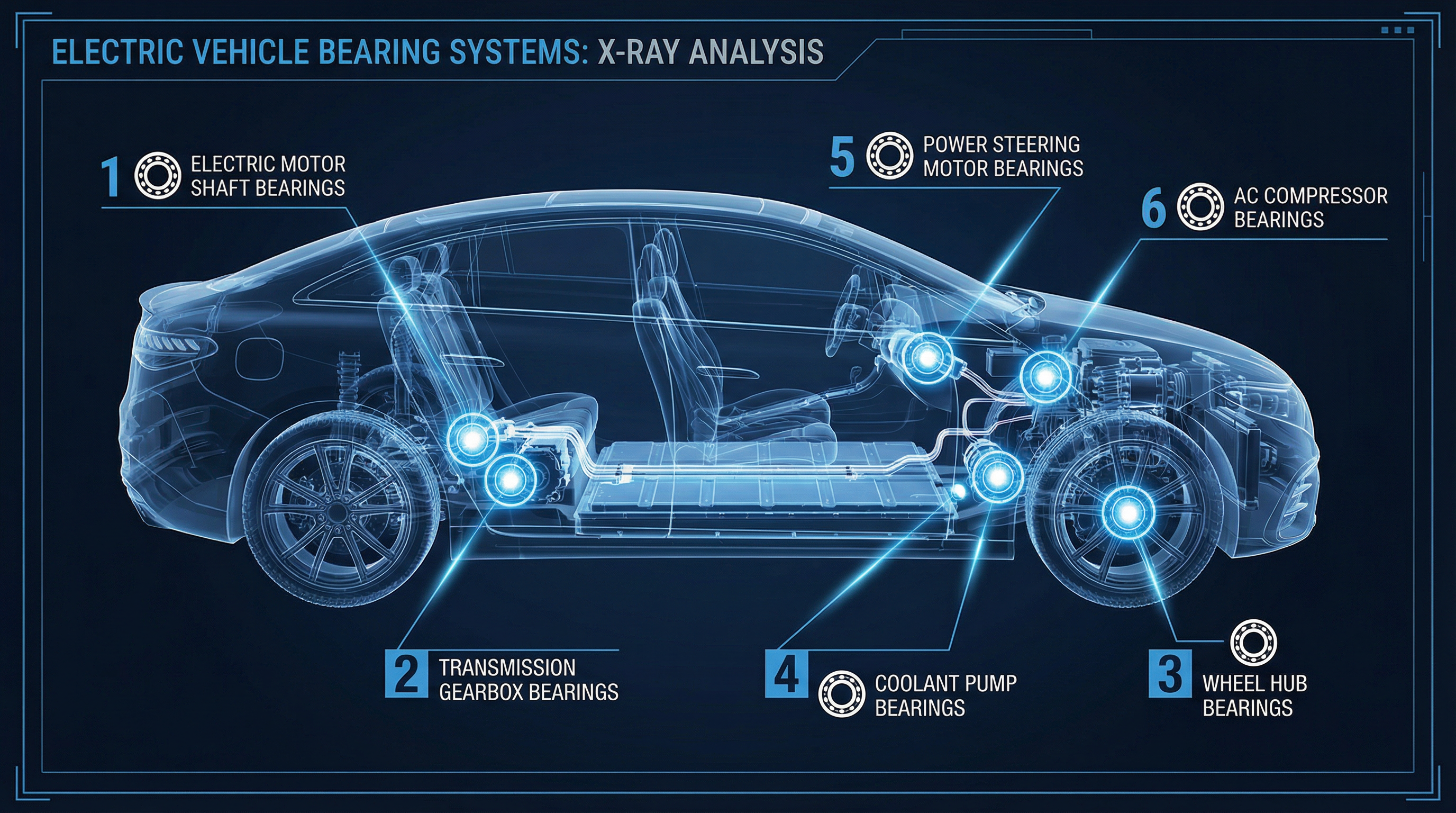
The adoption of ceramic bearings is expanding rapidly across various subsystems within the electric vehicle architecture. While the main traction motor is the primary beneficiary, engineers are finding value in ceramics throughout the chassis.
Electric Motor Shafts: The most critical application, where high RPMs and stray currents demand the insulation and low friction of ceramics.
Transmission and Gearboxes: Handling high torque and continuous high-speed rotation with minimal energy loss.
Coolant Pumps: Operating in wet, potentially corrosive environments where the chemical inertness of ceramics prevents rust and degradation.
Wheel Hubs: Supporting the heavy weight of EV battery packs while providing ultra-quiet operation for a premium cabin experience.
SKDIN: Your Partner in Next-Generation EV Bearings
As the automotive industry accelerates toward a fully electric future, the demand for high-precision, reliable bearing solutions has never been greater. At SKDIN, we understand the unique engineering challenges posed by modern electric drivetrains.
We are a premier manufacturer of precision bearings, offering a comprehensive range of solutions tailored for the EV market, including advanced deep groove ball bearings and specialized high-speed motor bearings. Our rigorous quality control, utilizing advanced Rockwell hardness testing and precision dimensional checks, ensures that every SKDIN bearing delivers the performance, efficiency, and longevity your electric vehicles demand.
Whether you are designing the next generation of high-speed traction motors or optimizing auxiliary EV systems, SKDIN has the engineering expertise and manufacturing capability to support your vision.
Ready to upgrade your EV drivetrain performance? Explore SKDIN's Precision Bearing Catalog today or Contact Our Engineering Team to discuss custom bearing solutions for your specific application.