
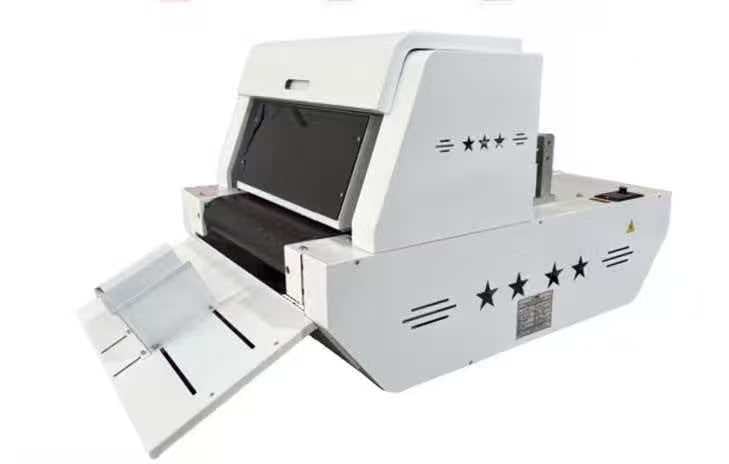
Application Cases of Digital Printing Machines in Various Industries: How ZMK400 Single Pass Printer Empowers Your Business
 Mia
Mia
Introduction: The Industry Revolution Powered by Desktop Printing
Digital printing technology has fundamentally transformed how businesses approach packaging, branding, and product customization. The ZMK400, a desktop single-pass digital printer, exemplifies this revolution by bringing industrial-grade printing capabilities to businesses of all sizes. Rather than being confined to large-scale manufacturers, companies across diverse industries can now leverage advanced printing technology to create competitive advantages.
This article explores real-world applications of the ZMK400 across multiple industries, demonstrating how businesses are using this technology to increase efficiency, reduce costs, and unlock new revenue streams. Whether you're in food and beverage, e-commerce, crafts, or print services, the ZMK400 offers solutions tailored to your industry's unique challenges.
Chapter 1: Food and Beverage Industry
Pizza Box Printing and Customization
The pizza industry represents one of the most compelling use cases for the ZMK400. Pizza restaurants and delivery services require high-volume, customized packaging that reflects their brand identity while maintaining food safety standards.
The Challenge: Traditional pizza box manufacturers require minimum orders of 5,000-10,000 units, making it difficult for small pizzerias to customize their packaging. Additionally, changing designs for seasonal promotions or limited-time offerings requires long lead times and significant inventory commitments.
The ZMK400 Solution: With the ZMK400's food-grade certification and variable data printing capabilities, pizzerias can print custom boxes on-demand. A small pizzeria can now:
- Print 500 boxes with unique designs for a weekend promotion
- Add variable data like order numbers, delivery instructions, or QR codes linking to loyalty programs
- Change designs weekly without inventory concerns
- Reduce packaging waste by printing only what's needed
Financial Impact: A pizzeria printing 10,000 boxes monthly can reduce packaging costs by 20-30% by eliminating minimum order quantities and storage expenses. The ability to add promotional content directly to boxes increases customer engagement and repeat orders.
Bakery and Confectionery Packaging
Bakeries and confectionery businesses face similar challenges to pizzerias but with even greater emphasis on visual appeal and food safety. The ZMK400's ability to print on specialty materials like kraft paper and cotton paper enables premium packaging that justifies higher product prices.
Application Example: A artisan bakery uses the ZMK400 to print custom boxes for different product lines (cookies, pastries, cakes) with variable data including:
- Product name and ingredients
- Expiration date and batch number (printed automatically from a database)
- QR codes linking to recipes or nutritional information
- Custom artwork for seasonal products
This capability allows the bakery to maintain a premium brand image while reducing packaging costs by 25% compared to pre-printed boxes.
Beverage Label and Packaging
Beverage companies, from craft breweries to specialty juice makers, require high-quality labels and packaging that stand out on retail shelves. The ZMK400's 1200×1200 dpi resolution ensures labels are crisp and professional, while variable data printing enables:
- Batch coding and traceability
- Limited edition designs for seasonal releases
- Personalized packaging for corporate gifts
- Multi-language labels for international markets
Chapter 2: E-commerce and Fulfillment Services
Branded Packaging for Online Retailers
E-commerce businesses recognize that unboxing experience significantly impacts customer satisfaction and brand loyalty. The ZMK400 enables online retailers to create premium unboxing experiences without the overhead of traditional packaging manufacturers.
The Opportunity: An online fashion retailer uses the ZMK400 to print custom branded boxes, tissue paper, and thank-you cards. The variable data capability allows:
- Customer names printed on boxes
- Personalized thank-you messages
- QR codes linking to product care instructions
- Promotional codes for future purchases
Results: Retailers using personalized packaging report 15-25% increases in repeat purchase rates and significant improvements in social media engagement as customers share unboxing videos.
Third-Party Logistics (3PL) Services
Third-party logistics providers can differentiate themselves by offering custom packaging services to their clients. The ZMK400 enables 3PL companies to:
- Print custom boxes for multiple clients without switching equipment
- Add variable data like tracking numbers and client logos
- Offer rapid turnaround times (24-48 hours) for rush orders
- Reduce inventory costs by printing on-demand
Business Model: A 3PL provider charges clients $0.15-0.25 per custom box, generating $1,500-2,500 in monthly revenue per client. With 10-15 active clients, a single ZMK400 can generate $150,000-375,000 in annual revenue.
Subscription Box Services
Subscription box companies require frequent packaging updates to maintain customer interest and reflect seasonal themes. The ZMK400's flexibility enables:
- Monthly design changes without inventory concerns
- Personalized boxes with subscriber names or messages
- Limited edition designs for special promotions
- Rapid prototyping of new packaging concepts
Chapter 3: Craft, Art, and Specialty Products
Artisan Packaging for Premium Products
Artists, craftspeople, and makers of premium products require packaging that reflects the quality and uniqueness of their products. The ZMK400's ability to print on specialty materials like cotton paper, rice paper, and thin wood opens unprecedented possibilities.
Application Example: An artisan jewelry maker uses the ZMK400 to print custom boxes on cotton paper with:
- Intricate designs that complement the jewelry
- Variable data including customer names or gift messages
- QR codes linking to the maker's story or care instructions
- Premium finishes that justify higher product prices
The ability to create truly unique packaging allows the maker to charge 30-40% premiums compared to standard packaging.
Print-on-Demand Merchandise
The ZMK400 enables creators to offer print-on-demand merchandise without minimum order quantities. This includes:
- Custom t-shirt packaging
- Personalized book covers
- Limited edition art prints with custom framing
- Collectible packaging for limited releases
Specialty Paper Products
Designers and paper enthusiasts can use the ZMK400 to create specialty paper products including:
- Custom stationery and business cards
- Personalized notebooks and journals
- Limited edition art prints on premium paper
- Handmade paper products with printed designs
Chapter 4: Print Service Providers and Commercial Printing
Expanding Service Offerings
Print service providers can use the ZMK400 to expand their service offerings without significant capital investment in traditional printing equipment. This includes:
Packaging Services: Offer custom packaging solutions to local businesses, from small startups to established companies needing rapid prototyping.
Variable Data Printing: Provide personalization services for direct mail campaigns, promotional materials, and event invitations.
Short-Run Production: Serve clients who need small quantities of printed materials without the high setup costs of traditional printing.
Specialty Material Printing: Differentiate from competitors by offering printing on materials like cotton paper, rice paper, and thin wood.
Business Model and Revenue Potential
A print service provider can generate significant revenue from a single ZMK400:
- Custom Packaging: $0.20-0.50 per unit × 50,000 units/month = $10,000-25,000/month
- Variable Data Printing: $500-2,000 per job × 10-20 jobs/month = $5,000-40,000/month
- Specialty Material Printing: $1-3 per unit × 20,000 units/month = $20,000-60,000/month
Total Monthly Revenue Potential: $35,000-125,000 per machine, with gross margins of 50-70%.
Competitive Advantages
Print service providers using the ZMK400 gain competitive advantages including:
- Rapid Turnaround: On-demand printing enables 24-48 hour turnaround times
- No Minimum Orders: Serve clients with small-volume needs
- Flexibility: Quickly adapt to client requests and design changes
- Cost Efficiency: Lower overhead compared to traditional printing facilities
Chapter 5: Manufacturing and Industrial Applications
Product Labeling and Traceability
Manufacturers across industries require high-quality product labels with variable data for traceability, batch coding, and regulatory compliance. The ZMK400 enables:
- Automatic batch number printing
- Expiration date and production date coding
- QR codes for supply chain tracking
- Multi-language labels for international distribution
Packaging for Retail Distribution
Manufacturers producing goods for retail distribution can use the ZMK400 to:
- Create sample packaging for trade shows and sales presentations
- Produce limited edition packaging for seasonal products
- Rapidly prototype new packaging designs
- Manage packaging inventory more efficiently
Industrial Equipment Labeling
The ZMK400's durability and precision make it suitable for labeling industrial equipment, including:
- Warning labels and safety instructions
- Serial numbers and warranty information
- QR codes linking to technical documentation
- Multi-language instructions for international markets
Chapter 6: Comparative Analysis and ROI
Industry-Specific ROI Calculations
The return on investment for the ZMK400 varies by industry, but all sectors benefit from reduced costs and new revenue opportunities:
| Industry | Primary Benefit | Annual Savings/Revenue | Payback Period |
| Food & Beverage | Reduced packaging costs | $15,000-30,000 | 18-24 months |
| E-commerce | Premium packaging | $20,000-40,000 | 12-18 months |
| Crafts & Art | Material versatility | $10,000-25,000 | 24-36 months |
| Print Services | New revenue stream | $50,000-150,000 | 6-12 months |
| Manufacturing | Efficiency gains | $20,000-50,000 | 12-18 months |
Key Success Factors
Businesses successfully implementing the ZMK400 share common characteristics:
1. Clear Use Case: Identify specific applications where the ZMK400 provides clear value
2. Market Research: Understand customer demand for customized packaging
3. Workflow Integration: Integrate the printer into existing production workflows
4. Staff Training: Ensure operators understand printer capabilities and maintenance
5. Quality Standards: Establish quality control procedures to maintain brand consistency
Chapter 7: Implementation Best Practices
Workflow Integration
Successful implementation requires thoughtful integration into existing workflows:
- Design Software: Invest in design software that supports variable data printing
- Database Integration: Connect customer data to automatically populate variable fields
- Production Scheduling: Develop scheduling systems to optimize printer utilization
- Quality Control: Establish testing procedures to ensure consistent output
Material Selection and Sourcing
The ZMK400's versatility requires careful material selection:
- Substrate Testing: Test materials before full production runs
- Supplier Relationships: Develop relationships with reliable material suppliers
- Inventory Management: Balance inventory to minimize storage while ensuring availability
- Cost Optimization: Negotiate volume discounts with suppliers
Marketing and Customer Acquisition
Businesses using the ZMK400 should emphasize:
- Customization Capabilities: Highlight ability to offer personalized packaging
- Rapid Turnaround: Emphasize quick delivery times compared to traditional printing
- Cost Efficiency: Demonstrate cost savings from on-demand production
- Sustainability: Highlight reduced waste from print-on-demand model
Conclusion: Unlocking Industry-Specific Opportunities
The ZMK400 represents a paradigm shift in how businesses approach printing and packaging. By bringing industrial-grade printing capabilities to the desktop, it enables companies across diverse industries to compete more effectively, reduce costs, and unlock new revenue opportunities.
Whether you're in food and beverage, e-commerce, crafts, print services, or manufacturing, the ZMK400 offers solutions tailored to your industry's unique challenges. The key to success is identifying clear use cases, integrating the printer into existing workflows, and maintaining focus on quality and customer satisfaction.
The businesses that successfully implement desktop digital printing technology will gain significant competitive advantages in their markets. The question is not whether to adopt this technology, but when.