W 61904 R
W Series Stainless Steel Flanged Bearings
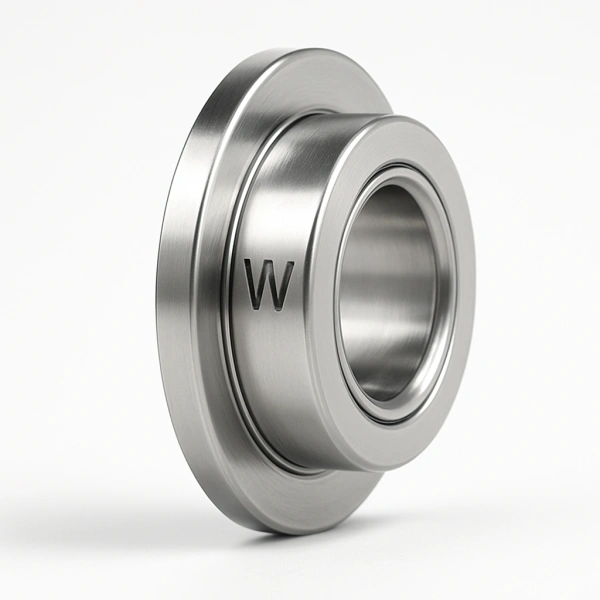

Image may differ from product. See technical specification for details.
Basic Information
Main Dimensions
Outer Ring Dimensions
Performance
Materials
Environment & Compliance
- Fast delivery
- Enjoy discounts on bulk purchases
- Secure Payment
- Fast Global Shipping
W 61904 R Bearing Product Overview & Core Advantages
The W 61904 R is a single row deep groove ball bearing designed for high-performance applications requiring precision and reliability. Engineered with stainless steel rings, balls, and cage, this open-type bearing offers excellent corrosion resistance and durability. Its compact design with a 9 mm width makes it ideal for space-constrained assemblies while maintaining high radial load capacity. The bearing features P0 tolerance class and CN radial internal clearance, ensuring consistent performance in demanding environments. With a limiting speed of 26,000 rpm and wide temperature range (-30° to 120°C), it delivers exceptional operational stability.
W 61904 R Bearing Model Code Explained, Specifications & Naming Convention
| Code Segment | Technical Meaning | Performance Implication |
|---|---|---|
| W | Stainless Steel Construction | Provides excellent corrosion resistance and durability |
| 61904 | Deep Groove Ball Bearing Series | Standard single row design for radial load applications |
| R | Flange Design | Enables easy mounting and secure positioning with 40 mm flange diameter |
W 61904 R Bearing Structural Features & Performance Benefits
Deep Groove Geometry: The optimized raceway design ensures smooth operation and efficient load distribution, enhancing bearing service life under radial dynamic loads up to 1243 lbf.
Stainless Steel Construction: All components manufactured from stainless steel provide superior corrosion resistance and maintain dimensional stability across the operating temperature range.
Flange Design Advantage: The integrated flange (40 mm outer diameter, 2 mm thickness) simplifies installation and provides secure mounting, reducing assembly time and improving positional accuracy.
High-Speed Capability: With a limiting speed of 26,000 rpm, the bearing delivers reliable performance in high-rotation applications, supported by precise bearing dimensions and optimized internal geometry.
Precision Engineering: Manufactured to P0 tolerance class with CN radial clearance, ensuring consistent performance and interchangeability in precision assemblies.
W 61904 R Bearing Typical Application Areas
- Medical Equipment: Surgical instruments, dental handpieces, and diagnostic devices requiring corrosion resistance and precision
- Food Processing Machinery: Conveyor systems, mixers, and packaging equipment where stainless steel construction is essential
- Laboratory Instruments: Precision analytical equipment, centrifuges, and measuring devices
- Small Electric Motors: High-speed miniature motors and precision drives
- Office Automation Equipment: Printers, scanners, and copiers requiring reliable high-speed operation
- Robotics and Automation: Small robotic joints, positioning systems, and precision mechanisms