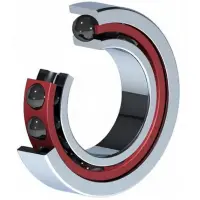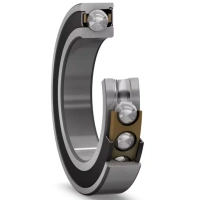
S7017 ACDGC/P4A
Sealed Super Precision Angular Contact Ball Bearings
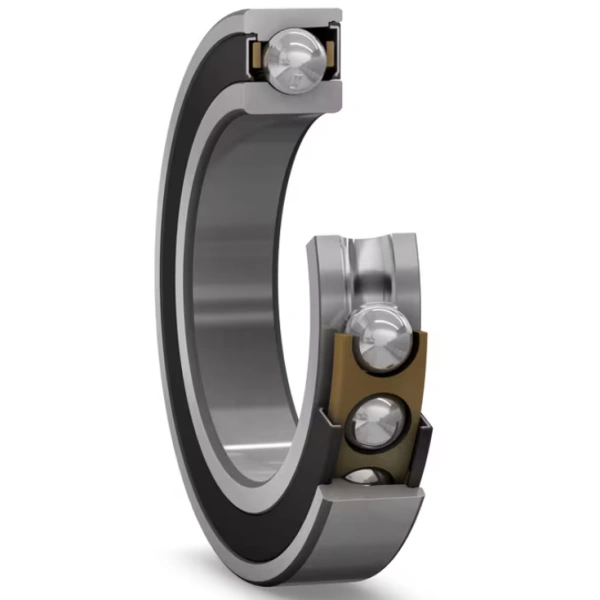

Image may differ from product. See technical specification for details.
Basic Information
Main Dimensions
Ball & Washer Dimensions
Performance
Materials
- Fast delivery
- Enjoy discounts on bulk purchases
- Secure Payment
- Fast Global Shipping
S7017 ACDGC/P4A Bearing Product Overview & Core Advantages
The S7017 ACDGC/P4A is a precision angular contact ball bearing designed for high-performance applications requiring exceptional rigidity and speed. As a single bearing from a universally matchable (SU) set, it is engineered to accommodate combined radial and axial loads simultaneously. Its P4A tolerance class ensures superior running accuracy, making it ideal for high-reliability machinery where precision and high rigidity are critical. The combination of a phenolic cage and premium grease lubrication enables outstanding high-speed performance.
S7017 ACDGC/P4A Bearing Model Code Explained, Specifications & Naming Convention
| Code Segment | Technical Meaning | Significance |
|---|---|---|
| S7017 | Basic bearing series and size designation | Indicates a 85mm bore, 130mm OD, 22mm width bearing |
| AC | Angular Contact design | Optimized for combined radial and axial loads |
| DGC | Contact angle and preload designation | 25° contact angle with Moderate (Class C) preload |
| P4A | Tolerance class | High precision grade for superior running accuracy |
S7017 ACDGC/P4A Bearing Structural Features & Performance Benefits
High Rigidity & Load Capacity: The angular contact design with a 25° contact angle and moderate preload (Class C) provides exceptional stiffness, enabling stable operation under combined loads. With a dynamic load rating of 14,332 lbf and static load rating of 13,950 lbf, it delivers reliable performance in demanding applications.
High-Speed Performance: The phenolic cage offers excellent strength-to-weight ratio and smooth operation at high speeds, supporting a limiting speed of 17,000 rpm. This makes it suitable for high-speed spindle applications.
Precision Engineering: Manufactured to P4A tolerance class with tight dimensional controls (bore/OD tolerance: -0.004mm to 0), this bearing ensures minimal runout and vibration for precision machinery.
Universal Matching Capability: As part of a universally matchable (SU) set of 3 bearings, the S7017 ACDGC/P4A can be combined with other bearings from the same set to create optimized bearing arrangements for specific application requirements.
S7017 ACDGC/P4A Bearing Typical Application Areas
The S7017 ACDGC/P4A is ideally suited for precision applications requiring high speed, accuracy, and rigidity, including:
- Machine Tool Spindles - High-speed machining centers and precision lathes
- Precision Grinding Spindles - Surface and cylindrical grinding applications
- High-Speed Motors - Industrial motors and servo drives
- Robotics - Precision joints and articulation points
- Aerospace Components - Actuators and control surface mechanisms