QJ 310 PHAS
Four-Point Contact Bearings Ball Bearings
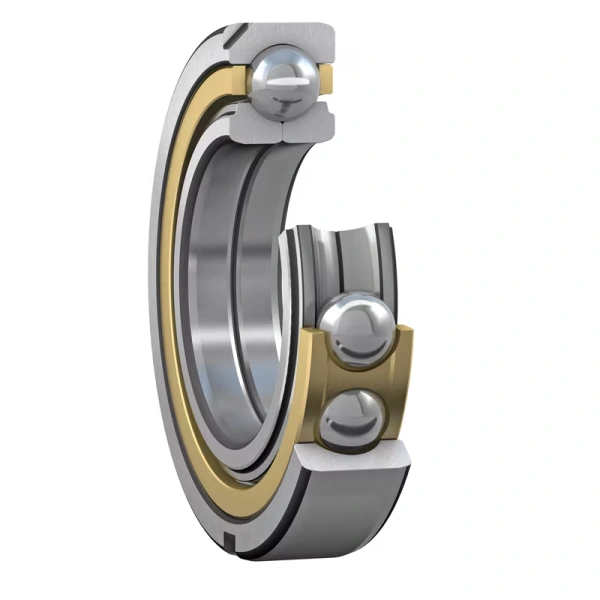

Image may differ from product. See technical specification for details.
Part No.
Part No.
QJ 310 PHAS
Basic Information
Bearing type
Ball
System of measurement
Metric
Construction
Single Row
Weight
1.35 kg
Tolerance class
P6 (ABEC-3)
Seal type
Open
For load direction
Four Point Contact
Main Dimensions
Bore diameter
50 mm
Bore diameter tolerance
-0.01mm to 0
Outside diameter
110 mm
Outside diameter tolerance
-0.013mm to 0
Width
27 mm
Width tolerance
-0.05mm to 0
Chamfer dimension
2 mm
Distance from side face to load point
56 mm
Inner Ring Dimensions
Inner ring large-side shoulder diameter
65 mm
Outer Ring Dimensions
Shoulder diameter outer ring
90 mm
Performance
Temperature range
-30° to 110 °C
Radial dynamic load rating
26550 lbf
Radial static load rating
22500 lbf
Limiting speed
11 X 1000 rpm
Lubrication
Lubricated
Materials
Ring material
Chrome Steel
Ball material
Chrome Steel
Cage material
Peek
Environment & Compliance
REACH
Compliant
ROHS
Compliant
Technical Drawings
No drawings available at the moment, will be launched soon
In Stock
Price available upon request.
Our sales team will respond within 24 hours with a competitive quote tailored to your requirements.
REQUEST A QUOTE
- Fast delivery
- Enjoy discounts on bulk purchases
- Secure Payment
- Fast Global Shipping
QJ 310 PHAS Bearing Product Overview & Core Advantages
The QJ 310 PHAS is a metric four-point contact ball bearing engineered for high-performance applications requiring exceptional precision and load handling. This single-row bearing is distinguished by its ability to simultaneously support substantial radial loads and axial loads in both directions with a compact cross-section. Manufactured to P6 (ABEC-3) tolerance class, it delivers high running accuracy and reliability. The optimized design, featuring a Peek cage and pre-lubrication, ensures smooth operation at high speeds, making it an ideal solution for demanding rotational systems.
QJ 310 PHAS Bearing Model Code Explained, Specifications & Naming Convention
The model designation QJ 310 PHAS provides specific technical information:
- QJ: Denotes the four-point contact ball bearing series.
- 310: Specifies the standard bore diameter (50 mm) and dimensional series.
- PHAS: Indicates the bearing is supplied with a special high-performance grease suitable for the specified operating temperature range.
QJ 310 PHAS Bearing Structural Features & Performance Benefits
- High Load Capacity & Rigidity: The four-point contact raceway design enables the bearing to handle significant combined radial and axial loads from both directions efficiently, providing a rigid and stable support structure.
- Precision & High-Speed Performance: Built to a P6 tolerance class, it guarantees precise shaft guidance and low vibration. The lightweight and robust Peek cage contributes to a high limiting speed of 11,000 rpm, ensuring stable operation in high-velocity applications.
- Optimized Material & Lubrication: Components made from chrome steel offer high durability and fatigue resistance. The bearing is pre-lubricated with a special grease (PHAS), providing long-term performance within a temperature range of -30°C to 110°C.
- Compact & Lightweight Design: With a bore diameter of 50 mm and a width of only 27 mm, this bearing offers a high load capacity in a minimal space, contributing to overall system weight reduction.
QJ 310 PHAS Bearing Typical Application Areas
The QJ 310 PHAS is ideally suited for high-precision and high-speed machinery, including:
- Industrial Robotic Arms and Gearing Systems
- High-Speed Machine Tool Spindles and Rotary Tables
- Precision Gearboxes and Drive Systems
- Aerospace Actuators and Control Mechanisms