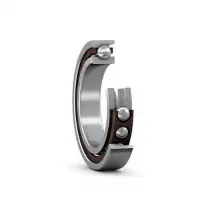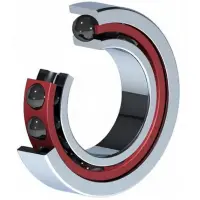
71920 ACD/P4ATBTC
71900 Series Super Precision Angular Contact Ball Bearings
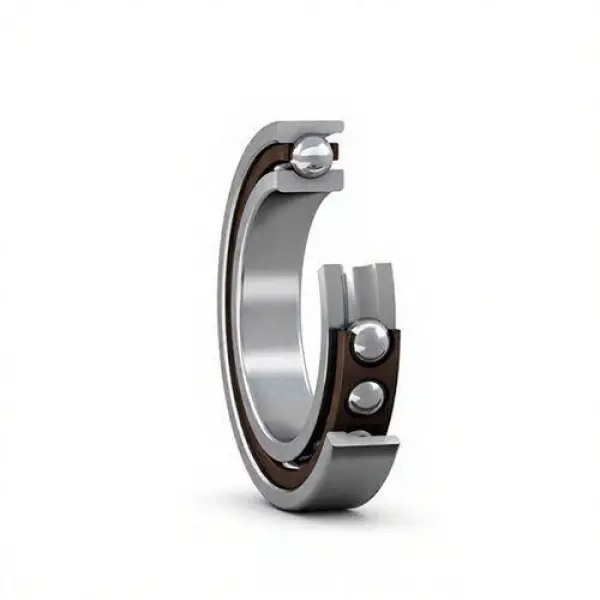

Image may differ from product. See technical specification for details.
Basic Information
Main Dimensions
Ball & Washer Dimensions
Performance
Materials
- Fast delivery
- Free shipping on orders over $200
- Enjoy discounts on bulk purchases
- Secure Payment
- Fast Global Shipping
71920 ACD/P4ATBTC Bearing Product Overview & Core Advantages
The 71920 ACD/P4ATBTC is a precision angular contact ball bearing designed for demanding applications requiring exceptional rigidity and accuracy. This matched triplex set features three bearings arranged in a back-to-back configuration (TBT), providing superior stability when handling combined radial and axial loads. With a P4A tolerance class and moderate preload (Class C), it delivers outstanding rotational precision and is optimized for high-speed operation up to 15,000 rpm. The phenolic cage and chrome steel construction ensure reliable performance across a wide temperature range.
71920 ACD/P4ATBTC Bearing Model Code Explained, Specifications & Naming Convention
| Code Segment | Technical Meaning |
|---|---|
| 71920 | Basic bearing designation with 100mm bore, 140mm OD |
| ACD | Angular Contact Design with 25° contact angle |
| P4A | High precision tolerance class for superior running accuracy |
| TBT | Triplex Back-to-Back arrangement for maximum rigidity |
| C | Moderate preload classification for optimal performance |
71920 ACD/P4ATBTC Bearing Structural Features & Performance Benefits
Enhanced Rigidity: The triplex back-to-back arrangement creates a highly stable bearing system that effectively resists moment loads and deflection, making it ideal for applications requiring exceptional stiffness and precision.
Superior Load Capacity: With a 25° contact angle and optimized internal geometry, this bearing set handles combined radial and axial loads efficiently. The radial dynamic load rating of 27,900 lbf and static load rating of 42,750 lbf ensure reliable operation under demanding conditions.
High-Speed Capability: The phenolic cage material and precision manufacturing enable smooth operation at limiting speeds of 15,000 rpm. The moderate preload minimizes heat generation while maintaining positional accuracy.
Precision Engineering: Manufactured to P4A tolerance standards with tight dimensional controls (±0.004mm on diameters), this bearing set guarantees consistent performance and interchangeability in precision assemblies.
71920 ACD/P4ATBTC Bearing Typical Application Areas
This high-precision triplex bearing set is specifically engineered for applications requiring maximum rigidity and accuracy:
- Machine tool spindles for milling, grinding, and turning operations
- High-speed machining centers and precision manufacturing equipment
- Industrial robotics and automation systems requiring precise motion control
- Aerospace components including flight control systems and auxiliary power units
- Medical equipment such as CT scanners and high-speed dental handpieces
- Precision test and measurement instruments demanding minimal runout