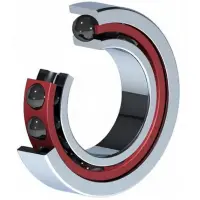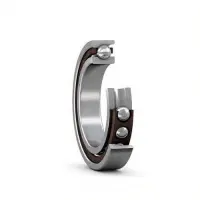
7011 ACBGA/P4A
7000 Series Super Precision Angular Contact Ball Bearings
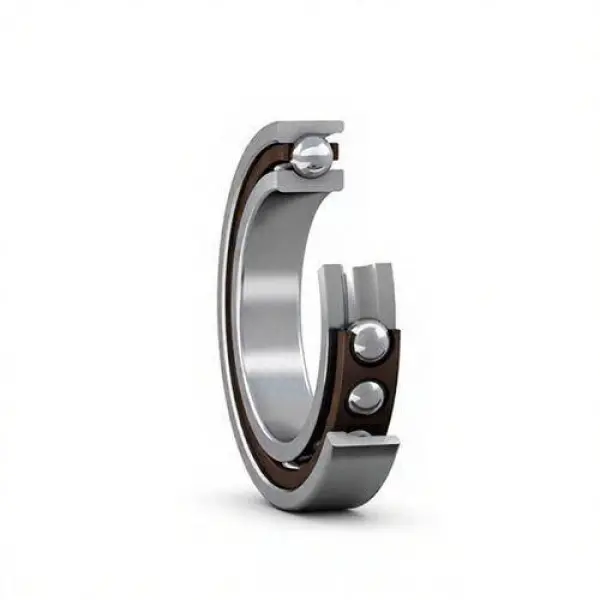

Image may differ from product. See technical specification for details.
Basic Information
Main Dimensions
Ball & Washer Dimensions
Performance
Materials
- Fast delivery
- Enjoy discounts on bulk purchases
- Secure Payment
- Fast Global Shipping
7011 ACBGA/P4A Bearing Product Overview & Core Advantages
The 7011 ACBGA/P4A is a single-row angular contact ball bearing designed for applications requiring high precision and superior running accuracy. Manufactured to P4A tolerance class, this bearing delivers exceptional dimensional stability and rotational precision. Its 25° contact angle is optimized to handle significant combined loads, efficiently supporting both radial and axial forces in one direction. The phenolic cage and universal matching designation (SU) enable high-speed operation and simplified bearing arrangement design, making it ideal for high-rigidity applications where precision is paramount.
7011 ACBGA/P4A Bearing Model Code Explained, Specifications & Naming Convention
| Suffix Code | Technical Meaning | Performance Significance |
|---|---|---|
| AC | Angular Contact | Designed for combined radial and axial loads |
| BGA | Extra Light Preload (Class A) | Minimizes deflection under light loads, ideal for high-precision applications |
| P4A | High Precision Tolerance Class | Superior dimensional and running accuracy beyond ABEC-7 standards |
7011 ACBGA/P4A Bearing Structural Features & Performance Benefits
High-Precision Construction: The P4A tolerance class ensures minimal dimensional variation and exceptional running accuracy, critical for precision machinery. The open design allows for customized lubrication schemes while maintaining optimal operating temperatures.
Optimized Load Capacity: With a 25° contact angle and chrome steel construction, this bearing achieves an optimal balance between radial and axial load capacity. The radial dynamic load rating of 2992 lbf and static load rating of 2340 lbf provide reliable performance under demanding conditions.
High-Speed Capability: The phenolic cage contributes to the bearing's high-speed performance, enabling operation up to 34,000 rpm. The cage's lightweight properties reduce centrifugal forces while maintaining structural integrity at elevated speeds.
Universal Matching Design: As a universal matchable bearing (SU), the 7011 ACBGA/P4A can be paired with another identical bearing in various configurations, simplifying inventory and installation while ensuring precise preload control.
7011 ACBGA/P4A Bearing Typical Application Areas
- Machine Tool Spindles: High-precision machining centers and grinding spindles
- Precision Instrumentation: Measuring equipment and laboratory instruments
- High-Speed Motors: Servo motors and spindle drives requiring precise rotation
- Medical Equipment: Dental handpieces and surgical tools
- Aerospace Systems: Guidance systems and precision actuators
- Robotics: Joint mechanisms and precision positioning systems