52408
Double Direction Thrust Ball Bearings
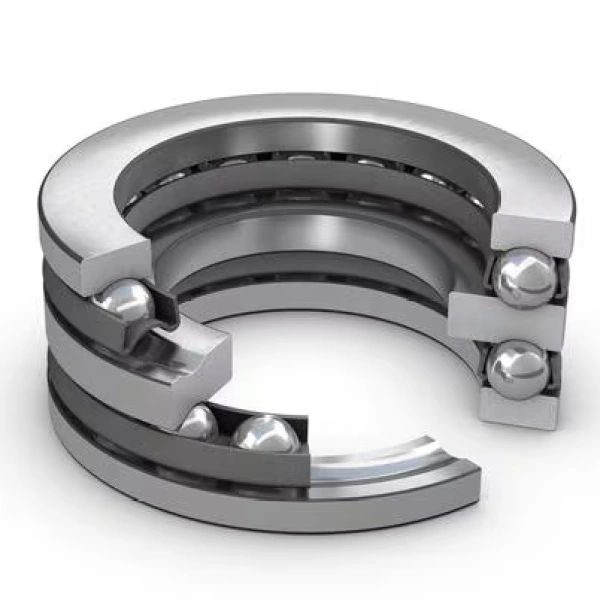

Image may differ from product. See technical specification for details.
Basic Information
Main Dimensions
Ball & Washer Dimensions
Performance
Materials
Environment & Compliance
- Fast delivery
- Enjoy discounts on bulk purchases
- Secure Payment
- Fast Global Shipping
52408 Bearing Product Overview & Core Advantages
The 52408 is a metric thrust ball bearing engineered for applications requiring high axial load capacity and precision. Designed specifically to accommodate thrust loads in a single direction, this bearing features a robust construction with hardened chrome steel components, ensuring reliable performance and long service life. Its open seal type allows for versatile lubrication options, making it suitable for high-speed operations up to 2,400 rpm. The 52408 is ideal for scenarios demanding high axial dynamic and static load ratings (21,510 lbf and 41,175 lbf respectively), providing exceptional stability and durability in demanding industrial environments.
52408 Bearing Model Code Explained, Specifications & Naming Convention
- 52408: Basic model number indicating a metric thrust ball bearing with a 40mm bore and specific dimensions.
- Open: Signifies the bearing has no integral seals or shields, allowing for direct lubrication and potentially higher speed capability.
- Thrust: Explicitly defines the bearing's design purpose for carrying axial loads.
52408 Bearing Structural Features & Performance Benefits
- High Axial Load Capacity: The bearing is constructed to handle significant thrust loads, with a high axial static load rating of 41,175 lbf, making it suitable for heavy-duty applications.
- Precision Ground Components: Manufactured from chrome steel rings and balls with a stainless steel cage, the bearing ensures smooth operation, reduced friction, and enhanced corrosion resistance.
- Optimized for Speed: The open design and precision construction contribute to a limiting speed of 2,400 rpm, enabling use in high-speed machinery.
- Stable Operation: Tight dimensional tolerances on the bore, outside diameter, and width contribute to precise positioning and high rigidity in the assembly.