52208
Double Direction Thrust Ball Bearings
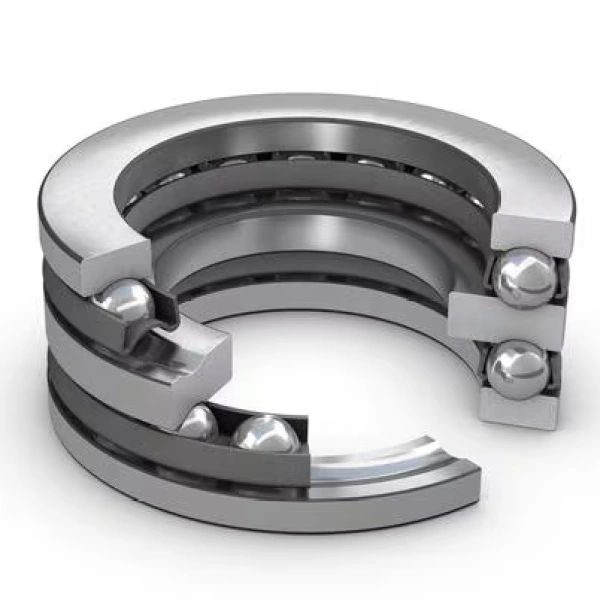

Image may differ from product. See technical specification for details.
Basic Information
Main Dimensions
Ball & Washer Dimensions
Performance
Materials
Environment & Compliance
- Fast delivery
- Enjoy discounts on bulk purchases
- Secure Payment
- Fast Global Shipping
52208 Bearing Product Overview & Core Advantages
The 52208 metric thrust ball bearing is engineered for high-precision axial load applications requiring exceptional rigidity and dimensional accuracy. Designed specifically to handle unidirectional thrust loads, this bearing features chrome steel components and stainless steel cage for reliable performance in demanding environments. With its open design and precision-ground raceways, it delivers optimal performance in applications where axial load capacity and rotational accuracy are critical.
52208 Bearing Model Code Explained, Specifications & Naming Convention
| Code Segment | Technical Meaning |
|---|---|
| 52 | Thrust ball bearing series designation |
| 208 | Bore diameter code (30mm) |
| Open | No seals or shields, optimized for lubrication access and heat dissipation |
52208 Bearing Structural Features & Performance Benefits
High Load Capacity: Engineered with chrome steel rings and balls to deliver exceptional axial dynamic load rating of 9945 lbf and axial static load rating of 21712 lbf, ensuring reliable performance under heavy thrust loads.
Precision Engineering: Features tight dimensional tolerances (bore: -0.01mm to 0, OD: -0.015mm to 0) for precise fitment and optimal alignment in high-accuracy applications.
Enhanced Durability: Stainless steel cage provides excellent corrosion resistance and maintains structural integrity at limiting speeds up to 3800 rpm.
Thermal Performance: Operating temperature range of -30°C to 110°C ensures stable performance across various environmental conditions.
52208 Bearing Typical Application Areas
The 52208 thrust ball bearing is ideally suited for applications requiring high axial load capacity and precision positioning, including:
- Machine tool spindles and positioning systems
- Industrial pumps and compressor assemblies
- Automotive steering systems and transmission components
- Material handling equipment and lifting mechanisms
- Precision instruments requiring accurate axial positioning